Adobe Firefly vs Leonardo AI: The Ultimate AI Image Generator Showdown
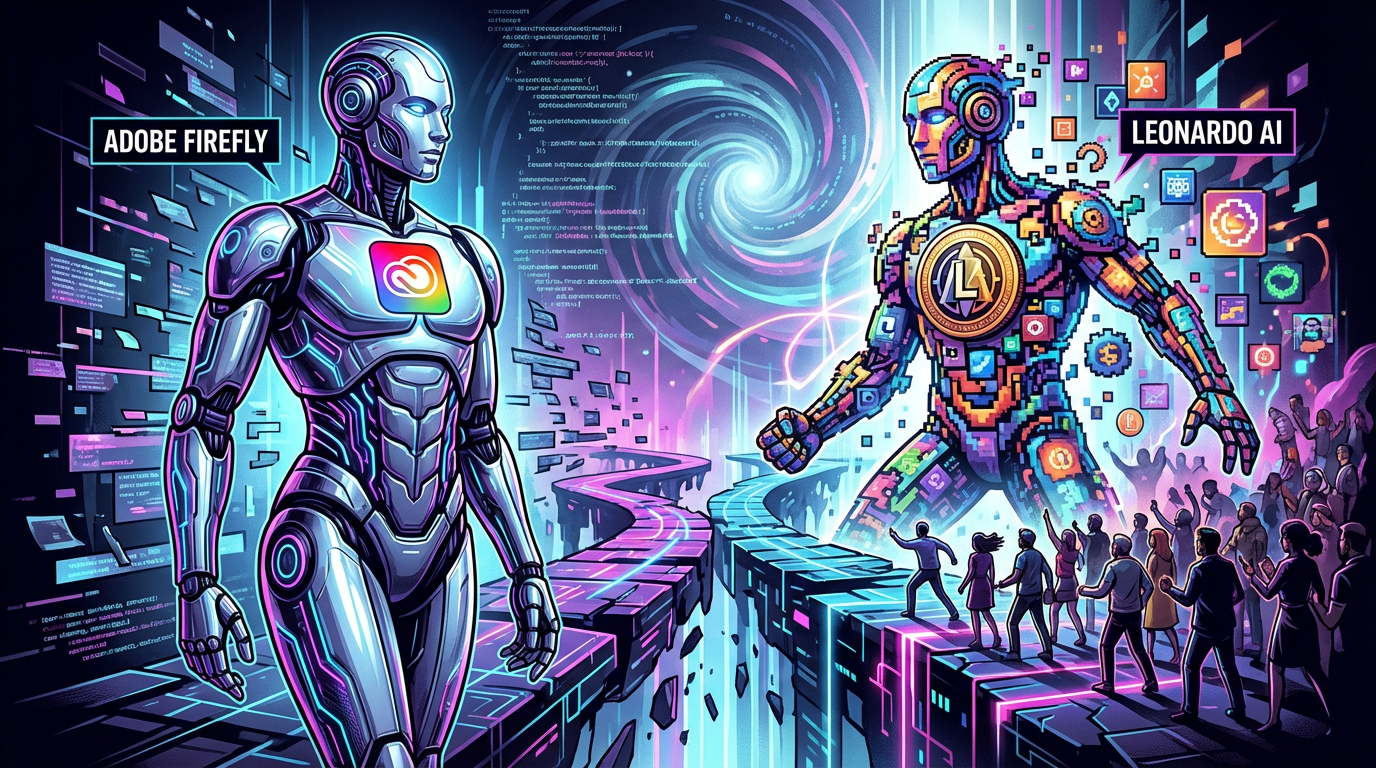
The landscape of AI image generation is rapidly evolving, presenting creators with a choice between two powerful, yet fundamentally different, platforms. On one side stands Adobe Firefly, a tool deeply integrated into the professional creative ecosystem, prioritizing commercial safety and seamless workflow. On the other is Leonardo AI, a community-driven powerhouse that offers unparalleled control, customization, and a focus on artistic freedom.
For designers, artists, and marketers, the decision between Adobe Firefly vs Leonardo AI is a strategic one that impacts everything from workflow efficiency to legal security. This comprehensive 2500-word analysis will dissect the core differences, technical capabilities, and commercial implications of both platforms, helping you determine which AI image generator is the superior choice for your specific needs in 2025.
1. Core Philosophy: Integration vs. Independence
The most significant distinction between these two platforms lies in their foundational design philosophy and target audience.
Adobe Firefly: The Professional's Integrated Toolkit
Adobe Firefly was developed with a clear mission: to be the generative AI co-pilot for the existing Creative Cloud user base. Its core philosophy is seamless integration and commercial reliability.
•Integration First: Firefly is not a standalone product; it is a feature embedded within industry-standard applications like Adobe Photoshop, Illustrator, and Express. This allows professional designers to use tools like Generative Fill and Generative Expand without ever leaving their familiar workflow.
•Commercial Safety: Adobe has trained Firefly on a dataset of licensed content and public domain images, explicitly excluding copyrighted material. This focus on ethical sourcing provides users with a level of legal indemnity that is crucial for enterprise and commercial work.
Leonardo AI: The Creator's Custom Studio
Leonardo AI, by contrast, is built as an independent, all-in-one platform for the dedicated AI artist and enthusiast. Its philosophy centers on maximum control and community-driven innovation.
•Customization and Control: Leonardo AI offers a vast array of fine-tuning options, custom models, and community-trained models that give artists granular control over the output. This level of customization is designed for users who want to move beyond simple text-to-image and create highly specific, unique aesthetics.
•Community Ecosystem: The platform thrives on its active community, where users share prompts, custom models, and creative techniques. This fosters rapid learning and a constant influx of new artistic styles, making it a dynamic environment for exploration.
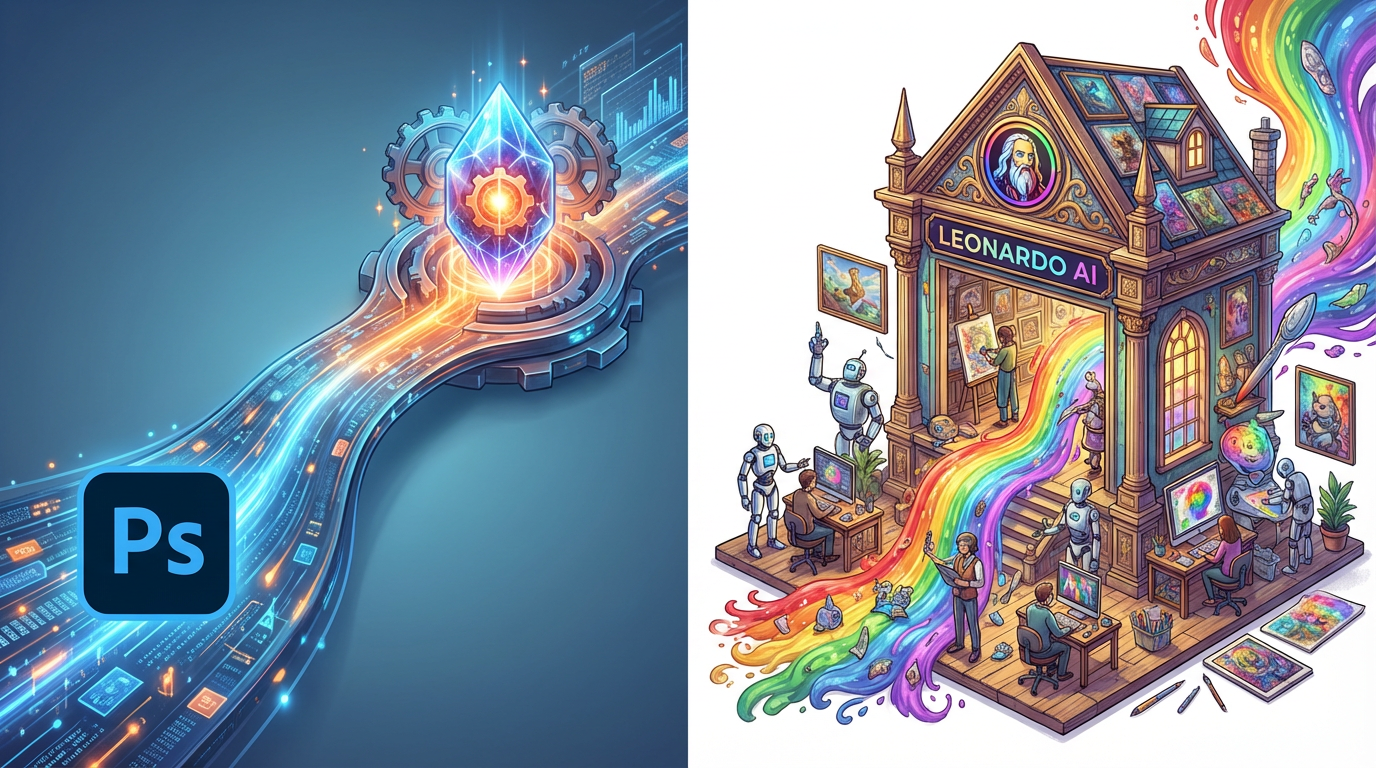
A visual metaphor illustrating the deep integration of Adobe Firefly into the professional Adobe ecosystem (left) versus the vibrant, independent, and community-driven studio of Leonardo AI (right).
2. Aesthetic and Output Quality: Photorealism vs. Stylization
While both generators can produce high-quality images, their native aesthetic tendencies cater to different creative needs.
Firefly’s Aesthetic: Polished and Commercially Viable
Adobe Firefly excels at generating images that are clean, polished, and photorealistic. Its output often has a distinct, high-production-value look that is immediately suitable for marketing materials, product mockups, and corporate design.
•Strengths: Generative Fill and Generative Expand are industry-leading for non-destructive editing. The results are consistently high-resolution and maintain a professional, un-AI-like finish, making them ideal for commercial use where realism and brand safety are paramount. This is a direct result of Adobe's commitment to a commercially safe training dataset, which naturally steers the model toward a more conventional, yet highly reliable, aesthetic. This focus on "safe" output minimizes the risk of generating controversial or visually inconsistent imagery, which is a major concern for corporate clients.
•Limitations: While capable of various styles, Firefly’s core models tend to lean towards a safer, more conventional aesthetic, which can sometimes feel less experimental or stylized than its competitors.
Leonardo AI’s Aesthetic: Versatile and Highly Stylized
Leonardo AI offers a much broader and more versatile aesthetic range, primarily due to its extensive library of custom-trained models.
•Strengths: The platform is a powerhouse for concept art, game assets, and highly stylized illustrations. Users can select from dozens of community and platform models (like Leonardo Diffusion, DreamShaper, or various fine-tuned models) to achieve specific, niche artistic styles that are difficult to replicate elsewhere. The sheer diversity of these models, often trained by the community on specific artistic styles, allows for a level of creative depth and experimentation that is simply unmatched by Firefly's more centralized model. This makes Leonardo AI the go-to choice for artists seeking a truly unique and personalized visual signature.
•Limitations: The sheer volume of models can be overwhelming for beginners, and the quality can vary depending on the model chosen and the user's prompting skill. While it can achieve photorealism, its strength lies in its ability to create fantastical and unique visuals.

A split image contrasting Firefly's strength in clean, photorealistic product rendering (left) with Leonardo AI's capability for highly detailed, fantastical concept art (right).
3. Pricing and Credit System: Generative Credits vs. Tokens
The business models of the two platforms reflect their target markets, resulting in two very different approaches to pricing and usage.
Adobe Firefly: The Generative Credit System
Adobe uses a system of Generative Credits that are shared across all Firefly-powered features within the Creative Cloud suite.
•Free Tier: The free tier offers a limited number of monthly credits, allowing users to test the core features.
•Paid Plans: Credits are included with Creative Cloud subscriptions or can be purchased separately. For example, the Firefly Pro plan includes 4,000 Generative Credits per month 1
. Once credits are exhausted, generation speed slows down, but the core tools remain accessible. This system is designed to integrate seamlessly with the existing Adobe subscription model.
Leonardo AI: The Token System
Leonardo AI operates on a token system, where different actions consume a varying number of tokens.
•Free Tier: Leonardo AI offers a generous free tier with a daily allowance of Fast Tokens (typically 150 tokens per day). This is sufficient for casual use and extensive experimentation.
•Paid Plans: Paid plans, such as the Artisan Unlimited and Maestro Unlimited tiers, offer a much larger monthly allocation of Fast Tokens, as well as the option for Unlimited Image Generation at a relaxed pace for their hosted models 2
. This model is more flexible and allows power users to generate a high volume of images.
The key difference is that Firefly's credits are tied to the professional Adobe ecosystem, while Leonardo AI's tokens are focused purely on the volume and speed of AI generation.

A visual comparison of Adobe's official 'Generative Credits' (left) which are tied to the Creative Cloud ecosystem, versus Leonardo AI's glowing, customizable 'AI Tokens' (right) which emphasize community and volume.
4. Commercial Use and Legal Indemnity
For any professional or business, the legal rights to the generated images are non-negotiable. This is where the distinction between Adobe Firefly vs Leonardo AI becomes most critical.
Adobe Firefly: The Gold Standard for Commercial Safety
Adobe’s approach to commercial use is its strongest selling point for enterprise clients.
•Trained on Safe Data: Firefly is trained exclusively on Adobe Stock images, public domain content, and licensed content, ensuring that the generated images are free from intellectual property (IP) conflicts.
•Legal Indemnity: Adobe offers legal indemnification for content created with Firefly, meaning they will cover the legal costs if a third party claims copyright infringement on a Firefly-generated image. This is a massive advantage for large corporations and professional agencies who cannot risk IP disputes.
Leonardo AI: Creator-Owned, with Caveats
Leonardo AI’s policy is highly favorable to the creator, but it lacks the explicit legal indemnity offered by Adobe.
•Creator Ownership: Leonardo AI grants users full ownership and commercial rights to the images they generate, even on the free plan 3
. This is a huge benefit for independent artists and small businesses.
•Data Source: While the platform uses proprietary models, the training data is less transparent than Adobe’s. Users must be aware of the inherent risks associated with using AI models trained on vast, often unverified, datasets. For most independent creators, this risk is acceptable, but it is a major consideration for large-scale commercial deployment.
5. Control and Customization: Deep Parameters vs. Integrated Tools
The level of control a user has over the generation process is a key differentiator in the Adobe Firefly vs Leonardo AI debate.
Leonardo AI: Granular Control and Model Fine-Tuning
Leonardo AI is the clear winner for users who demand granular control over every aspect of the image generation process.
•Custom Models: Users can train their own custom AI models (called "Finetuned Models") on their own image data. This allows for the creation of highly specific, repeatable characters, objects, or styles, which is invaluable for game development and consistent branding.
•Advanced Features: The platform includes advanced controls like Image-to-Image prompting, Prompt Magic, and a detailed settings panel for adjusting parameters like guidance scale, tiling, and aspect ratio, giving artists the tools to achieve highly technical results.
Adobe Firefly: Integrated Editing and Simplicity
Firefly’s control is less about deep, pre-generation parameters and more about post-generation editing and integration.
•Generative Fill and Expand: Firefly’s unique strength lies in its ability to non-destructively edit and expand images directly within Photoshop. This is a form of control that no other platform can match, allowing for seamless inpainting, outpainting, and object manipulation with text prompts.
•Simplicity: The Firefly interface is intentionally streamlined, focusing on ease of use and quick results. This is perfect for designers who need fast, reliable assets without getting bogged down in complex AI parameters.
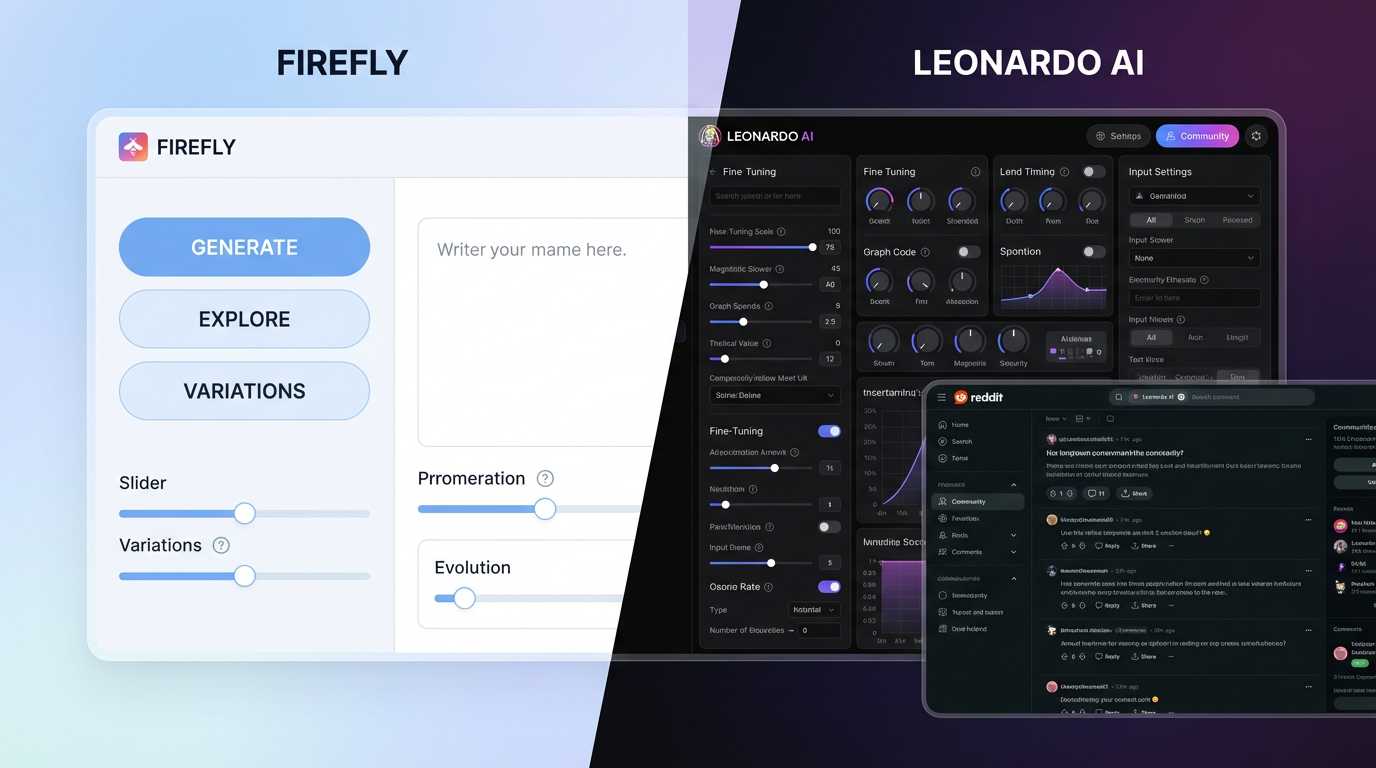
A visual comparison of Firefly's streamlined, simple interface (left) focused on quick generation and integrated editing, versus Leonardo AI's complex, detailed control panel (right) with fine-tuning dials and community features.
6. Ecosystem and Community: Creative Cloud vs. Standalone Platform
The ecosystem surrounding each tool significantly influences its utility for different user groups.
Adobe Firefly: The Creative Cloud Ecosystem
Firefly's power is amplified by its position within the Adobe Creative Cloud.
•Seamless Workflow: Assets generated in Firefly can be instantly used in Photoshop, Illustrator, Premiere Pro, and After Effects. This seamless workflow is the ultimate time-saver for professional studios and agencies.
•Enterprise Support: Adobe provides enterprise-level support, training, and security, making it the default choice for large organizations that require robust infrastructure.
Leonardo AI: The Community-Driven Ecosystem
Leonardo AI’s ecosystem is built around its vibrant and active user community.
•Community Models: The ability to browse, use, and even train custom models shared by other users is a massive advantage for artistic exploration. This open exchange of knowledge accelerates learning and innovation.
•Dedicated Platform: Leonardo AI is a dedicated platform for generative art, meaning all its features are focused on improving the core image generation experience. Its official Discord server boasts a massive, active user base, making it an excellent resource for support and inspiration 4.
7. Unique Feature Showdown: Generative Fill vs. 3D Texture Generation
Beyond core image generation, both platforms offer unique features that cater to specific creative niches.
Adobe Firefly’s Unique Feature: Generative Fill and Expand
Generative Fill, now deeply integrated into Photoshop, is arguably Firefly’s killer feature. It allows users to select an area of an image and replace or expand it with AI-generated content that seamlessly matches the lighting, perspective, and style of the original image. This capability has revolutionized photo retouching and compositing.
Leonardo AI’s Unique Feature: 3D Texture Generation
Leonardo AI offers a powerful feature for 3D artists and game developers: the ability to generate seamless, tileable textures from a text prompt. This is a game-changer for creating environments and assets in 3D modeling software, allowing artists to quickly texture complex models without manual painting.

A side-by-side comparison of Firefly's Generative Fill feature (left), which allows for seamless inpainting and editing, versus Leonardo AI's AI 3D Texture Generation (right), which is invaluable for game development and 3D modeling.
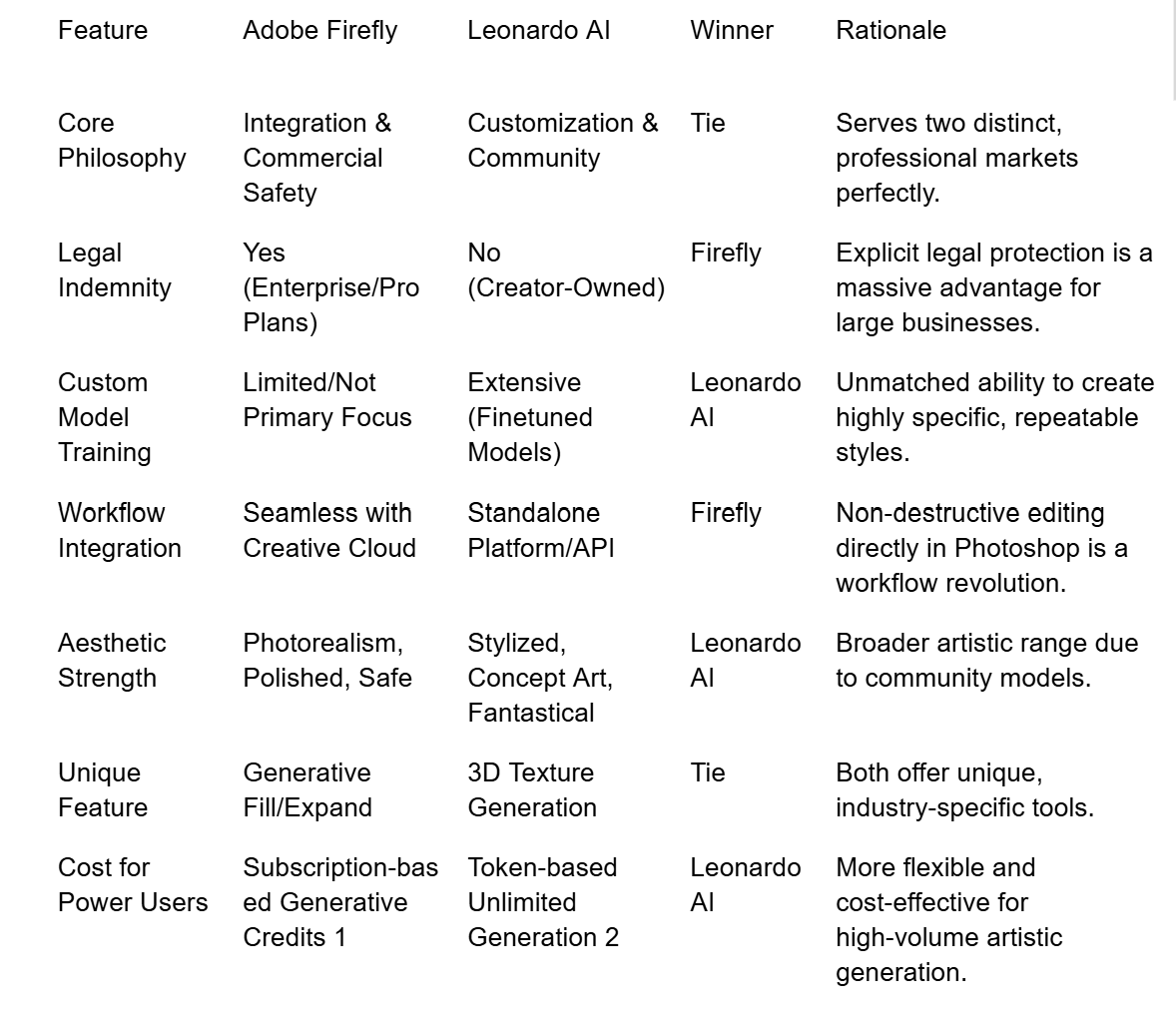
8. Summary of the Showdown: Adobe Firefly vs Leonardo AI
The table below summarizes the key differences between the two platforms:
9. The Future of AI Art: Convergence and Competition
The competition between Adobe Firefly vs Leonardo AI is driving innovation at an unprecedented pace. The future will likely see a convergence of features, with each platform attempting to adopt the other's strengths.
•Firefly's Evolution: Adobe is expected to introduce more advanced control parameters and a wider variety of stylistic models to appeal to the dedicated AI artist. The company is also continuously expanding its Generative Fill capabilities to more applications 5
. To compete with Leonardo AI's artistic range, Firefly will need to introduce more stylized and experimental models, perhaps through a curated marketplace, while maintaining its core commitment to commercial safety.
•Leonardo AI's Evolution: Leonardo AI is focused on improving the photorealism and temporal coherence of its models, while also expanding its platform to include more integrated editing tools that mimic the non-destructive workflow of professional software. To truly challenge Adobe's dominance in the professional space, Leonardo AI must also address the need for clearer IP provenance and potentially offer a form of legal assurance to enterprise users, a critical factor that currently holds back its adoption in large corporations.
10. Final Verdict: Choosing Your AI Partner
The choice between Adobe Firefly vs Leonardo AI is less about which tool is "better" and more about which tool is better for your specific professional context.
If you are a professional designer, marketing agency, or enterprise user already embedded in the Adobe Creative Cloud ecosystem, and your primary concern is commercial safety, legal indemnity, and seamless workflow integration, then Adobe Firefly is the indispensable tool. Its Generative Fill feature alone justifies its adoption for any serious retouching or compositing work.
If you are an independent artist, game developer, concept artist, or enthusiast whose primary goal is artistic freedom, deep customization, and high-volume generation at a flexible cost, then Leonardo AI is the superior platform. Its token system, custom model training, and vibrant community make it the ultimate playground for creative exploration.
The ultimate winner in this showdown is the creator, who now has two world-class tools perfectly tailored to opposite ends of the professional creative spectrum.