15 Best DeepSeek Alternatives: Effective AI Assistants in 2025
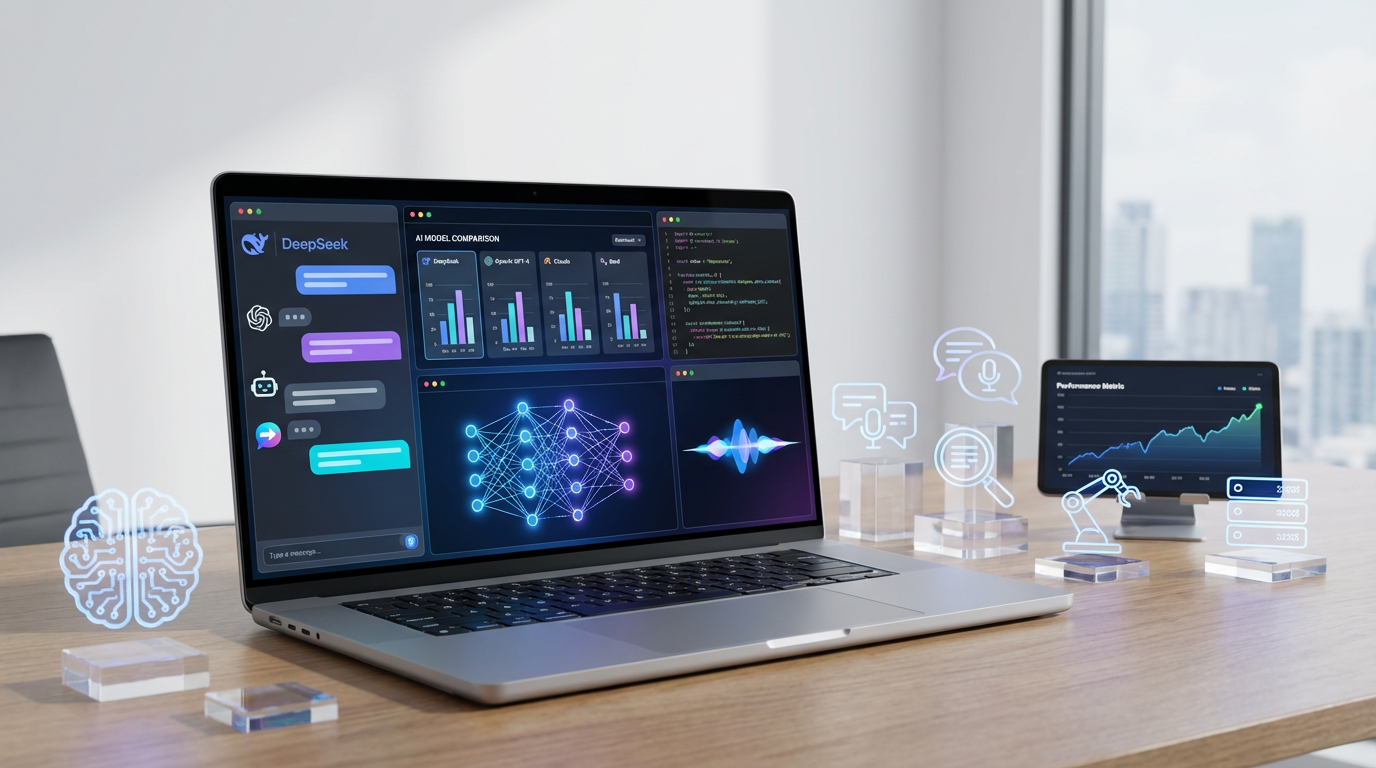
The world of artificial intelligence is moving at a breakneck pace, with new and powerful large language models (LLMs) emerging constantly. While giants like OpenAI, Google, and Anthropic often dominate the headlines, a wave of highly capable and often open-source models from around the globe is providing incredible value and performance. Among these, DeepSeek has carved out a significant niche.
Hailing from China, DeepSeek has gained immense popularity, especially among developers, for its powerful coding abilities and generous free tier. Its models, trained on a massive dataset of code, often rival or even surpass the performance of more famous counterparts on programming benchmarks. DeepSeek represents a powerful movement in the AI space: specialized, efficient, and often open-source models that provide a compelling alternative to the closed, proprietary systems of Big Tech.
But as impressive as DeepSeek is, the AI landscape is all about options. You might be looking for an AI assistant with stronger creative writing skills, deeper integration with your existing apps, access to real-time information, or a different approach to AI safety and ethics. The search for the perfect AI assistant is a personal one, tailored to your specific workflow and needs. Whether you're a developer, a writer, a researcher, or a business professional, there is an AI model out there that is the perfect co-pilot for you.
This guide will explore the 15 best DeepSeek alternatives in 2025. We will journey through the landscape of modern AI, from the titans of the industry to specialized and open-source challengers, helping you find the most effective AI assistant to augment your capabilities and boost your productivity.
Why Look for a DeepSeek Alternative?
DeepSeek is a phenomenal tool, particularly for coding and technical tasks. So why look for an alternative? The reasons are as diverse as the AI models themselves:
•Need for Broader General Knowledge: While DeepSeek excels at code, other models may have a broader and deeper knowledge base for general-purpose queries, creative writing, or complex reasoning.
•Real-Time Information Access: Many of the top AI assistants can now access the internet in real-time, providing up-to-the-minute information that a statically trained model like DeepSeek might lack.
•Multimodal Capabilities: You might need an AI that can understand and process images, audio, or even video, not just text.
•Ecosystem Integration: If you are heavily invested in the Google or Microsoft ecosystems, an AI assistant that is deeply integrated with those services (like Gemini or Copilot) can offer a more seamless workflow.
•User Interface and Experience: Sometimes, it just comes down to personal preference. You might prefer the user interface or conversational style of a different AI chatbot.
•Specific Use Cases: Tools like Jasper for marketing or Perplexity for research offer specialized features that a general-purpose model can't match.
The 15 Best DeepSeek Alternatives in 2025
Our list covers the full spectrum of AI assistants, from the most famous commercial models to powerful open-source alternatives.
1. ChatGPT (OpenAI)
The undisputed king of AI chatbots, ChatGPT is the benchmark against which all others are measured. Powered by OpenAI's state-of-the-art GPT-4 and GPT-4o models, it remains arguably the most capable and versatile AI assistant available.
Key Features:
•State-of-the-Art Performance: GPT-4o offers incredible reasoning, creativity, and problem-solving skills across a vast range of topics.
•Multimodal Capabilities: Can understand and discuss images, analyze data from uploaded files (like spreadsheets), and browse the web in real-time.
•Massive Ecosystem: Features a huge library of custom GPTs for specialized tasks and integrates with thousands of third-party applications.
Pricing: Offers a very capable free tier. ChatGPT Plus, which provides access to the latest models and features, costs $20 per month.
Who is it for? Almost everyone. From students and professionals to developers and creatives, ChatGPT is a powerful and reliable general-purpose AI assistant that excels at nearly every task.
2. Claude (Anthropic)
Developed by Anthropic, a company founded by former OpenAI researchers, Claude has established itself as a top-tier competitor to ChatGPT, with a strong emphasis on safety, ethics, and a more natural, conversational style.
Key Features:
•Massive Context Window: Claude is famous for its enormous context window, allowing it to process and analyze hundreds of thousands of words at once. This makes it ideal for summarizing long documents, analyzing codebases, or answering questions about a dense research paper.
•Exceptional Writing and Summarization: Many users find that Claude produces more natural, eloquent, and well-structured written content than its competitors.
•Constitutional AI: Built with a unique "Constitutional AI" approach, which aims to align the model with a set of ethical principles, often resulting in more helpful and less "preachy" refusals.
Pricing: Offers a free tier with daily usage limits. Claude Pro costs $20 per month for significantly higher usage.
Who is it for? Writers, researchers, lawyers, and anyone who works with large amounts of text. If your primary use case involves reading, summarizing, or writing long documents, Claude is arguably the best tool on the market.
3. Google Gemini
As Google's flagship AI model, Gemini (formerly Bard) is a powerful and versatile assistant that is deeply integrated into the Google ecosystem. It is designed to be a creative and helpful collaborator for a wide range of tasks.
Key Features:
•Deep Google Integration: Gemini has access to real-time information from Google Search and can connect directly with Google Workspace apps like Gmail, Docs, and Drive through extensions.
•Multimodal from the Ground Up: Gemini was designed from the start to be multimodal, making it very capable of understanding and reasoning about images and other data types.
•Generous Free Tier: The standard version of Gemini is free to use and is one of the most capable free AI assistants available.
Pricing: The standard Gemini is free. Gemini Advanced, which uses the more powerful Gemini 1.5 Pro model, is available through the Google One AI Premium plan for $19.99 per month.
Who is it for? Users who are heavily invested in the Google ecosystem. The ability to draft emails in Gmail or summarize documents in Drive makes Gemini an incredibly powerful productivity tool for Google Workspace users.
4. Microsoft Copilot
Microsoft Copilot (formerly Bing Chat) is Microsoft's answer to the AI assistant race. By integrating OpenAI's powerful GPT models with its own Bing search engine, Microsoft has created a powerful research and productivity tool.
Key Features:
•Free Access to GPT-4: Copilot offers free access to OpenAI's powerful GPT-4 model, which is a significant advantage over other free tools.
•Real-Time Web Access: Because it is integrated with Bing, Copilot excels at providing up-to-date information and citing its sources.
•Microsoft 365 Integration: For business users, Copilot for Microsoft 365 is a game-changer, bringing the power of AI directly into Word, Excel, PowerPoint, and Teams.
Pricing: The standard version of Copilot is free. Copilot Pro, which offers priority access and faster performance, costs $20 per month. Copilot for Microsoft 365 costs $30 per user per month.
Who is it for? Professionals and enterprise users who work within the Microsoft ecosystem. The integration with Microsoft 365 makes it an unparalleled productivity tool for the workplace.
5. Perplexity AI
Perplexity AI is not just a chatbot; it's an "answer engine." It combines the power of a large language model with a real-time search engine to provide direct, accurate, and cited answers to your questions. It is a phenomenal tool for research.
Key Features:
•AI-Powered Search: Instead of just giving you a list of links, Perplexity browses the web for you and synthesizes the information into a concise answer.
•Cited Sources: Every answer is backed up by a list of sources, allowing you to verify the information and dive deeper into the topic.
•Focus Mode: You can focus your search on specific domains, such as academic papers, YouTube, or Reddit, to get more targeted answers.
Pricing: Offers a powerful free version. Perplexity Pro, which provides access to more advanced models like GPT-4 and Claude 3, costs $20 per month.
Who is it for? Researchers, students, journalists, and anyone who needs accurate, up-to-date, and verifiable information. It is arguably the best AI research assistant available today.
6. Grok (xAI)
Developed by Elon Musk’s xAI, Grok is an AI assistant that is designed to be witty, rebellious, and a little bit sarcastic. Its defining feature is its real-time integration with the X (formerly Twitter) platform.
Key Features:
•Real-Time X Integration: Grok has access to the firehose of information on X, making it uniquely capable of answering questions about current events and public conversations as they unfold.
•Unique Personality: Grok is designed to have a sense of humor and a more engaging, less-sanitized personality than other AI assistants.
•Focus on Truth-Seeking: The stated goal of xAI is to create an AI that is a “maximum truth-seeking” tool, designed to understand the true nature of the universe.
Pricing: Grok is available exclusively to subscribers of X Premium+.
Who is it for? Power users of X and those who are looking for an AI with a more distinct and entertaining personality. Its ability to tap into real-time conversations on X gives it a unique edge for certain types of research.
7. Meta AI (Llama)
Meta AI is powered by Meta’s powerful open-source Llama models. It is integrated across Facebook, Instagram, WhatsApp, and Messenger, and is also available as a standalone web application. It represents one of the most powerful and widely accessible free AI assistants.
Key Features:
•Powered by Llama 3: Meta’s latest open-source model, Llama 3, is highly capable and competitive with many of the top proprietary models.
•Social Media Integration: The deep integration with Meta’s family of apps makes it a convenient and powerful tool for billions of users.
•Free to Use: Meta AI is completely free to use, making it an incredible value.
Pricing: Free.
Who is it for? Everyone. As a powerful, free, and easily accessible AI assistant, it is a fantastic alternative to the paid tiers of ChatGPT and Claude, especially for users who are active on Meta’s social media platforms.
8. Qwen (Alibaba)
Qwen, developed by Alibaba Cloud, is another powerful large language model from China that has demonstrated impressive performance on a wide range of benchmarks. It is a strong competitor to DeepSeek, especially for multilingual tasks.
Key Features:
•Strong Multilingual Support: Qwen has been trained on a diverse dataset that gives it strong capabilities in many languages beyond English and Chinese.
•Open Source and Commercial Models: Alibaba offers both open-source versions of Qwen for researchers and developers, as well as more powerful commercial models available through their cloud platform.
•Excellent Reasoning: The latest Qwen models have shown very strong performance on benchmarks that measure reasoning and problem-solving abilities.
Pricing: Open-source models are free. Commercial models are available through Alibaba Cloud with usage-based pricing.
Who is it for? Developers and businesses, particularly those operating in the Asian market or those who need strong multilingual capabilities from their AI model.
9. Mistral AI
Based in Paris, Mistral AI has quickly become the leading AI company in Europe, producing a series of powerful open-source and commercial models that are highly regarded for their performance and efficiency.
Key Features:
•High-Performance Open-Source Models: Mistral’s open-source models, like Mistral 7B, are famous for being the best-performing models in their size class, making them ideal for running on local hardware.
•Powerful Commercial Models: Their flagship commercial models, available via API, are competitive with the top models from OpenAI and Anthropic.
•Focus on Efficiency: Mistral’s models are known for being highly efficient, offering a great balance of performance and computational cost.
Pricing: Open-source models are free. Commercial models are available via API with usage-based pricing.
Who is it for? Developers and businesses who value open-source technology and are looking for a high-performance, efficient alternative to the major US-based AI labs.
10. Pi (Inflection AI)
Pi is a different kind of AI. Developed by Inflection AI, it is designed to be a personal, empathetic, and supportive AI companion. The goal is not just to answer questions, but to have a friendly and engaging conversation.
Key Features:
•Empathetic and Conversational: Pi is designed to be a great listener and a supportive conversational partner.
•Personalized Experience: The more you talk to Pi, the more it learns about you and tailors its conversations to your interests.
•Excellent Voice Capabilities: Pi offers a range of natural-sounding voices, making it one of the best AIs to talk to, not just type with.
Pricing: Free to use.
Who is it for? Anyone who is looking for an AI companion for brainstorming, talking through ideas, or simply having a friendly conversation. It is less of a productivity tool and more of a personal AI.
11. Chatsonic (Writesonic)
Chatsonic is the AI chatbot from Writesonic, a company that specializes in AI-powered tools for content creation and SEO. As such, Chatsonic has a strong focus on features that are useful for marketers and content creators.
Key Features:
•Real-Time Information: Integrates with Google Search to provide up-to-date answers.
•AI Image Generation: Can create images from text prompts, similar to DALL-E.
•Content Creation Focus: Designed to help with marketing copy, blog posts, and other content creation tasks.
Pricing: Included with a Writesonic subscription, which starts at $20 per month.
Who is it for? Marketers, bloggers, and SEO professionals who want an AI assistant that is tightly integrated with a suite of content creation tools.
12. Jasper
Jasper (formerly Jarvis) was one of the first AI writing assistants to gain widespread popularity, and it remains a top choice for marketing teams and businesses. It is a premium tool focused on creating high-quality, on-brand content at scale.
Key Features:
•Brand Voice Training: You can train Jasper on your company’s style guide and existing content to ensure that everything it writes is perfectly on-brand.
•Team Collaboration: Excellent features for marketing teams, including campaign workflows and content approval processes.
•Deep Marketing Focus: Offers a huge library of templates for specific marketing tasks, from writing Facebook ads to creating video scripts.
Pricing: Premium pricing, with plans starting at $49 per user per month.
Who is it for? Marketing teams and businesses that are serious about using AI to scale their content marketing efforts and want a premium tool with strong brand voice and collaboration features.
13. GenieChat
GenieChat is the AI chatbot feature of GetGenie, a popular AI writing assistant for WordPress. It offers a convenient way to access the power of a large language model directly within your WordPress dashboard.
Key Features:
•Multiple AI Models: Allows you to choose from a range of AI models to find the one that best suits your task.
•WordPress Integration: Because it is part of the GetGenie plugin, it is deeply integrated with WordPress, making it great for blogging and SEO tasks.
•Affordable Pricing: GetGenie offers very competitive pricing, making it an affordable option for bloggers and small businesses.
Pricing: Included with a GetGenie subscription, which has plans starting at a very low price point.
Who is it for? Bloggers, content marketers, and SEO professionals who work primarily with WordPress and want an integrated AI assistant.
14. Team GPT
As the name suggests, Team GPT is an AI tool that is built from the ground up for collaboration. It provides a shared workspace where teams can use and organize their interactions with large language models.
Key Features:
•Shared Workspace: Create folders and organize your chats to build a shared knowledge base for your team.
•Access to Multiple Models: Supports a range of models from OpenAI, Google, and Anthropic.
•Cost Management: Allows you to manage your team’s usage of paid AI models and control costs.
Pricing: Starts at $10 per user per month.
Who is it for? Businesses and teams that want to use AI collaboratively and build a shared repository of prompts, chats, and knowledge.
15. Poe (Quora)
Poe, developed by Quora, is a unique platform that gives you access to a wide range of different AI models all in one place. It is a fantastic tool for comparing the performance of different models on a specific task.
Key Features:
•Access to Many Models: You can chat with models from OpenAI, Google, Anthropic, Meta, and more, all from a single interface.
•Create Custom Bots: You can create your own custom bots with specific instructions and make them public for others to use.
•Model Comparison: Easily compare the responses from different models to the same prompt side-by-side.
Pricing: Offers a free tier with limited access to premium models. A subscription provides higher usage limits for all models.
Who is it for? AI enthusiasts and power users who want to experiment with a wide range of different models and find the perfect one for any given task.
Fan-Out Queries Answered
1.What is the best free DeepSeek alternative? Meta AI and the free versions of ChatGPT and Google Gemini are the most powerful and versatile free alternatives.
2.What is the best AI for coding besides DeepSeek? ChatGPT (GPT-4) is widely considered to be the best all-around AI for coding and software development tasks.
3.What is the best AI for writing and creative tasks? Claude is often praised for its superior ability to generate natural, eloquent, and creative written content.
4.What is the best AI for research? Perplexity AI is the top choice for research due to its ability to provide accurate, up-to-date, and cited answers.
5.What is an open-source alternative to DeepSeek? Mistral AI and Meta AI (Llama) offer powerful open-source models that are excellent alternatives.
6.Can these AIs access real-time information? Yes, ChatGPT, Google Gemini, Microsoft Copilot, and Perplexity AI can all access the internet for real-time information.
7.What does “context window” mean? The context window is the amount of text (both your prompt and the AI’s response) that the model can remember at one time. A larger context window is better for tasks involving long documents.
8.What is a multimodal AI? A multimodal AI can process and understand different types of data, such as text, images, and audio.
9.Are there any privacy-focused AI assistants? Some open-source models can be run on your own hardware, giving you complete privacy and control over your data.
10.What is the best AI for team collaboration? Team GPT is specifically designed to help teams use and organize their AI interactions in a shared workspace.
The Final Verdict: Choosing Your AI Co-Pilot
The AI assistant landscape in 2025 is richer and more diverse than ever before. While DeepSeek remains a top-tier choice, especially for developers, the best alternative for you will depend entirely on your unique needs and workflow.
For the ultimate in general-purpose capability, ChatGPT continues to hold the crown. Its power, versatility, and massive ecosystem make it the default choice for a wide range of users.
For those who work extensively with long documents, the massive context window and exceptional writing skills of Claude make it an unparalleled assistant for writing, summarization, and analysis.
For researchers and anyone who values accuracy and verifiability, Perplexity AI has redefined the concept of an answer engine, providing cited, real-time information that you can trust.
And for developers who believe in the power of open source, the high-performance models from Mistral AI and Meta AI offer a compelling and cost-effective alternative to the proprietary models from the major labs.
The era of a single, dominant AI is over. The future is a multi-polar world of specialized, powerful, and diverse AI models. The most effective professionals will not be those who use a single AI, but those who understand the strengths and weaknesses of many, and can choose the right tool for the right job. We hope this guide has provided you with a map to this exciting new world.