14 Best Quetext Alternatives: Effortless AI Detection in 2025
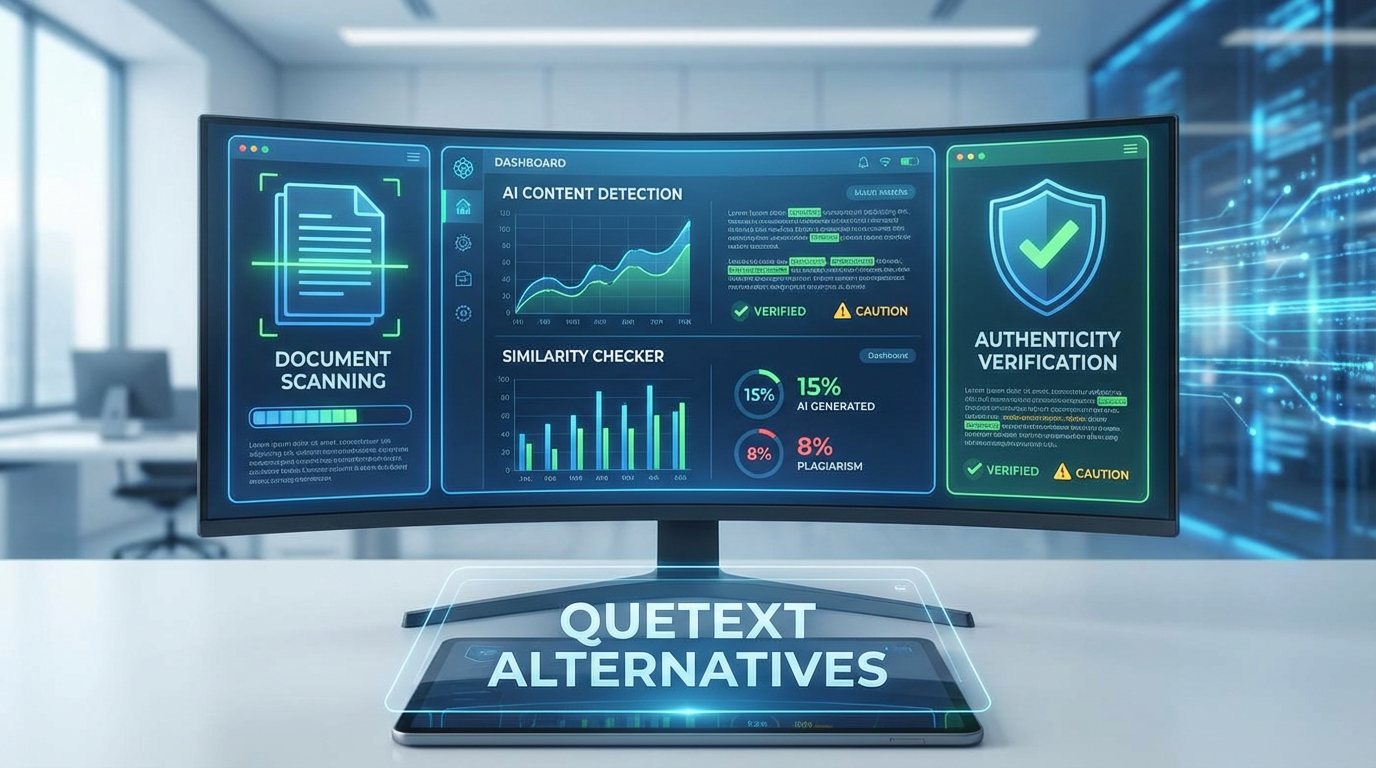
In the age of AI, ensuring the originality and authenticity of written content has never been more critical. Tools like Quetext have become essential for students, educators, and content creators, offering a robust defense against plagiarism. By combining a powerful plagiarism checker with emerging AI detection capabilities, Quetext provides a solid foundation for content integrity.
However, the landscape of AI and plagiarism detection is evolving at lightning speed. You might be looking for a Quetext alternative because you need more accurate AI detection, deeper integration with your learning management system (LMS), a more affordable price point, or advanced features for team-based content workflows. The right tool depends on your specific needs, whether you're a student striving for academic honesty, a teacher managing a classroom, or a publisher protecting your brand.
This guide will explore the 14 best Quetext alternatives in 2025. We'll break down the top platforms, from academic powerhouses and dedicated AI detectors to user-friendly free tools, helping you find the perfect solution to safeguard your content's originality.
Why Look for a Quetext Alternative?
Quetext is a strong contender, known for its DeepSearch™ technology that provides comprehensive plagiarism checking. It offers a clean interface, color-coded feedback, and a citation generator. However, there are several compelling reasons to explore other options:
•Specialized AI Detection: While Quetext has added AI detection, other tools specialize in it, offering higher accuracy and more detailed analysis of AI-generated text.
•Academic & Institutional Features: Educators and institutions often require tools with seamless LMS integration (like Canvas or Moodle), bulk submission capabilities, and detailed administrative dashboards.
•Web Content Focus: Publishers and SEO professionals may need a tool specifically designed to check for plagiarism across the live web, like Copyscape.
•Cost and Accessibility: Many users, especially students, may be looking for more generous free plans or more affordable premium options.
•All-in-One Writing Assistance: Some users prefer a tool that combines plagiarism checking with grammar, style, and tone suggestions, like Grammarly.
With these factors in mind, let's dive into the best alternatives available today.
Category 1: The Academic & Professional Powerhouses
These tools are the gold standard in academic and professional settings, offering comprehensive databases, institutional features, and a reputation for reliability.
1. Turnitin
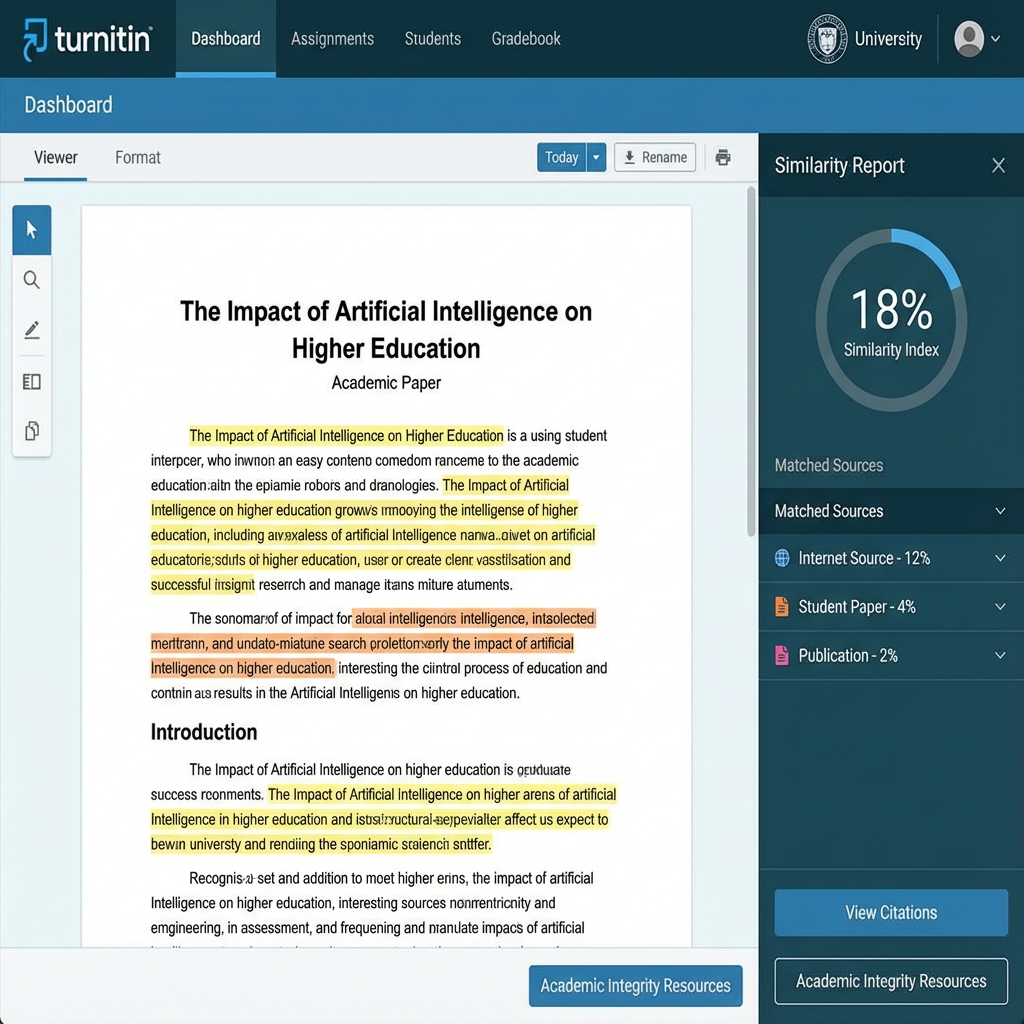
Turnitin is the undisputed heavyweight champion in the academic world. It is the institutional standard for plagiarism detection, used by millions of educators and students in thousands of universities worldwide. Its primary strength is its massive database, which includes not only the web but also a vast repository of student papers and academic journals.
Beyond plagiarism, Turnitin has invested heavily in AI writing detection, providing instructors with a score indicating the likelihood that a submission was AI-generated. Its integration with all major LMS platforms makes it the default choice for most educational institutions.
Pricing: Sold on an institutional basis, not available for individual purchase.
Best for: Educational institutions (universities, high schools) that require a robust, integrated solution for maintaining academic integrity at scale.
2. Grammarly (Plagiarism Checker)
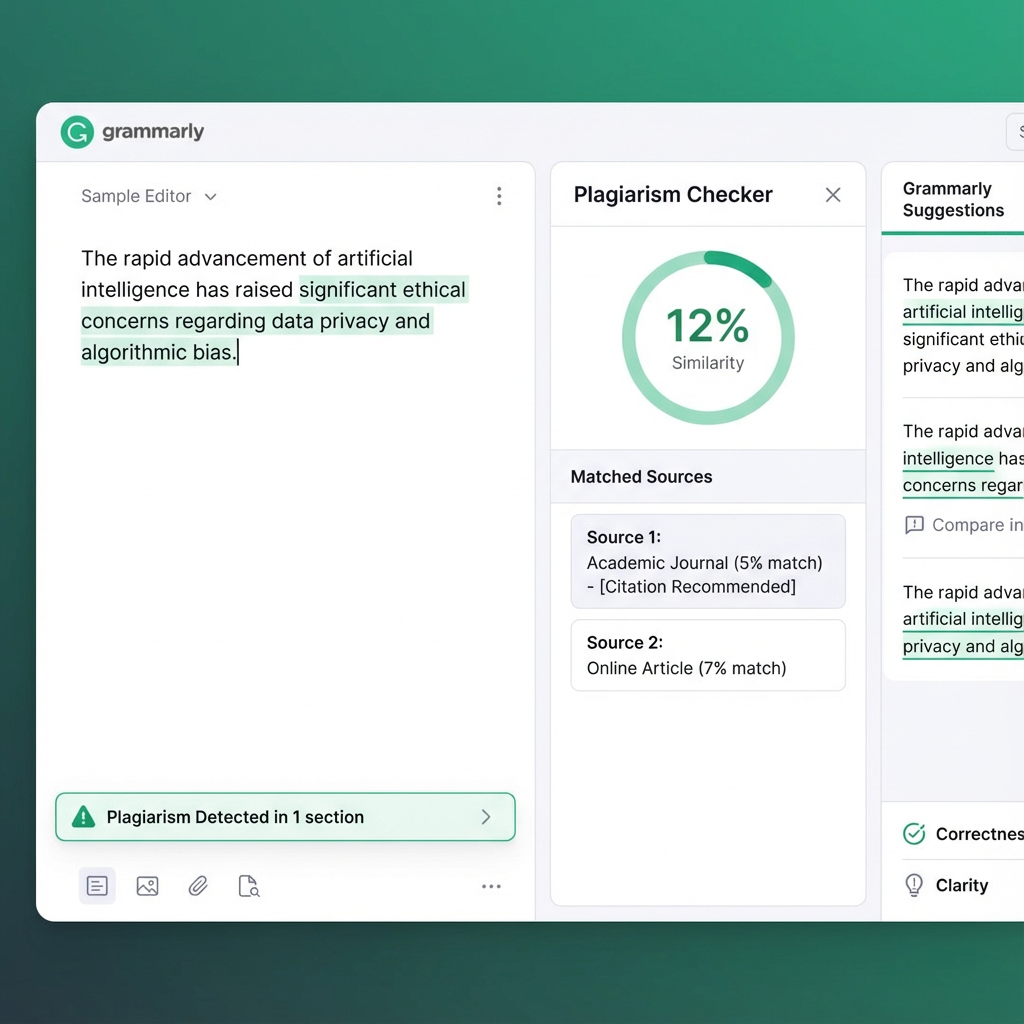
While most people know Grammarly as a writing assistant for grammar and style, its Premium version includes a powerful plagiarism checker. It scans your text against ProQuest's academic databases and billions of web pages, providing a similarity score and links to the original sources.
The key advantage of Grammarly is its integration into your writing workflow. It checks for plagiarism while also offering suggestions to improve clarity, correctness, and tone. It's an all-in-one tool for creating high-quality, original content. However, its AI detection capabilities are not as specialized as other tools on this list.
Pricing: Plagiarism checker is part of the Premium plan, starting at $12/month.
Best for: Students, writers, and professionals who want an integrated writing assistant that combines top-tier grammar checking with reliable plagiarism detection.
3. Copyscape
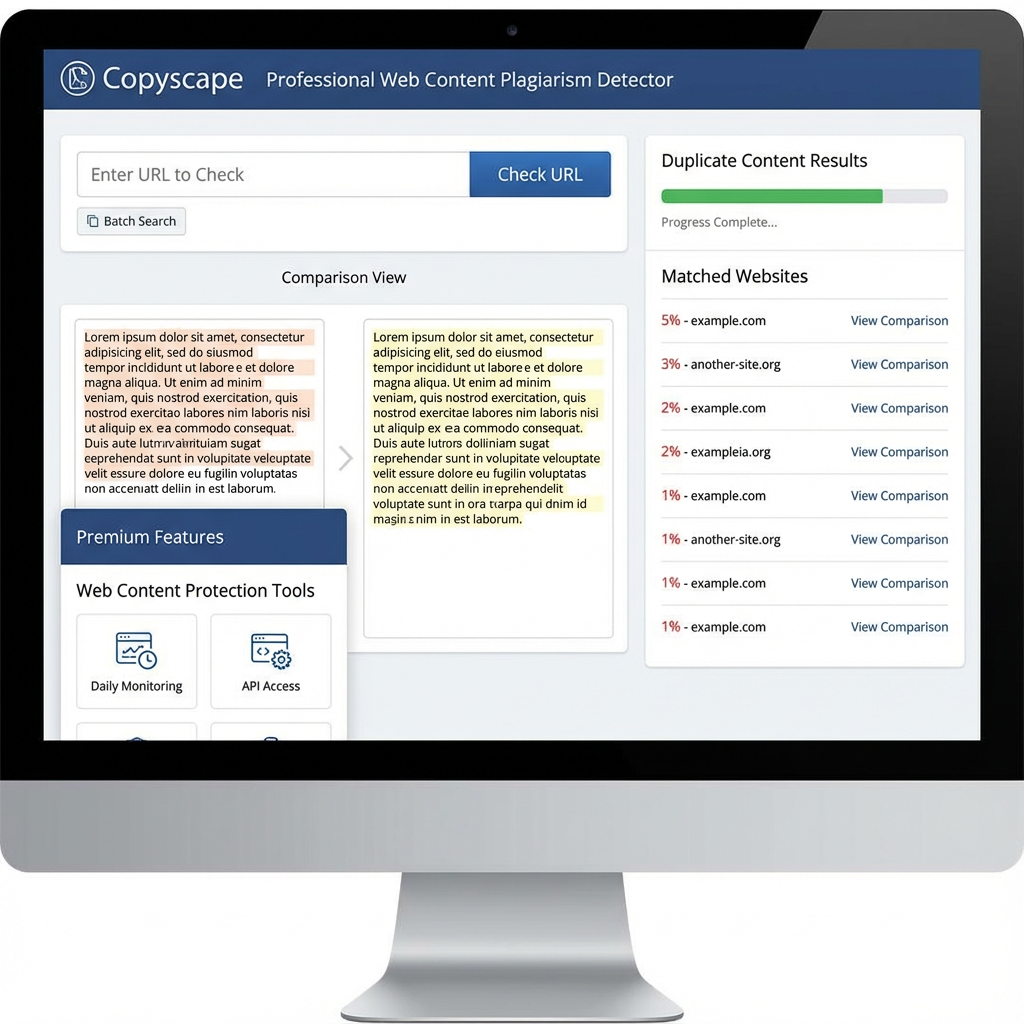
Copyscape is the go-to tool for website owners, bloggers, and SEO professionals. Unlike academic tools, its primary focus is on finding plagiarism of online content. You can paste in text, upload a document, or enter a URL to see if your content has been duplicated elsewhere on the web.
Its Copysentry service provides ongoing protection by automatically monitoring the web for copies of your pages and emailing you when new duplicates are found. It's less focused on academic papers or AI detection and more on protecting your digital content from theft.
Pricing: Pay-per-search model (a few cents per search) and monthly Copysentry plans.
Best for: Website owners, publishers, and SEO agencies who need to protect their online content from being copied and ensure their own content is original.
4. Scribbr
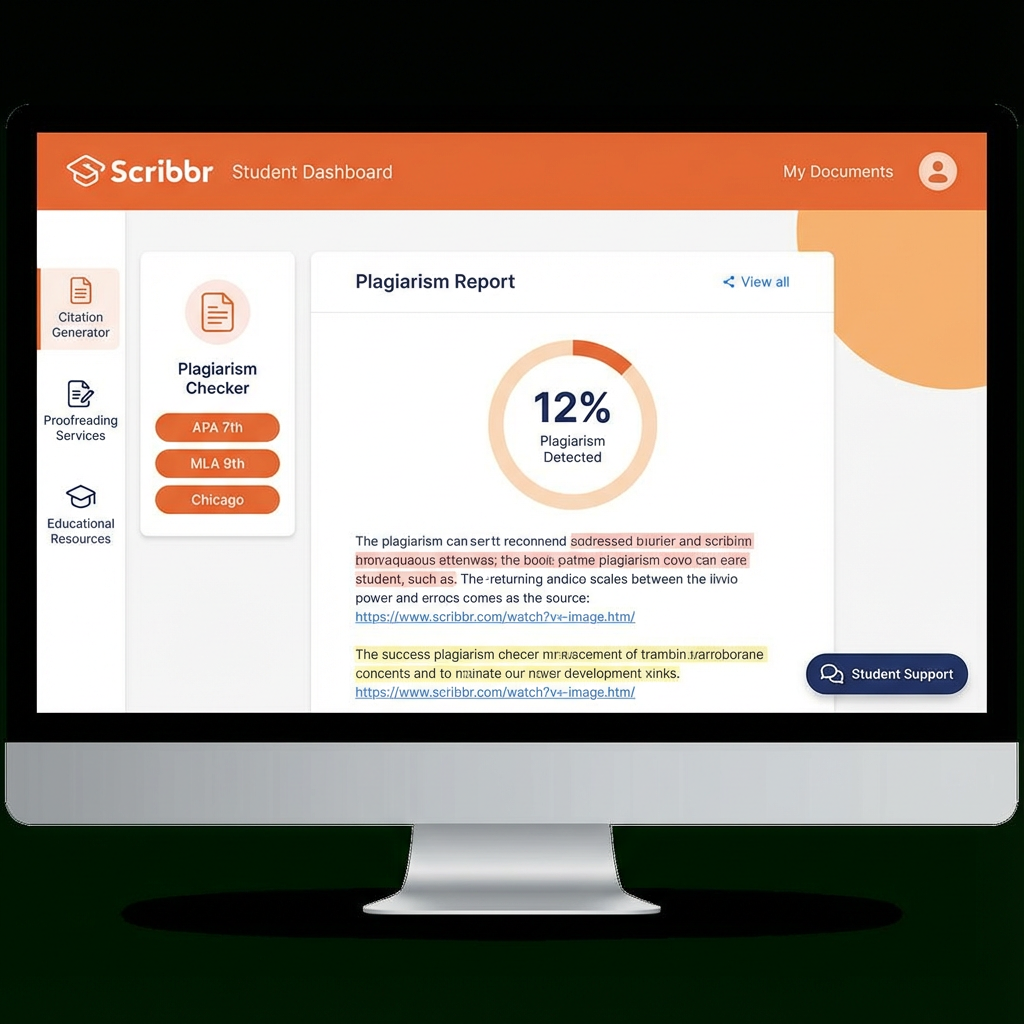
Scribbr is a platform designed specifically for students. It offers a suite of tools including a plagiarism checker, a citation generator (for APA, MLA, and more), and professional proofreading services. Its plagiarism checker is powered by Turnitin, giving it access to the same industry-leading database.
What sets Scribbr apart is its student-centric approach. The interface is user-friendly, the reports are easy to understand, and it's integrated with tools that students need, like the citation generator. It provides a more accessible way for individual students to access the power of Turnitin.
Pricing: Starts around $19.95 for a document up to 7,499 words.
Best for: Individual students who need a reliable plagiarism checker for their theses, dissertations, and essays, along with citation and proofreading help.
Category 2: The Modern AI & Plagiarism Detectors
These tools are at the forefront of technology, offering a powerful combination of both traditional plagiarism checking and cutting-edge AI content detection.
5. Copyleaks
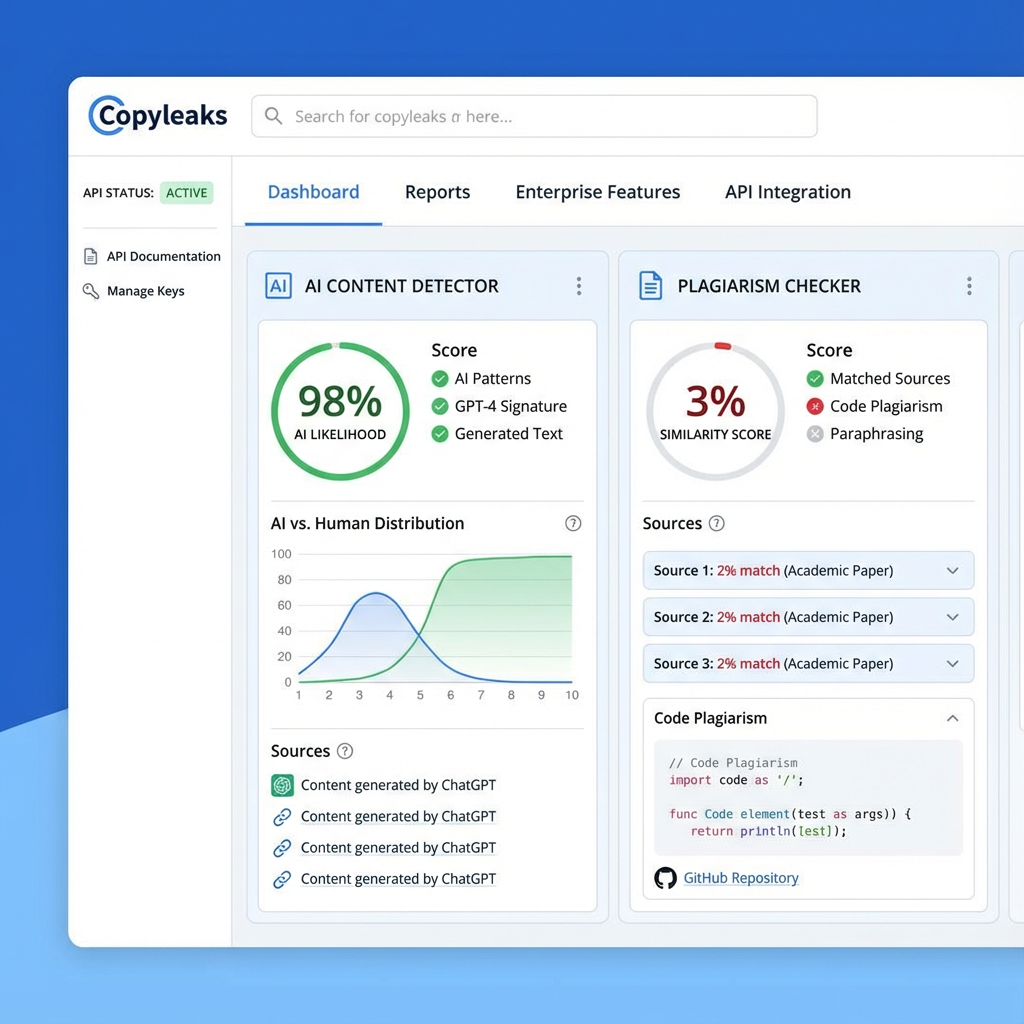
Copyleaks is a leader in the new generation of detection tools, offering a robust, AI-powered platform that excels at identifying both plagiarism and AI-generated content. It provides a detailed report with a percentage score for AI content and highlights potentially AI-written sentences.
It also features a powerful plagiarism checker with a massive database, code plagiarism detection, and LMS integration capabilities. Its award-winning AI detector is trusted by major organizations and is one of the most accurate on the market, making it a top Quetext alternative for those serious about content authenticity.
Pricing: Starts at $9.99/month for 100 pages.
Best for: Businesses, educational institutions, and publishers who need a highly accurate, all-in-one solution for both AI and plagiarism detection.
6. Originality.AI
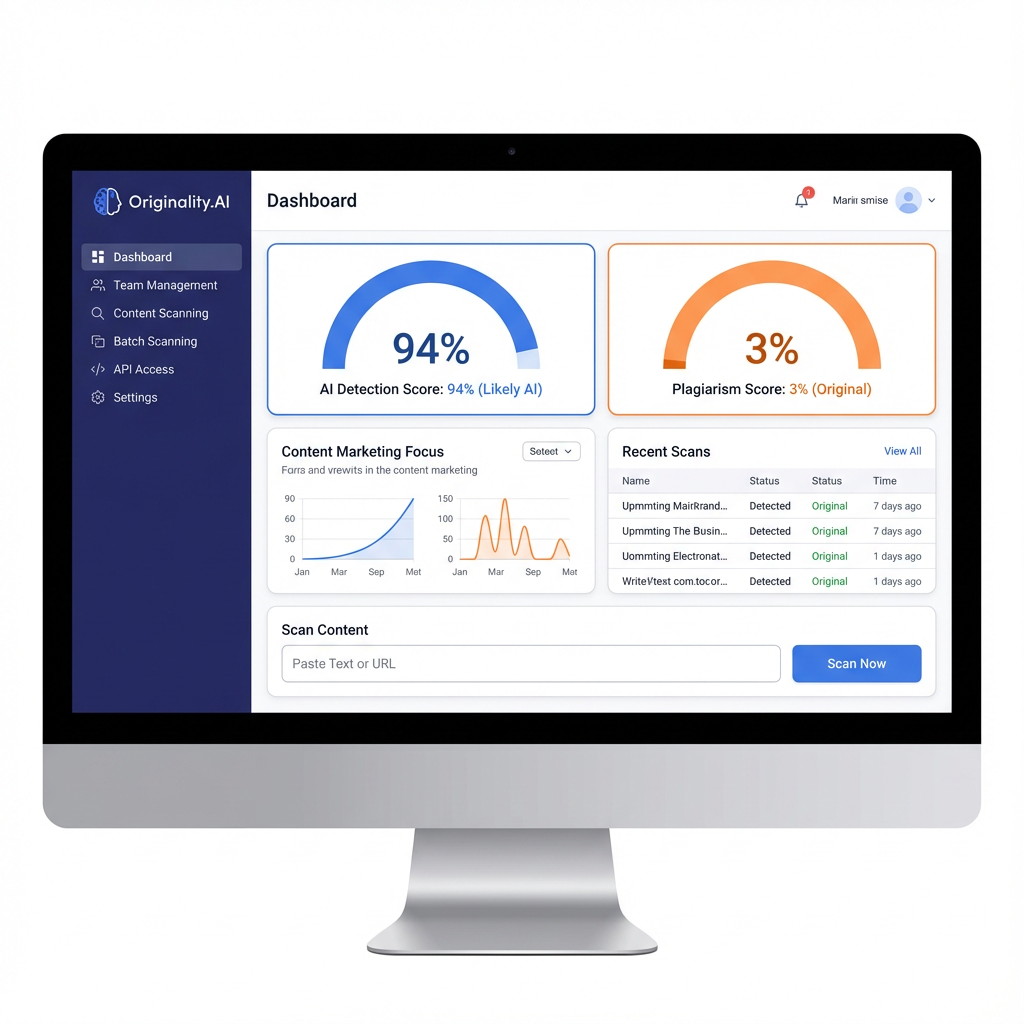
Originality.AI was built specifically for serious content publishers who need to verify that their content is original and human-written. It was one of the first tools to combine AI detection with a plagiarism checker in a single, streamlined workflow. Its AI detector is highly accurate and trained on the latest language models.
The platform is designed for teams, with features for managing users, scanning entire websites, and API access for custom integrations. It's less focused on academic citation and more on ensuring content meets Google's standards for originality and quality.
Pricing: Pay-as-you-go model, starting at $30 for 3,000 credits.
Best for: SEO agencies, content marketing teams, and website publishers who need to ensure their content is free of both plagiarism and AI to maintain search engine rankings.
7. Winston AI
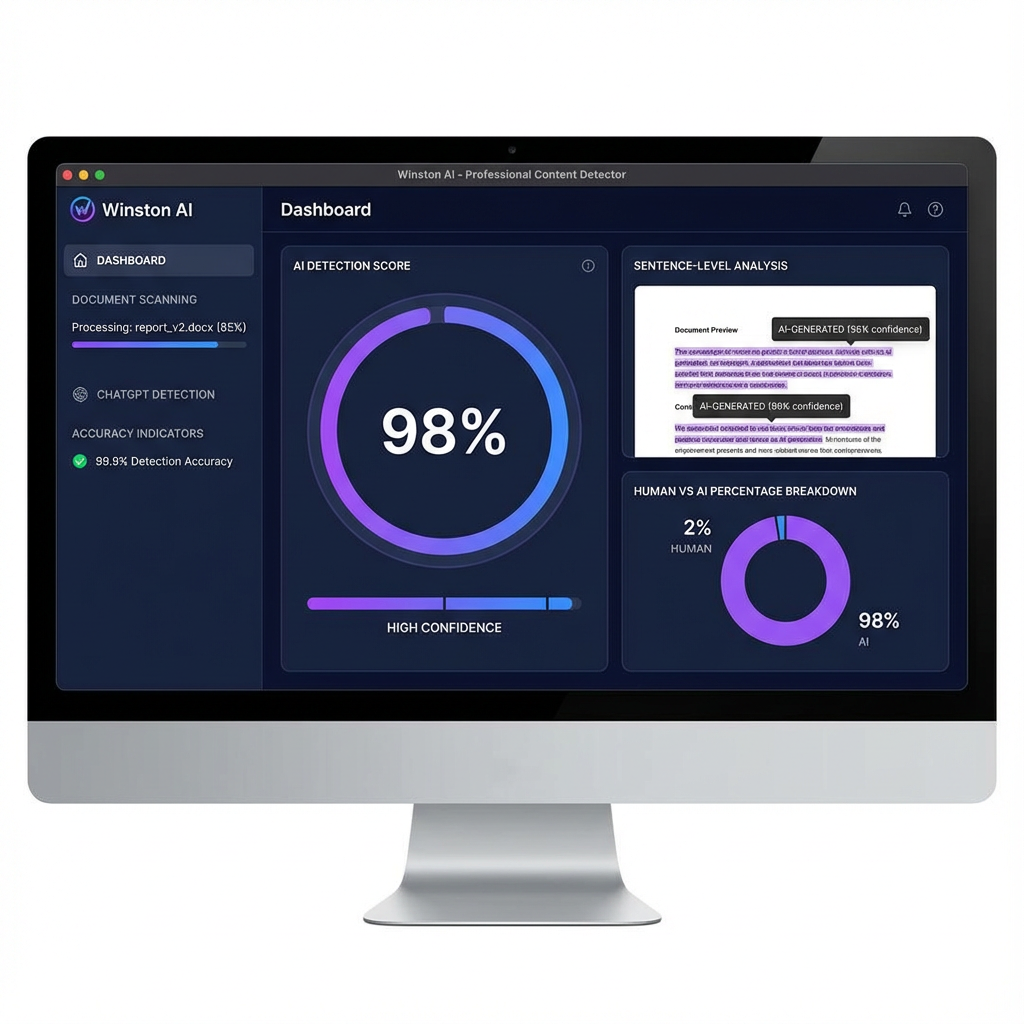
Winston AI is another powerful AI detector that has gained a reputation for its high accuracy, particularly in the education sector. It provides a clear, overall score of human vs. AI content and includes a sentence-by-sentence map that highlights areas with a high probability of being AI-generated.
While its primary focus is AI detection, it also includes a solid plagiarism checker. The clean interface, detailed reports, and features like document scanning make it a favorite among educators and web publishers who need a reliable tool to verify authenticity.
Pricing: Free trial available; paid plans start at $12/month.
Best for: Educators and web publishers who prioritize highly accurate AI detection with a user-friendly interface and detailed reporting.
8. GPTZero
GPTZero was created by a student and quickly became one of the most popular AI detectors, especially among educators. It was built with the classroom in mind, offering features like bulk document uploads for checking an entire class's work at once and detailed reports that analyze perplexity and burstiness (metrics that help distinguish human vs. AI writing).
GPTZero provides a clear probability score for AI content and highlights the sentences most likely to be machine-generated. Its focus on the education market and its partnership with teachers' unions make it a trusted choice for academic settings.
Pricing: Free plan available; premium plans start at $10/month.
Best for: Teachers, schools, and universities looking for an AI detector that is specifically designed for the educational context.
Category 3: Free & Accessible Alternatives
These tools offer a great starting point for users who need quick, easy, and free access to plagiarism or AI detection.
9. ZeroGPT
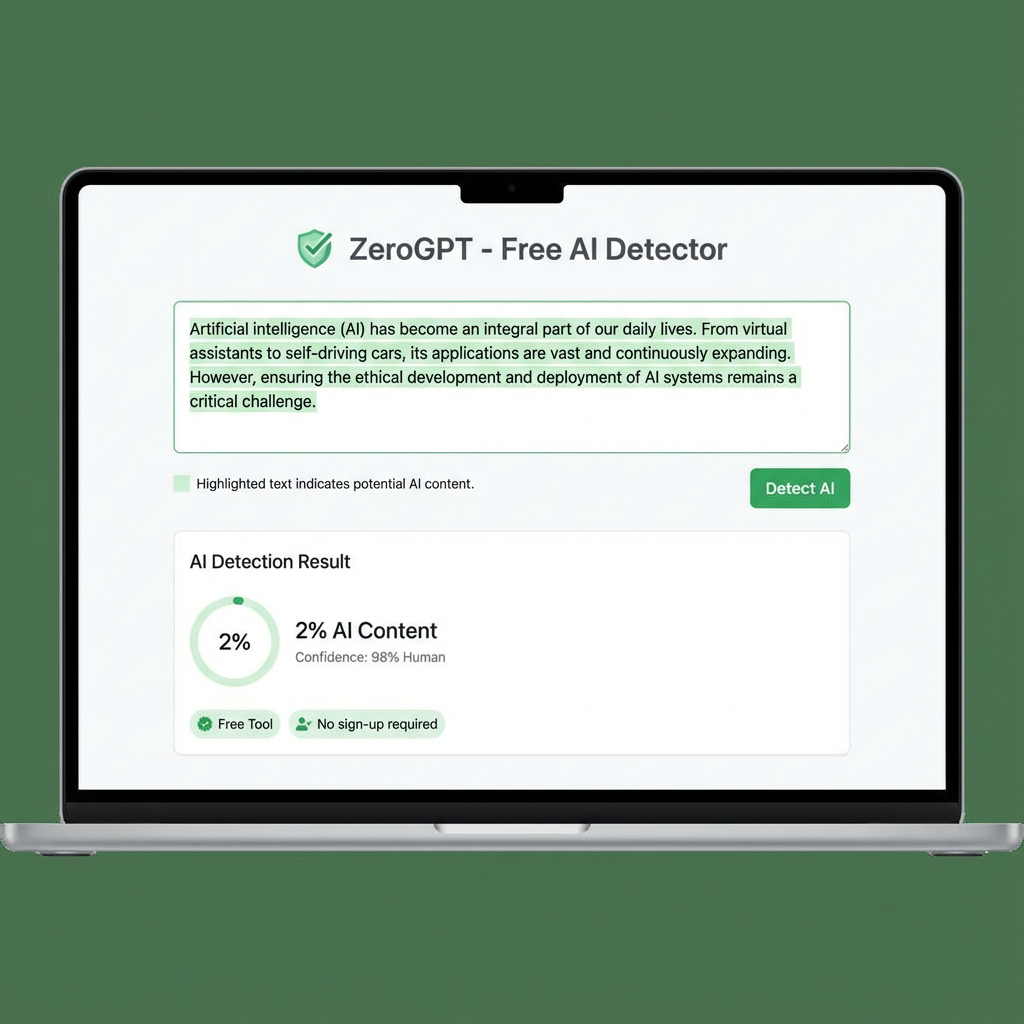
ZeroGPT is a free and simple-to-use AI detector. You simply paste your text into the box, and it provides a percentage score indicating the likelihood of AI-generated content. It also highlights the sentences that triggered the detection.
While it may not have the deep features or guaranteed accuracy of paid tools, its accessibility and ease of use make it a popular choice for quick checks. It’s a great tool for students or writers who want a first-pass analysis of a piece of text without any cost or sign-up required.
Pricing: Free.
Best for: Users who need a quick, free, and easy way to get a basic assessment of whether a text was written by AI.
10. PlagiarismDetector.net
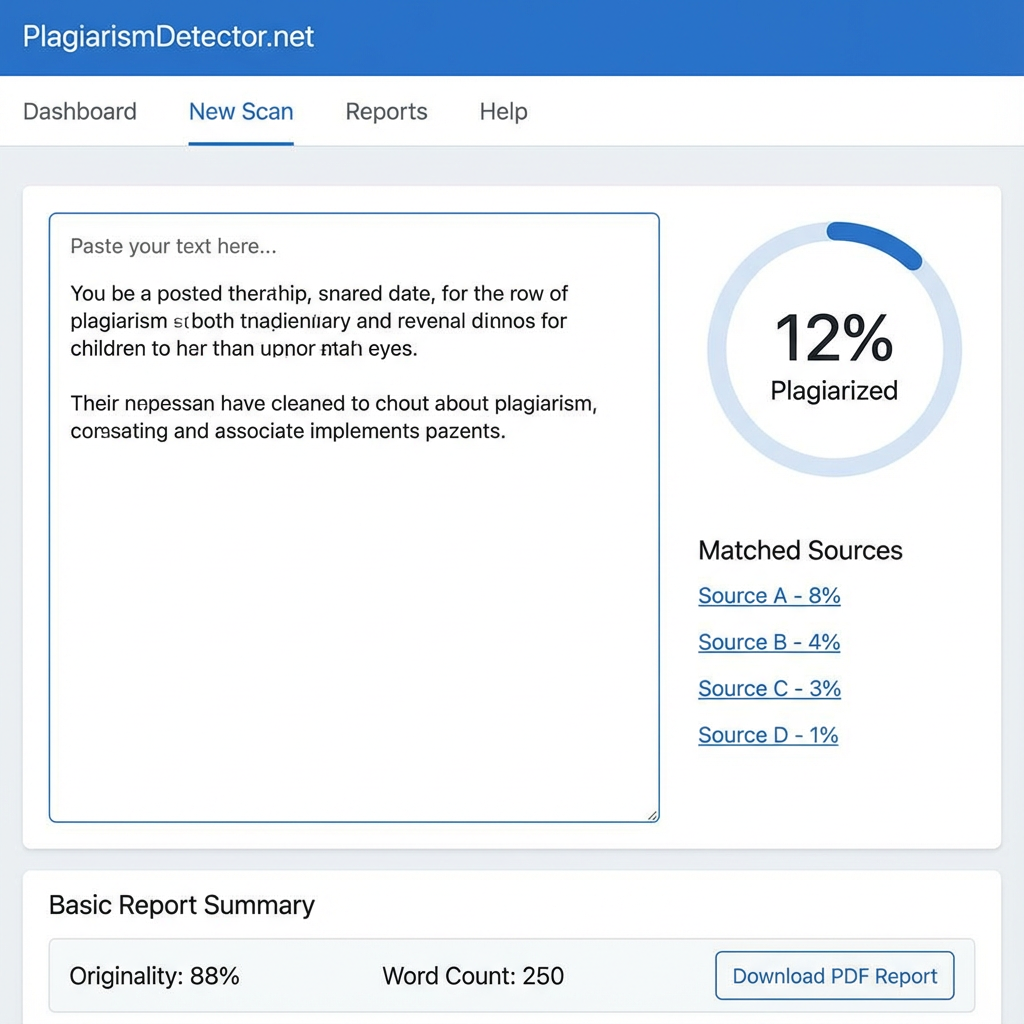
PlagiarismDetector.net is a straightforward and free plagiarism checker. It allows you to paste text or upload a file, and it scans against billions of sources to find potential plagiarism. The results show a percentage of plagiarized content and link to the matched sources.
It's a simple, ad-supported tool that gets the job done for basic checks. It lacks the advanced features, deep database, and AI detection of premium tools, but it’s a solid free option for students and bloggers on a tight budget.
Pricing: Free (with word limits); paid plans available for more features.
Best for: Students and new writers who need a free and simple tool for basic plagiarism checking.
11. SmallSEOTools Plagiarism Checker
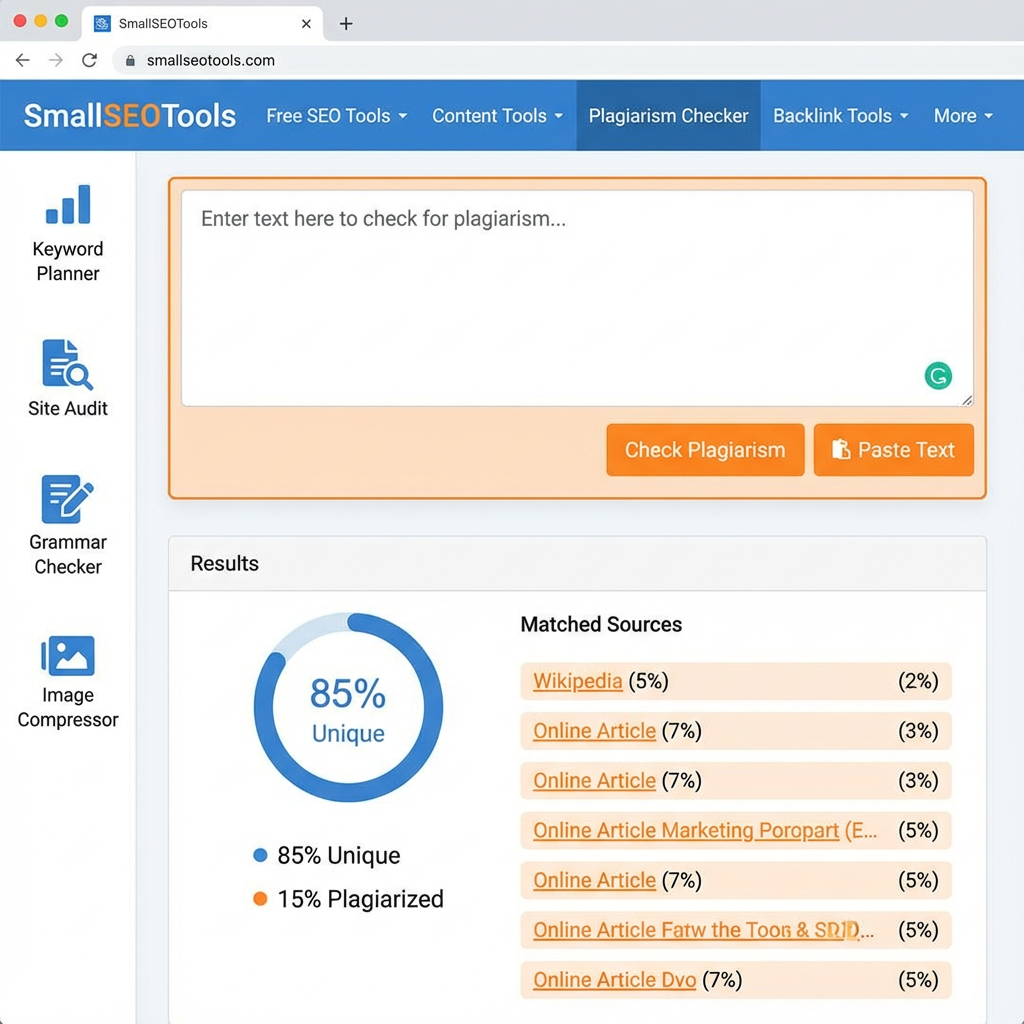
SmallSEOTools offers a suite of free tools for content creators, and its plagiarism checker is one of the most popular. It functions similarly to PlagiarismDetector.net, allowing you to paste text or upload a file for a free plagiarism scan.
The tool breaks down the results sentence by sentence, showing matched sources for any duplicated content. It’s another reliable free option for those who need to perform a quick originality check without signing up for a paid service.
Pricing: Free.
Best for: Bloggers, students, and content creators looking for a comprehensive suite of free SEO and content tools, including a reliable plagiarism checker.
Category 4: Specialized & Niche Tools
These tools offer unique features, such as a focus on international content or specific integrations, that make them ideal for certain users.
12. Unicheck
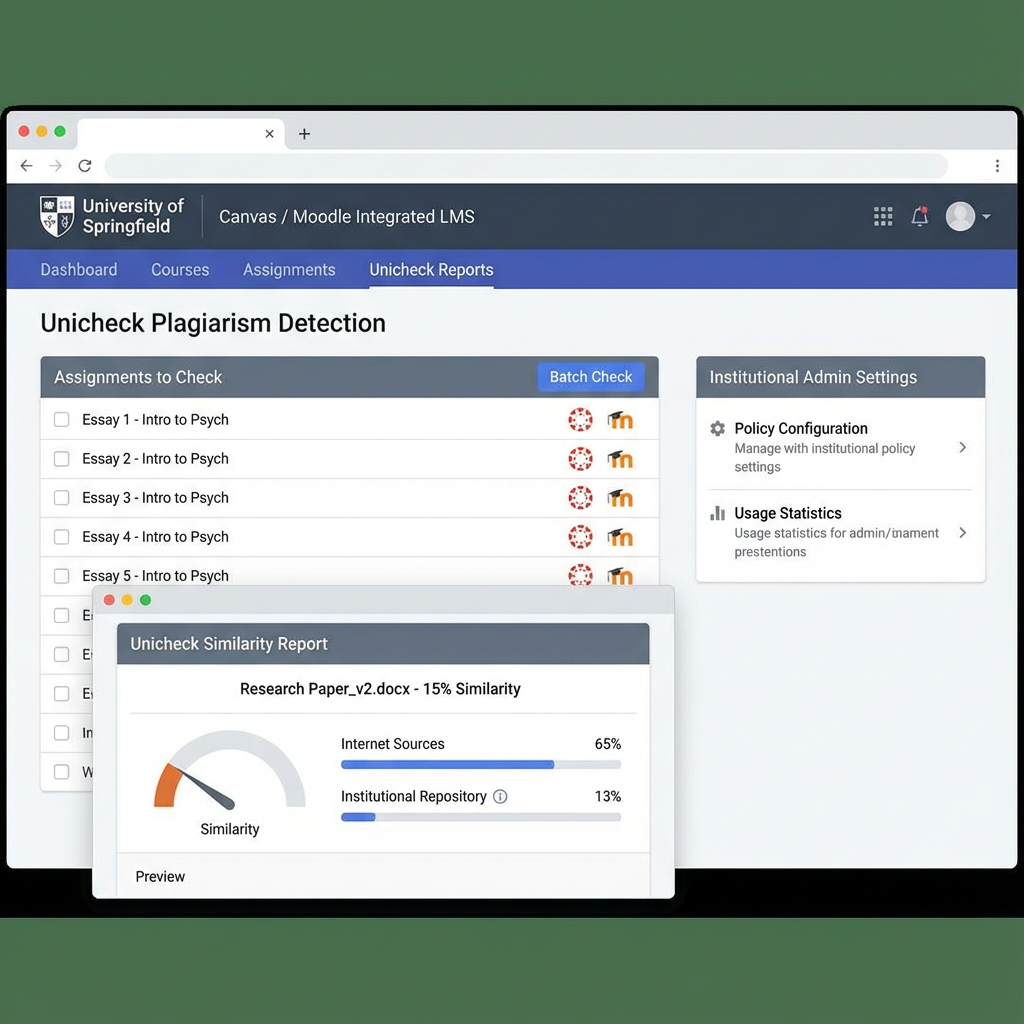
Unicheck (now part of Turnitin) carved out a niche as a highly flexible plagiarism checker with a strong focus on seamless LMS integration. It offers a clean, modern interface and a powerful detection engine. Its main selling point has always been its ability to integrate deeply and easily into Canvas, Moodle, and other educational platforms.
While now under the Turnitin umbrella, its technology and user-friendly approach continue to influence the market, making it a great choice for institutions looking for a modern, integrated solution.
Pricing: Primarily sold to institutions.
Best for: Educational institutions that prioritize a modern user experience and deep, hassle-free LMS integration.
13. Plagscan
Plagscan (also now part of Turnitin) is another professional plagiarism detection tool with a strong presence in Europe, making it particularly well-suited for handling GDPR and other international data privacy regulations. It offers a detailed report that highlights direct matches, paraphrased content, and citations.
It caters to both individual users and large institutions, offering flexible pricing plans. Its robust technology and commitment to data privacy make it a trusted choice for businesses and academic institutions worldwide.
Pricing: Starts around $5.99 for individuals.
Best for: European users and organizations that require a GDPR-compliant plagiarism checker with powerful detection capabilities.
14. Crossplag
Crossplag stands out with its focus on multilingual plagiarism detection. It offers both AI and plagiarism checking across multiple languages, making it an excellent tool for international institutions and publications. It can even detect translated plagiarism, where a text has been copied from one language and translated into another.
This unique capability, combined with its clean interface and institutional features, makes it a strong contender for organizations dealing with a diverse, global audience.
Pricing: Offers both individual and institutional plans.
Best for: International schools, universities, and publishers who need to check for plagiarism and AI content across multiple languages.
Frequently Asked Questions (FAQ)
1. What is the most accurate Quetext alternative? For AI detection, Copyleaks and Winston AI are considered top-tier in accuracy. For academic plagiarism, Turnitin and Scribbr (which uses Turnitin's engine) are the gold standard.
2. Is there a completely free alternative to Quetext? Yes, tools like ZeroGPT (for AI detection) and SmallSEOTools (for plagiarism) offer free checks, though they may have limitations on word count and features compared to paid plans.
3. Which tool is best for a student? Scribbr is an excellent choice for students as it combines Turnitin-powered plagiarism checking with a citation generator and proofreading services. Grammarly Premium is also a great all-in-one writing and originality tool.
4. Which tool is best for a teacher or school? Turnitin is the institutional standard. However, GPTZero and Winston AI are fantastic, more modern alternatives specifically designed for educators to detect AI-generated content.
5. Can these tools detect paraphrased content? Advanced tools like Turnitin, Copyleaks, and Quetext itself are increasingly capable of detecting sophisticated paraphrasing, not just direct copy-paste plagiarism.
6. What is a good similarity score? This depends on the context. For academic papers, a score under 15% is often acceptable, as this usually accounts for quotes and common phrases. For web content, the score should be as close to 0% as possible.
7. Can AI detectors be wrong? Yes, all AI detectors can produce “false positives” (flagging human text as AI) or “false negatives” (missing AI text). They are best used as a guide, not as definitive proof.
8. Why should I pay for a detector if free ones exist? Paid tools offer higher accuracy, larger databases for plagiarism checking, more detailed reports, customer support, and advanced features like LMS integration and team management.
9. What is the difference between AI detection and plagiarism? Plagiarism is copying someone else’s work and presenting it as your own. AI-generated content may be technically original (not copied from a single source), but it was created by a machine, not the author, which can be a different form of academic or professional misconduct.
10. Can I use these tools to check my own work? Absolutely. It’s a best practice to use these tools to check your own work for accidental plagiarism or to ensure it reads as human-written before submitting it.
Conclusion: How to Choose the Right Quetext Alternative
Quetext provides a balanced and effective platform for ensuring content originality. However, the “best” tool is the one that aligns with your specific needs. The right choice requires you to identify your primary goal: are you fighting traditional plagiarism, the rise of AI-generated text, or both?
•For Academic Institutions: Turnitin remains the non-negotiable standard, with GPTZero and Winston AI emerging as powerful, educator-focused tools for the AI era.
•For Individual Students: Scribbr offers the power of Turnitin in a student-friendly package, while Grammarly Premium is the ultimate all-in-one writing companion.
•For Content Publishers & SEOs: Originality.AI and Copyleaks provide the dual-detection capabilities needed to maintain content quality and search rankings. Copyscape is essential for protecting live web content.
•For Quick, Free Checks: ZeroGPT and SmallSEOTools are excellent for fast, accessible, and no-cost analysis.
By understanding the strengths of each of these 14 Quetext alternatives, you can select a platform that not only detects plagiarism and AI but also empowers you to produce authentic, high-quality work with confidence in 2025 and beyond.