DALL-E 3 vs Bing Image Creator: The Ultimate AI Image Generator Showdown
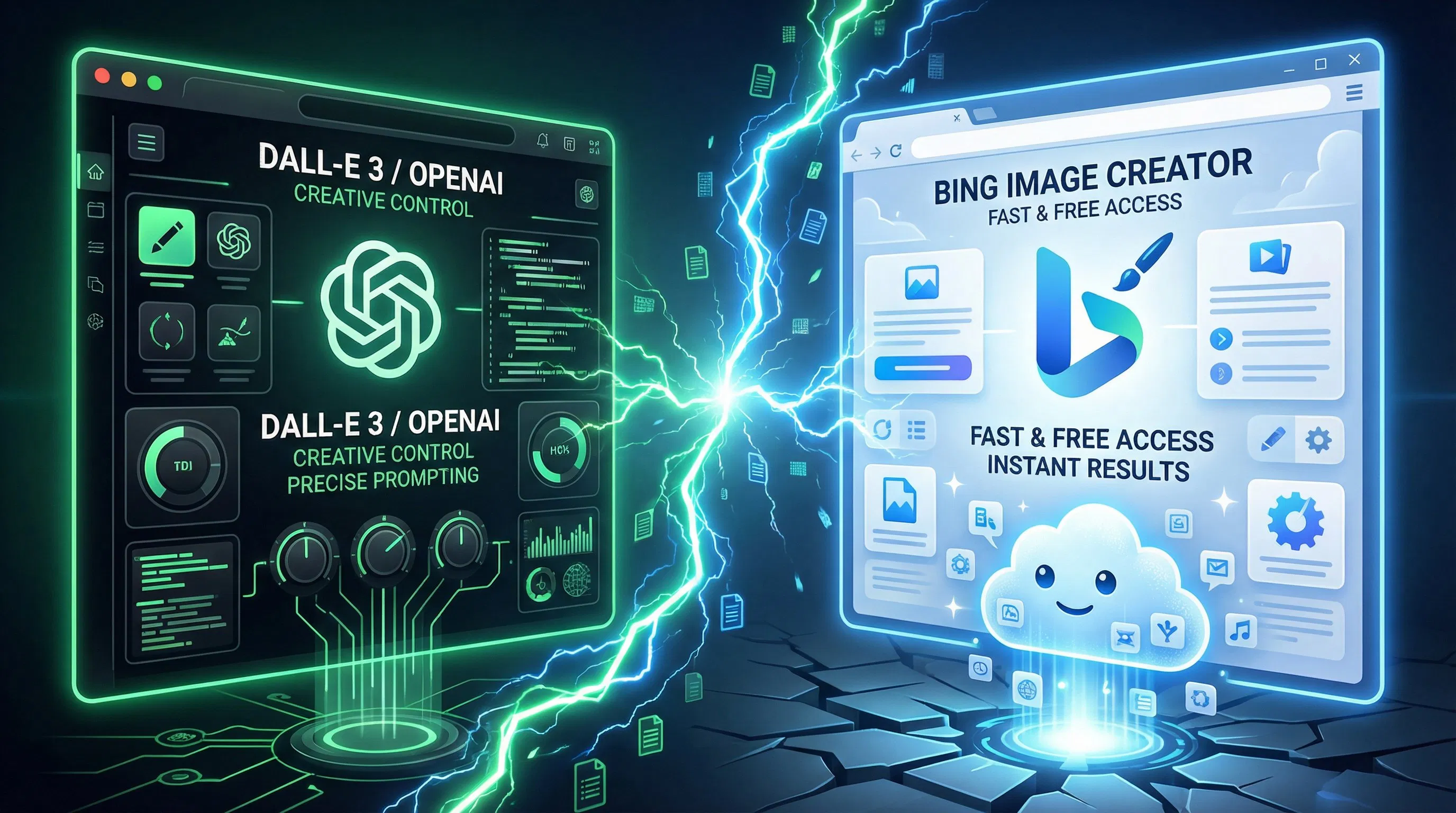
The introduction of DALL-E 3 marked a significant leap forward in the world of generative AI, offering unprecedented prompt adherence and image quality. However, the technology is not accessed through a single portal. Instead, users can interact with DALL-E 3 through two primary, yet distinct, interfaces: the premium, feature-rich environment of ChatGPT (or the OpenAI API) and the free, widely accessible Bing Image Creator (now often integrated into Microsoft Copilot).
While both platforms leverage the same core DALL-E 3 model, the user experience, creative control, output resolution, and underlying cost structures are vastly different. This comprehensive analysis dives deep into the DALL-E 3 vs Bing Image Creator debate, dissecting the nuances that determine which platform is the superior choice for your specific creative or commercial needs.
1. Core Technology and Prompt Refinement: The Hidden Hand of ChatGPT
The most critical difference between the two platforms lies not in the base model, but in the pre-processing layer—specifically, how the user's initial prompt is handled before it is sent to the DALL-E 3 engine.
ChatGPT/OpenAI: The Intelligent Prompt Refiner
When a user submits a prompt through ChatGPT, the large language model (LLM) acts as an intelligent intermediary. It automatically expands, refines, and structures the user's input into a highly detailed, optimized prompt that is then fed to DALL-E 3. This process is often invisible to the user but is the key reason why the results are frequently described as "much nicer" or more accurate . The LLM's role extends beyond simple rephrasing; it acts as a sophisticated prompt engineer. For instance, if a user requests "a cat wearing a hat," the LLM might expand this to include details like "a photorealistic Siamese cat, wearing a small, ornate, red velvet hat, sitting on a wooden table, studio lighting, 8k, highly detailed." This automatic enrichment is critical for achieving the high-fidelity, detailed results DALL-E 3 is known for. Furthermore, the LLM is adept at handling complex constraints, such as ensuring specific objects are included or excluded (acting as an implicit negative prompt), and translating abstract artistic styles into concrete visual parameters that the diffusion model can interpret. This level of automated, intelligent pre-processing is the primary source of the perceived quality gap between the two interfaces.
•LLM Refinement: ChatGPT’s ability to interpret complex, conversational, or vague requests and translate them into precise, technical DALL-E 3 instructions is unparalleled. This ensures the final image aligns closely with the user's intent, even if the initial prompt was simple.
•Iterative Dialogue: The chat interface allows for a natural, back-and-forth refinement process. Users can request small, specific changes to the generated image, and the LLM maintains context, leading to superior iterative control.
•Prompt Transparency: ChatGPT often displays the final, refined prompt it used to generate the image, which is a valuable learning tool for users to understand how to better structure their own requests.
Bing Image Creator: Direct and Streamlined Access
Bing Image Creator offers a more direct, streamlined path to DALL-E 3. The user's prompt is sent with minimal or no LLM refinement. This simplicity is a double-edged sword: it is faster and more straightforward, but it places the entire burden of prompt engineering on the user.
•Raw Input: The model relies heavily on the user's exact wording. If the prompt is vague or lacks necessary detail, the resulting image may be less refined or miss subtle instructions. The Bing interface essentially bypasses the sophisticated prompt engineering layer of the LLM, sending a more direct, raw query to the DALL-E 3 model. While this is faster, it means the user must be a skilled prompt engineer themselves to achieve results comparable to those from ChatGPT. The system does not automatically inject the necessary stylistic or technical keywords (like "cinematic lighting," "octane render," or "unreal engine") that often elevate AI-generated art. This reliance on raw input makes Bing a purer, but less forgiving, interface for the DALL-E 3 model.
•Speed over Precision: The lack of a complex LLM pre-processing step contributes to Bing's speed and free access, but it can lead to a slight degradation in the model's ability to perfectly adhere to highly complex or nuanced requests.
•Censorship and Guardrails: Bing's interface, being a public-facing Microsoft product, often employs stricter content filters and guardrails than the paid ChatGPT interface, which can sometimes interfere with creative freedom.
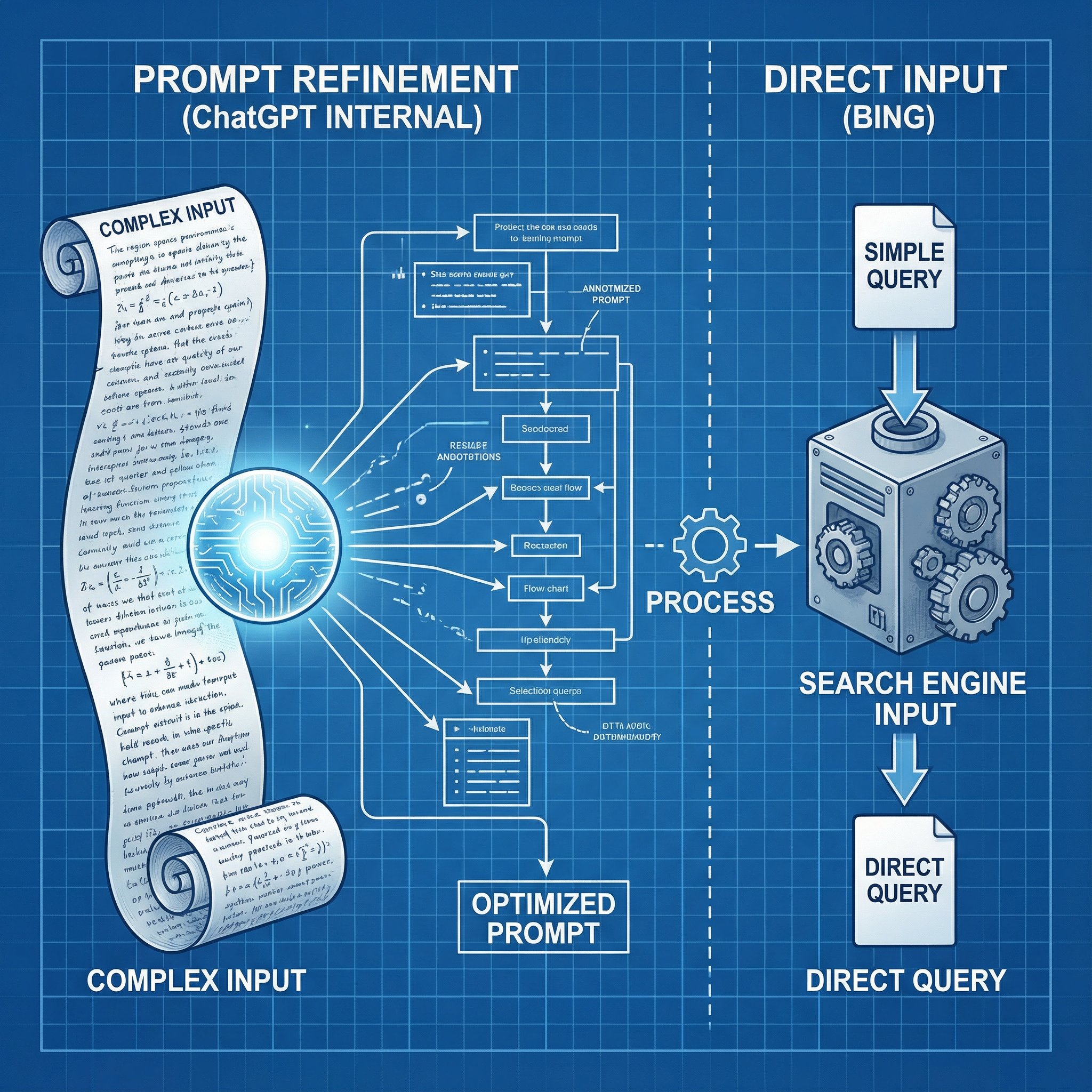
A visual representation of prompt refinement. On the left, a complex scroll of text being automatically polished and expanded by a small, glowing AI orb (ChatGPT's internal refinement). On the right, a simple, short piece of text being fed directly into a machine without alteration (Bing's direct input).
2. Creative Control and Output Flexibility: Aspect Ratios and Resolution
The level of creative control offered by each platform is a major differentiator, particularly concerning the final image's size and aspect ratio.
ChatGPT/OpenAI: Full Control Over Canvas
The paid DALL-E 3 experience via ChatGPT or the OpenAI API offers significantly more control over the output canvas, which is crucial for professional applications.
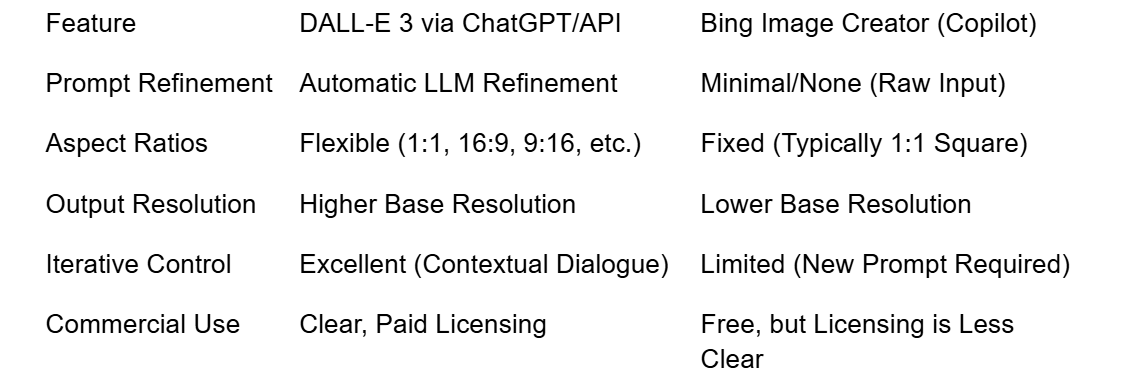
•Flexible Aspect Ratios: Users can choose from multiple aspect ratios, including 1:1 (square), 16:9 (landscape), 9:16 (portrait), 4:3, and others. This flexibility is essential for creating content tailored for different platforms (e.g., website banners, social media stories, print layouts).
•Higher Base Resolution: While the exact pixel count can vary, the images generated through the paid API or ChatGPT often have a higher base resolution and better quality for upscaling, making them more suitable for high-resolution printing or large digital displays.
•Advanced Features: The API access allows for advanced features like inpainting, outpainting, and custom fine-tuning, which are unavailable in the free Bing Image Creator.
Bing Image Creator: Fixed and Fast
Bing Image Creator prioritizes simplicity and speed, which means sacrificing output flexibility.
•Fixed Aspect Ratio: Bing Image Creator typically limits users to a single, fixed aspect ratio, usually 1:1 (square). This is convenient for quick social media posts but severely limits its utility for professional design work requiring specific dimensions.
•Lower Resolution: The output resolution is generally lower than the paid DALL-E 3 access, and while sufficient for web use, it may not hold up well under significant upscaling or for high-quality print media.
•Limited Editing: Bing is purely a generation tool. It lacks the advanced editing and manipulation features available through the OpenAI ecosystem.
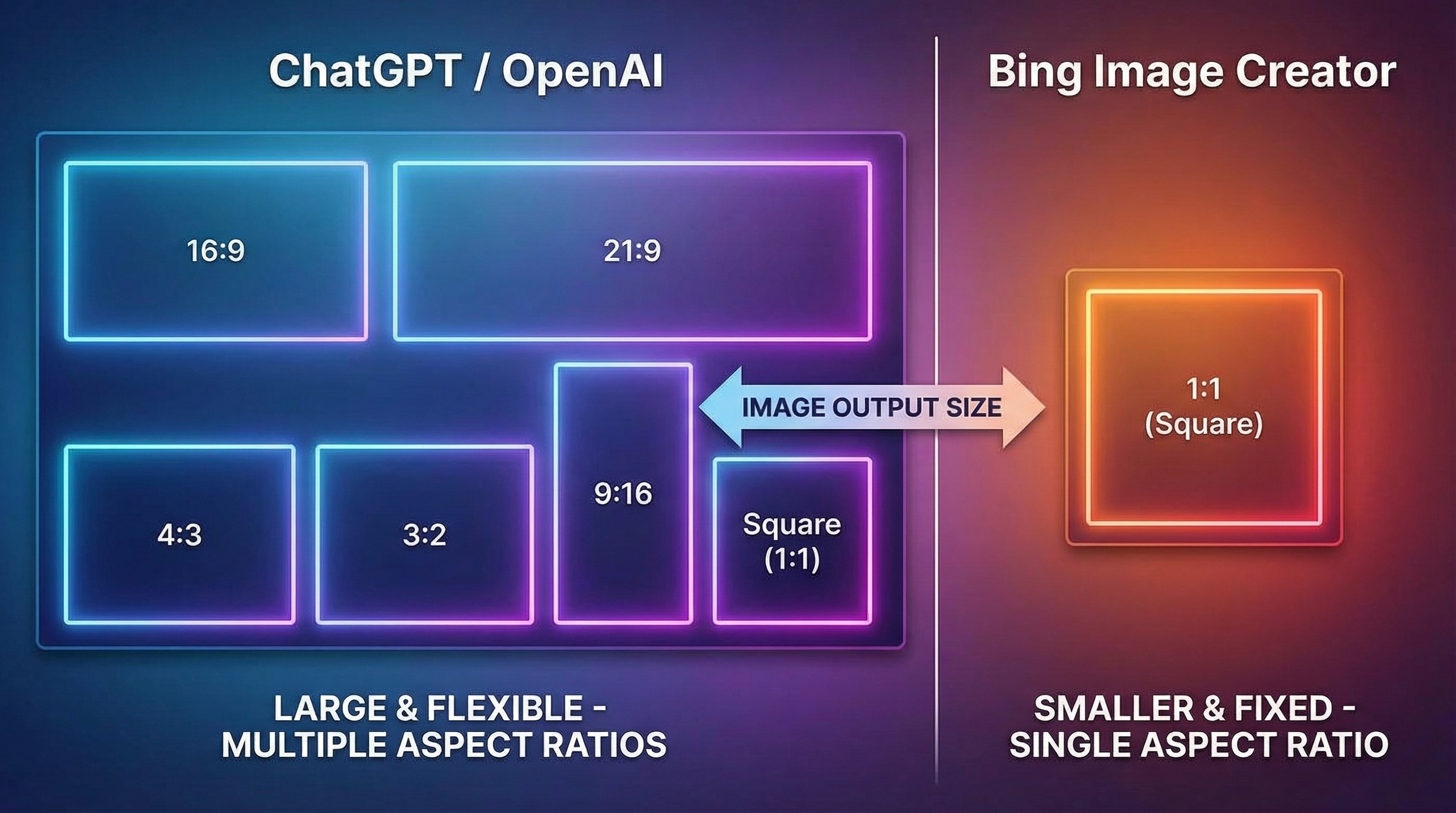
A side-by-side comparison of image output sizes. On the left, a large, wide canvas with multiple aspect ratio options (ChatGPT/OpenAI). On the right, a smaller, fixed-size square canvas (Bing Image Creator).
3. Accessibility and Integration: Ecosystem Lock-in
The third major point in the DALL-E 3 vs Bing Image Creator comparison is how each tool is integrated into its respective ecosystem.
ChatGPT/OpenAI: The Integrated Creative Suite
Accessing DALL-E 3 through ChatGPT or the OpenAI API places the tool within a powerful, integrated ecosystem designed for creators and developers.
•Seamless Workflow: For users already paying for ChatGPT Plus, the integration is seamless. The image generation is part of a larger, multi-modal conversation that can include code generation, data analysis, and text creation.
•API Access: Developers can access DALL-E 3 directly via the OpenAI API, allowing them to integrate the model into custom applications, websites, and commercial software. This is the ultimate form of integration and control.
•Future-Proofing: OpenAI's ecosystem is the primary hub for their latest models, meaning new features and model updates often roll out here first before being adapted for other platforms.
Bing Image Creator: The Free Gateway
Bing Image Creator is Microsoft's strategic move to integrate powerful AI into its search and productivity tools, offering a free gateway to DALL-E 3.
•Free Access: The most compelling feature is the cost. Bing Image Creator is free to use, operating on a system of "boosts" that prioritize generation speed.
•Copilot Integration: The tool is deeply integrated into Microsoft's Copilot, allowing users to generate images directly within the Bing search engine, Edge browser, and other Microsoft products.
•Ease of Use: The simple, dedicated web interface makes it incredibly easy for anyone to start generating images without needing a subscription or technical knowledge.
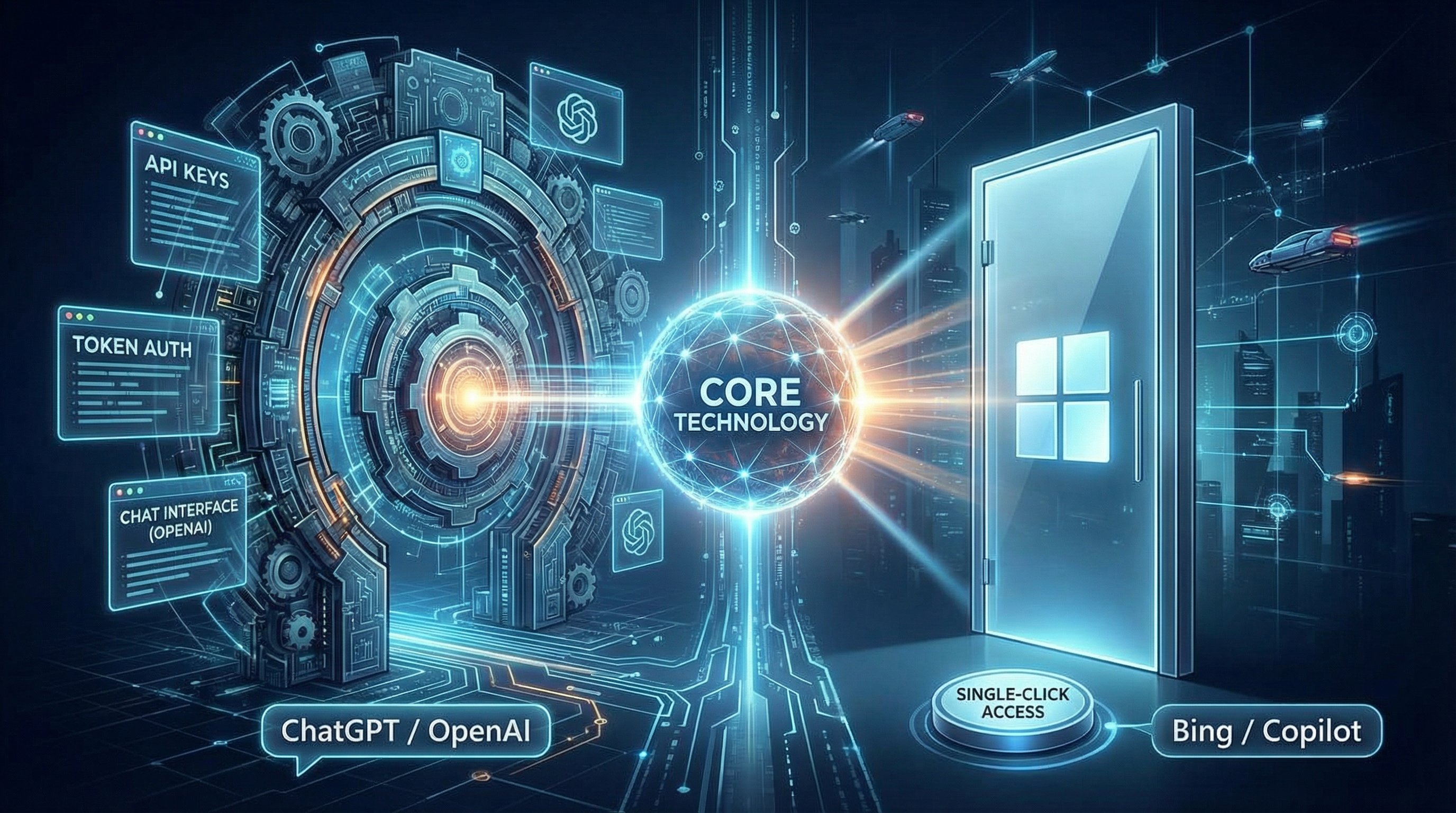
A visual metaphor showing two different access points to the same core technology. On the left, a complex, multi-layered gateway with API keys and a chat interface (ChatGPT/OpenAI). On the right, a simple, single-click door with a Microsoft logo (Bing/Copilot).
4. Cost and Commercial Viability: Free vs. Paid Precision
The cost structure is the most straightforward, yet most impactful, difference when evaluating DALL-E 3 vs Bing Image Creator. This financial divergence reflects the core business models of OpenAI and Microsoft, and it has profound implications for commercial users.
ChatGPT/OpenAI: Paid Precision
Access to DALL-E 3 via ChatGPT Plus requires a monthly subscription, and API access is billed per image generated.
•Subscription Model: The monthly fee for ChatGPT Plus grants access to DALL-E 3, along with GPT-4, Code Interpreter, and other advanced features. This cost is justified by the superior quality, control, and prompt refinement.
•Commercial Licensing: Images generated through the paid API or ChatGPT Plus are generally covered by clear commercial rights, making them safe for use in monetized projects, advertising, and product design.
•Value Proposition: The cost is an investment in reliability, quality, and the advanced features that save time and ensure professional-grade output.
Bing Image Creator: Free and Fast
Bing Image Creator is free, making it the ultimate tool for casual users, students, and those experimenting with AI art. This free access is powered by Microsoft's desire to drive engagement to its Copilot and Edge platforms. The free nature, however, comes with a specific operational constraint: the "boosts" system.
•Free Boosts: Users receive a set number of "boosts" daily, which allow for fast, priority generation. Once these "boosts" are depleted, generation is still free but the process is significantly slower, often taking several minutes or more. This mechanism effectively throttles high-volume free users, encouraging them to use the service judiciously or consider a paid option for consistent speed. The free access is a massive benefit for hobbyists, but the speed variability makes it unreliable for time-sensitive commercial projects.
•Cost-Effective Prototyping: For users who need to generate a high volume of images for personal use or rapid prototyping, the free model is unbeatable.
•Licensing Ambiguity: While Microsoft generally allows commercial use of images created with Bing Image Creator, the terms can be less explicit and are subject to change, making it a riskier choice for large-scale commercial ventures compared to the paid OpenAI tiers. In contrast, the paid DALL-E 3 access via ChatGPT Plus or the API grants users unrestricted commercial rights to the images they create, provided they comply with the content policy. This clear, iron-clad licensing is a non-negotiable requirement for businesses, advertising agencies, and professional artists who need legal certainty when monetizing their creations. The cost of the subscription is essentially the price of this legal assurance and the superior quality control.
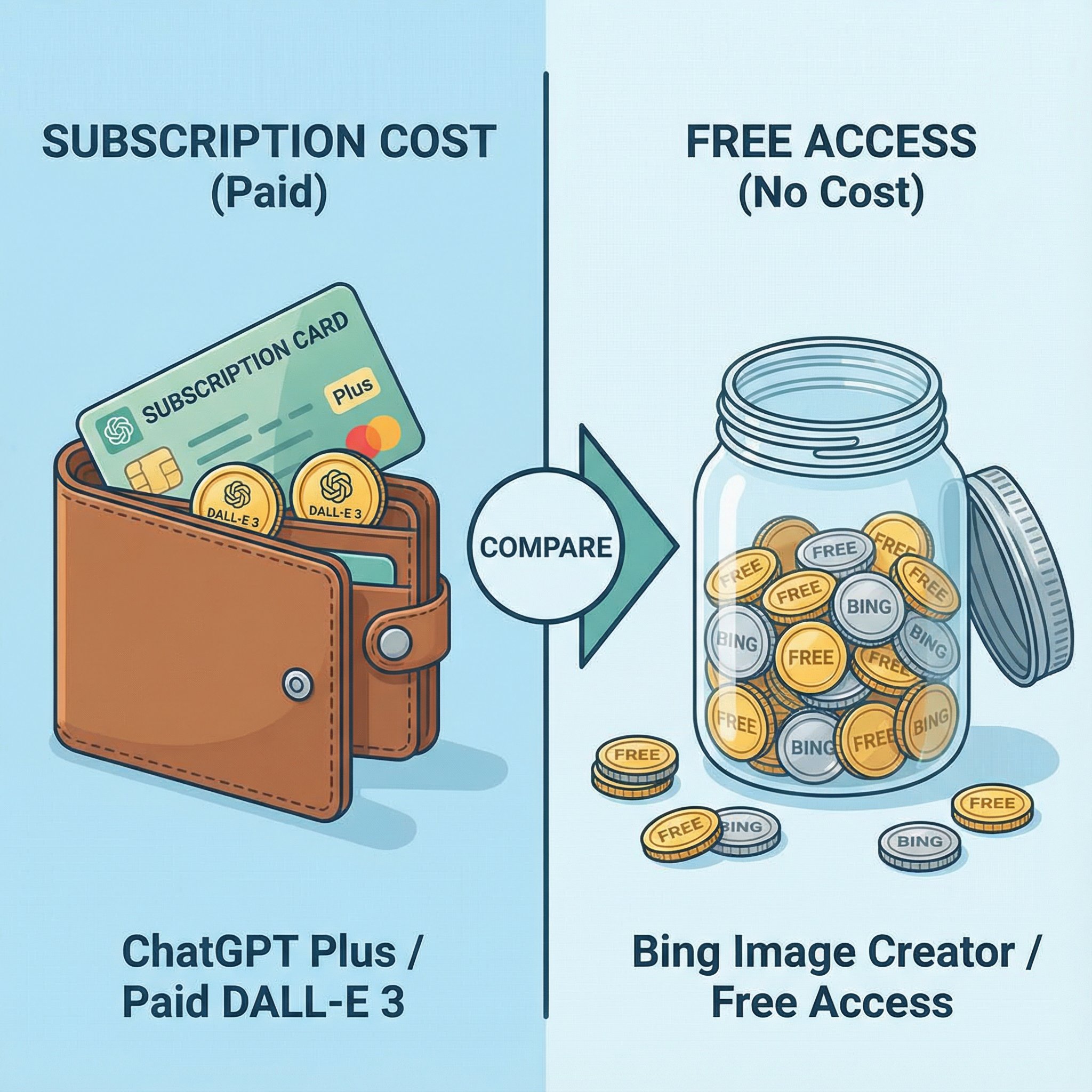
A visual comparison of cost. On the left, a wallet with a subscription card and a few tokens (ChatGPT Plus/Paid DALL-E 3). On the right, a completely free, open coin jar overflowing with coins (Bing Image Creator/Free Access).
5. The Output Quality Paradox: Why DALL-E 3 vs Bing Image Creator Results Differ
Despite using the same core model, the perceived difference in image quality is a constant source of debate. The key lies in the LLM refinement and the model versioning.
The LLM Advantage
As highlighted in the research , the LLM's ability to "coach" the DALL-E 3 model is the primary driver of the quality difference. The LLM ensures that the prompt is not only detailed but also adheres to the model's optimal input structure, resulting in images that are more aesthetically pleasing and technically sound.
Model Versioning and Latency
While both use DALL-E 3, there can be slight differences in the specific model version deployed, the computational resources allocated, and the latency. The paid ChatGPT service often has access to the most up-to-date model versions and dedicated, high-priority processing power, which can translate to marginal but noticeable improvements in detail and rendering speed.
The Text Rendering Test
DALL-E 3 is famous for its ability to render legible text within images, a feature that previous models struggled with.
•ChatGPT/API: Due to the LLM's precise prompt construction, text rendering is highly reliable and accurate, even with complex or stylized fonts.
•Bing Image Creator: While still excellent, text rendering can occasionally be less reliable than the ChatGPT version, sometimes resulting in minor spelling errors or garbled characters, reinforcing the idea that the prompt refinement layer is crucial.
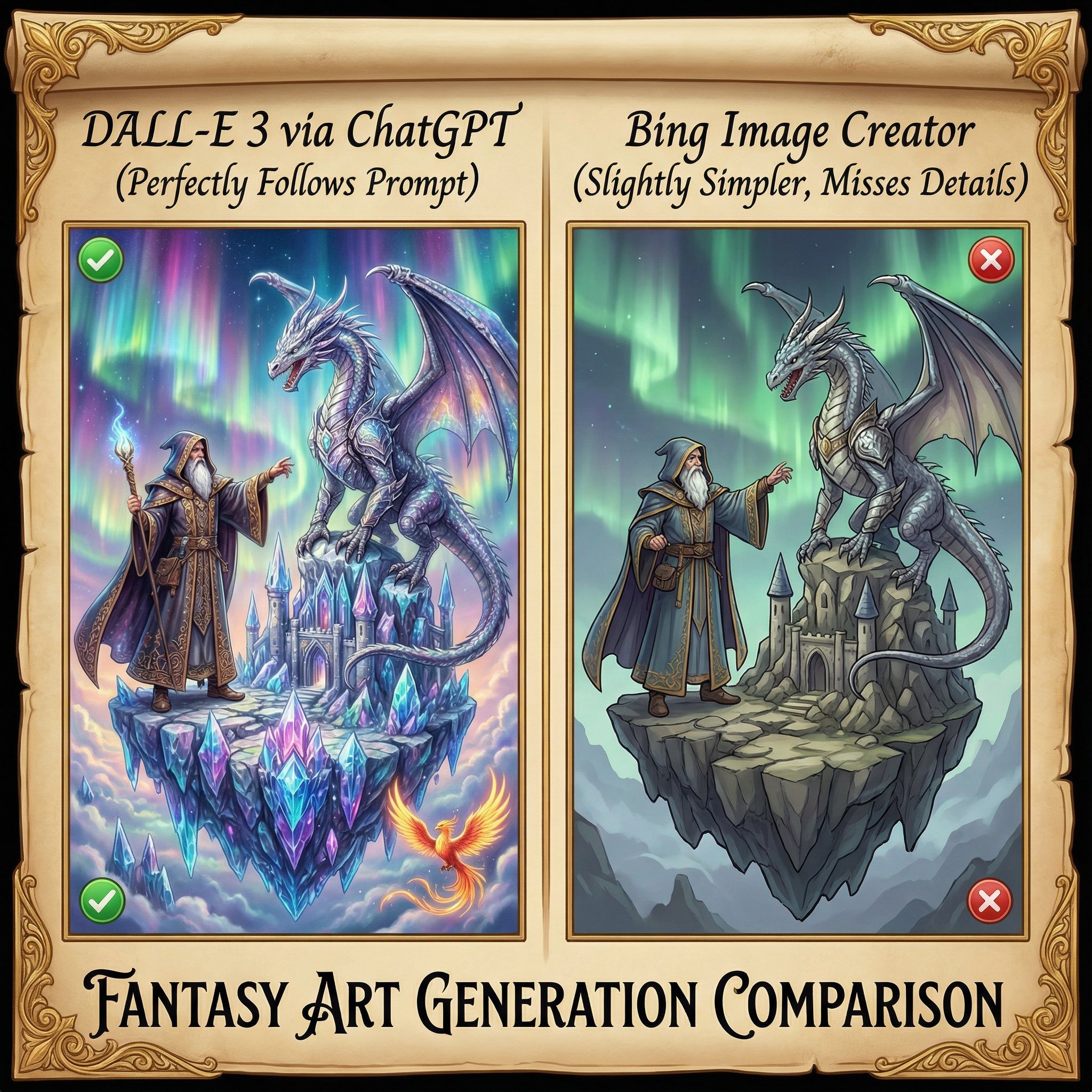
A side-by-side comparison of two generated images from the same complex prompt. The left image (DALL-E 3 via ChatGPT) is highly detailed and perfectly follows all prompt instructions. The right image (Bing Image Creator) is slightly simpler and misses one or two minor prompt details.
6. Final Verdict: Choosing Your DALL-E 3 Gateway
The choice between DALL-E 3 vs Bing Image Creator is a classic trade-off between cost and control.
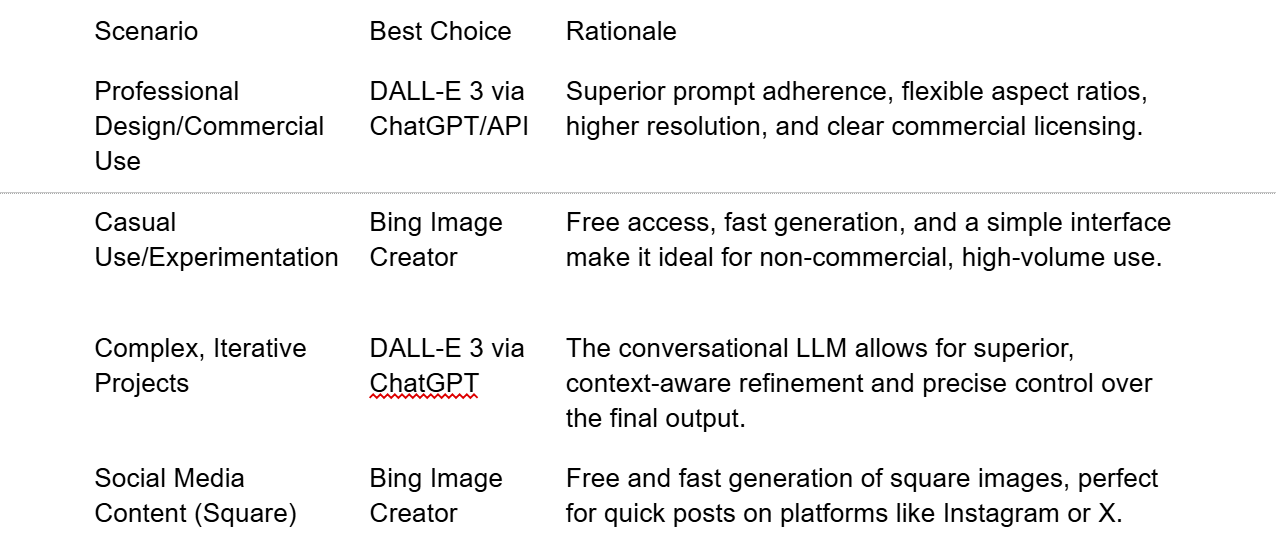
Free and fast generation of square images, perfect for quick posts on platforms like Instagram or X.
For the professional creator, the investment in the paid DALL-E 3 access via ChatGPT or the API is justified by the increased control, flexibility, and the superior prompt refinement that ensures the final image is exactly what was intended.
For the casual user, student, or hobbyist, Bing Image Creator is an unparalleled free resource. It provides access to the world's leading image generation model at no cost, making it the ultimate tool for exploration and high-volume, low-stakes creation. The difference in quality is marginal, but the difference in cost is absolute.