DALL-E 3 vs Ideogram: The Best AI Image Generator for Text and Logos
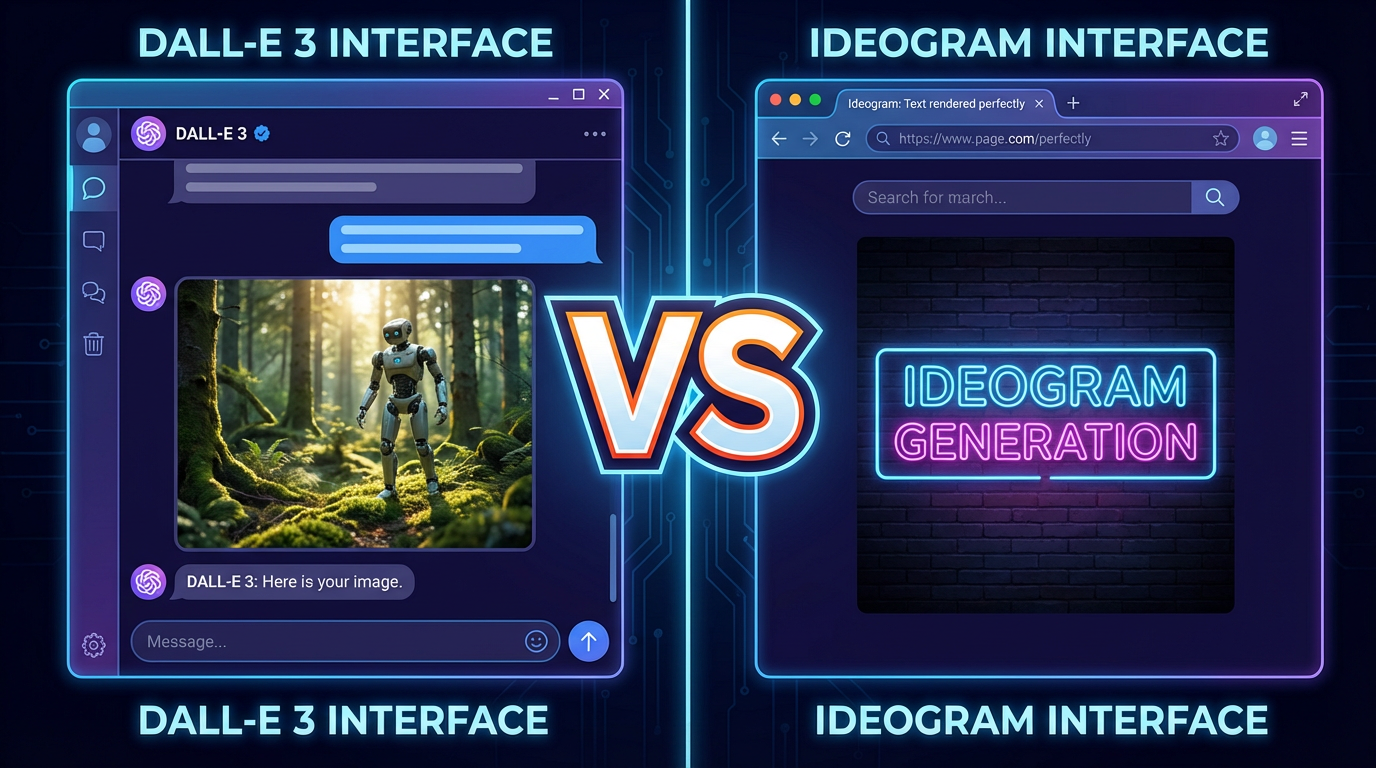
DALL-E 3 vs Ideogram: The Best AI Image Generator for Text and Logos
The generative AI image landscape has evolved rapidly, moving from simple artistic rendering to specialized functionality. For professionals and marketers focused on typography, logos, and clear text rendering, the choice has narrowed to two powerful contenders: DALL-E 3 vs Ideogram. While DALL-E 3, integrated with ChatGPT, offers unparalleled ease of use and high-quality artistic output, Ideogram has built its reputation on solving the "text problem"—the critical flaw in most diffusion models that renders text illegible.
This 2500-word analysis serves as the definitive guide for creators who need to choose the right tool for their branding and marketing assets. We will move beyond simple artistic comparisons to focus on the core functionality that matters most for commercial design: text accuracy, logo generation, and integration into a professional workflow.
The Core Divide: Conversational Artistry vs. Typographic Precision
The fundamental difference between DALL-E 3 vs Ideogram lies in their core training and accessibility. DALL-E 3 is designed to be a conversational artist, prioritizing aesthetic quality and seamless integration into the ChatGPT ecosystem. Its strength is its ability to interpret complex, natural language prompts with high fidelity, translating ideas into stunning visuals.
Ideogram, conversely, is trained with a heavy emphasis on text and typography, making it a functional design tool. It is a dedicated web application that has achieved a breakthrough in generating accurate, readable text within an image, a feat that DALL-E 3, while significantly improved over its predecessors, still struggles to match consistently.
Fan-Out Query 1: DALL-E 3 vs Ideogram Text Accuracy
The ability to render text is the single most important factor in this comparison for branding and marketing. A product label, a poster, or a logo must have perfectly rendered text.
DALL-E 3, integrated with ChatGPT, is a massive leap forward from DALL-E 2. It can often generate short, simple text correctly, especially when the text is the primary focus of the prompt. However, when the text is secondary, or the prompt is complex, DALL-E 3 can still introduce spelling errors, garbled letters, or inconsistent typography. This is a common limitation of diffusion models that treat text as a visual pattern rather than semantic information.
Ideogram's success is attributed to its unique architecture, which integrates a large language model (LLM) directly into the image generation process. This allows the model to understand the semantic meaning of the text prompt and translate it accurately into the visual output.
The visual evidence is clear when both models are asked to generate a simple phrase.
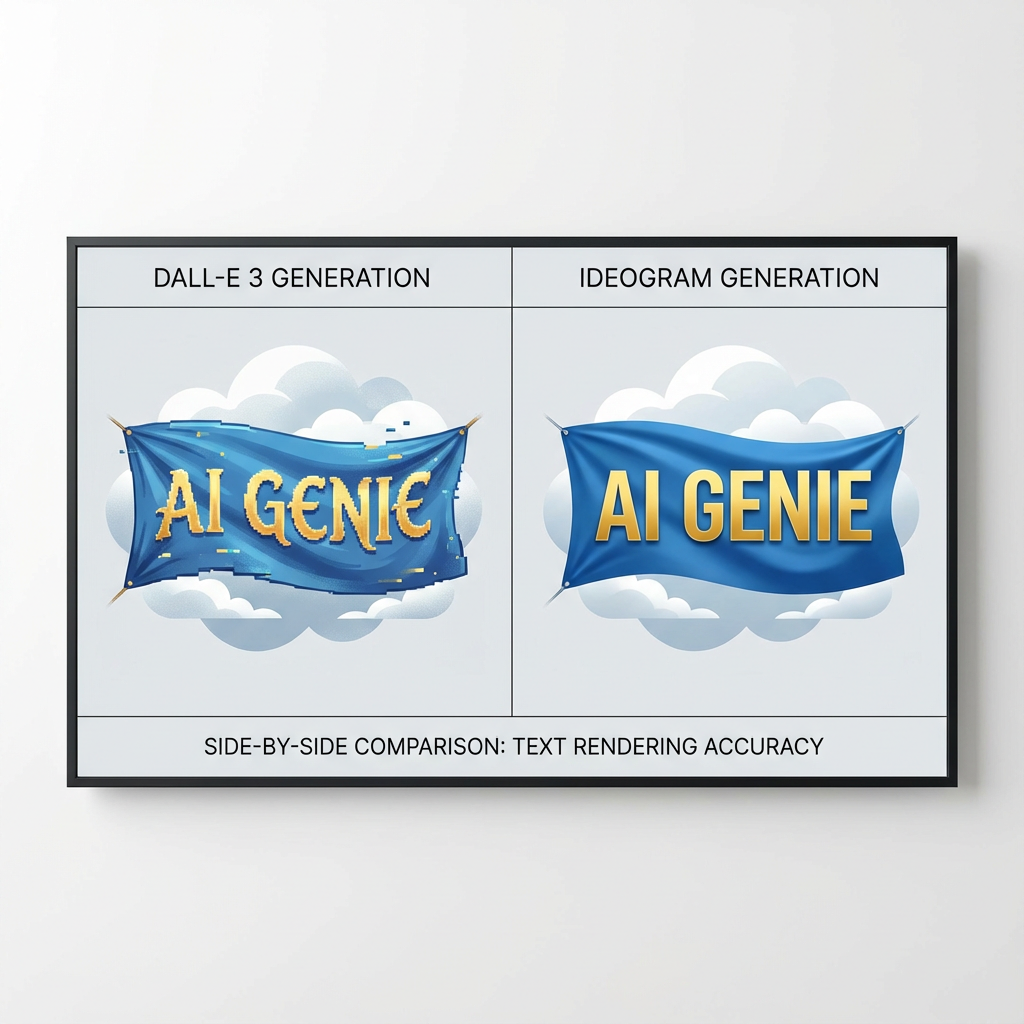
For any creator whose workflow involves text-in-image, Ideogram is the more reliable choice. This capability alone makes it indispensable for marketing and branding tasks where text integrity is non-negotiable.
Fan-Out Query 2: Logo and Branding Asset Generation
Beyond simple text, the ability to generate functional, clean, and scalable logos is a key differentiator. A logo requires simplicity, clear lines, and a design that works across various mediums.
DALL-E 3, due to its artistic focus, tends to produce highly detailed, complex, and often abstract logo concepts. These images are visually stunning and can serve as excellent inspiration, but they are rarely suitable for direct use as a final logo due to their complexity and lack of vector scalability. They often require significant post-processing by a human designer.
Ideogram, with its focus on clean lines and text, is far more capable of generating usable logo designs. Its style tags often lean toward graphic design and illustration, producing outputs that are closer to vector-ready concepts. The ability to reliably include the brand name or a slogan within the logo is a massive advantage.
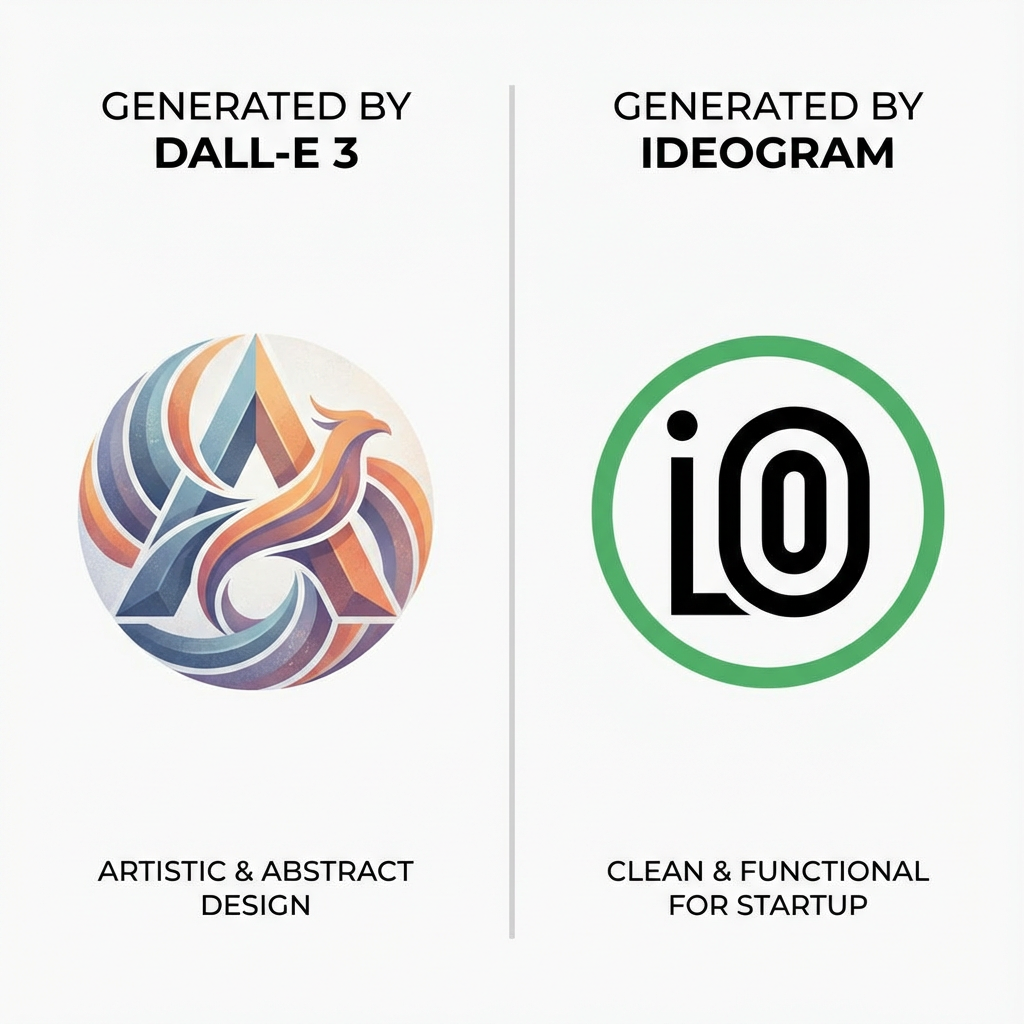
For generating branding assets, Ideogram provides a more practical starting point. Its outputs require less post-processing to be converted into a final, functional logo.
Fan-Out Query 3: Artistic Quality and Ease of Use
While Ideogram dominates the functional design space, DALL-E 3 excels in pure artistic quality and, more importantly, ease of use through its integration with ChatGPT.
DALL-E 3's images possess a high degree of aesthetic quality, excellent composition, and a strong understanding of lighting and texture. Its integration with ChatGPT is its killer feature. Users can generate images simply by talking to the AI, and then refine those images conversationally. ChatGPT automatically expands short prompts into detailed, descriptive ones, which is a massive benefit for users who struggle with complex prompt engineering.
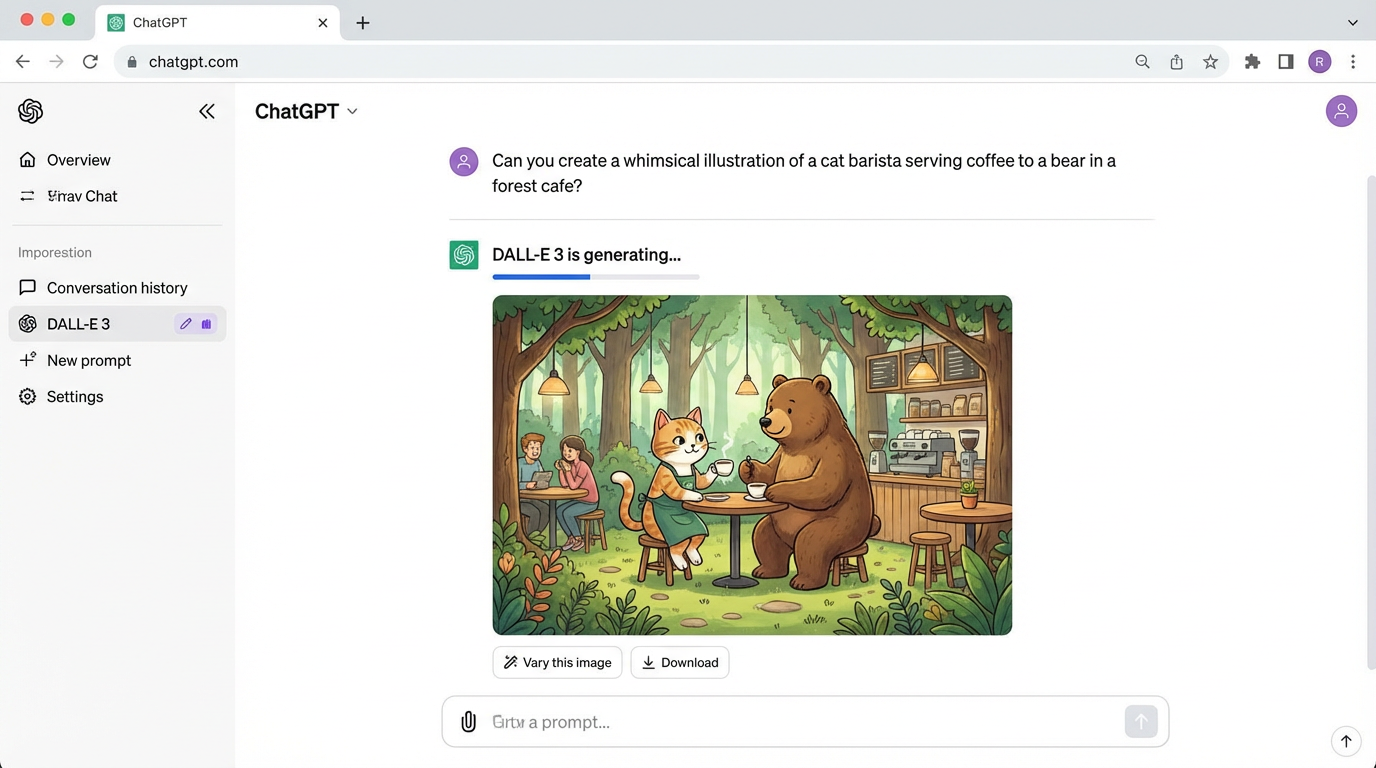
Ideogram, while accessible via a web interface, still requires more explicit prompting and does not offer the same level of conversational refinement. Its artistic quality is excellent but often leans towards a more stylized, graphic look, which may not suit all needs.
If the primary goal is to create a stunning, high-resolution image with minimal effort and a conversational workflow, DALL-E 3 is the superior tool.
Fan-Out Query 4: Pricing, Accessibility, and Community Features
The user experience and cost model of a tool are crucial for both hobbyists and professionals. DALL-E 3 vs Ideogram offers two very different approaches to accessibility.
DALL-E 3: The Integrated Ecosystem
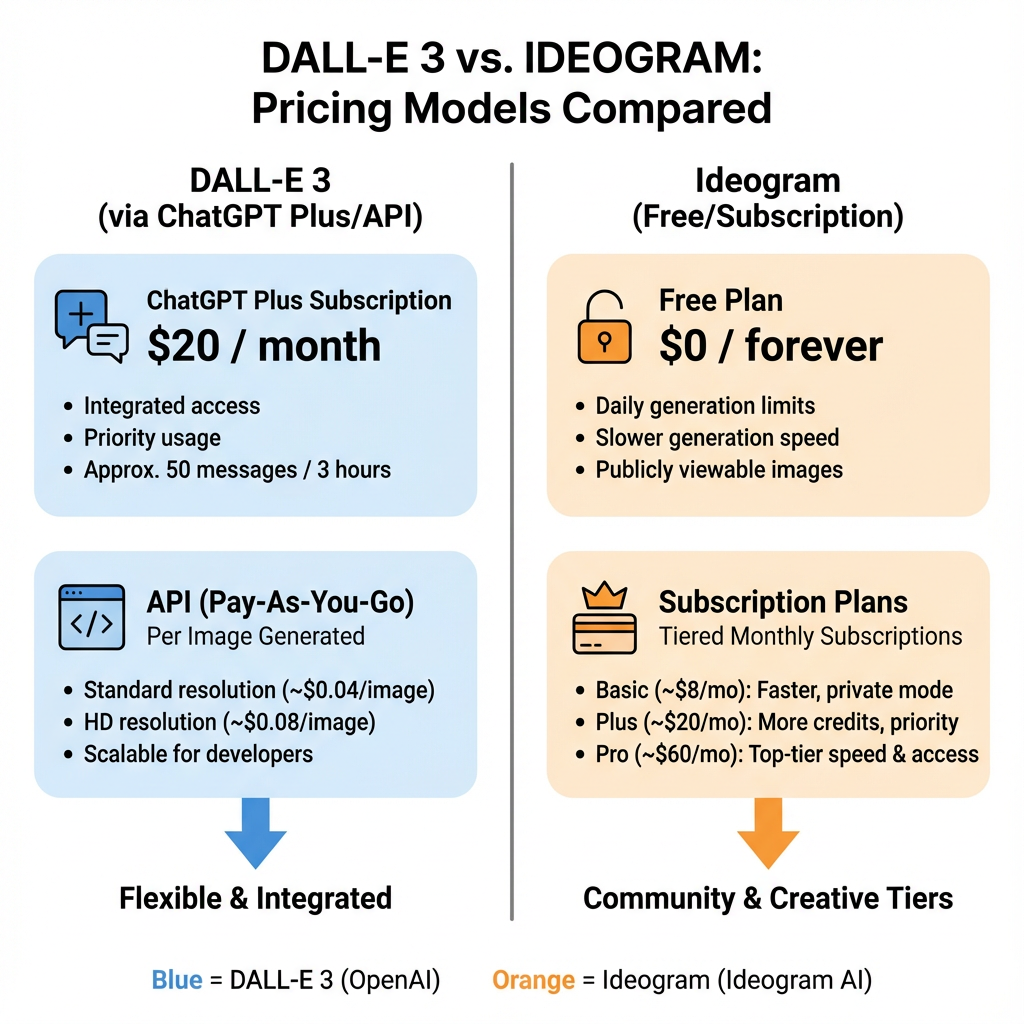
DALL-E 3 is primarily accessed through a paid subscription to ChatGPT Plus or via the OpenAI API.
•Accessibility: High ease of use via ChatGPT, but a paywall for the best experience.
•Pricing: Requires a $20/month ChatGPT Plus subscription for integrated access. API access is pay-as-you-go, which can be cost-effective for high-volume users.
•Community: Generations are private by default, focusing on individual workflow.
Ideogram: The Community-Driven Platform
Ideogram is a dedicated web application, offering a clean, intuitive interface and a generous free tier.
•Accessibility: High. Simple web login, clear interface, and a free tier that allows for daily generations.
•Pricing: Generous free tier with a subscription for faster generation and private mode.
•Community: Highly social, with a public feed where users can "remix" and learn from others' prompts.
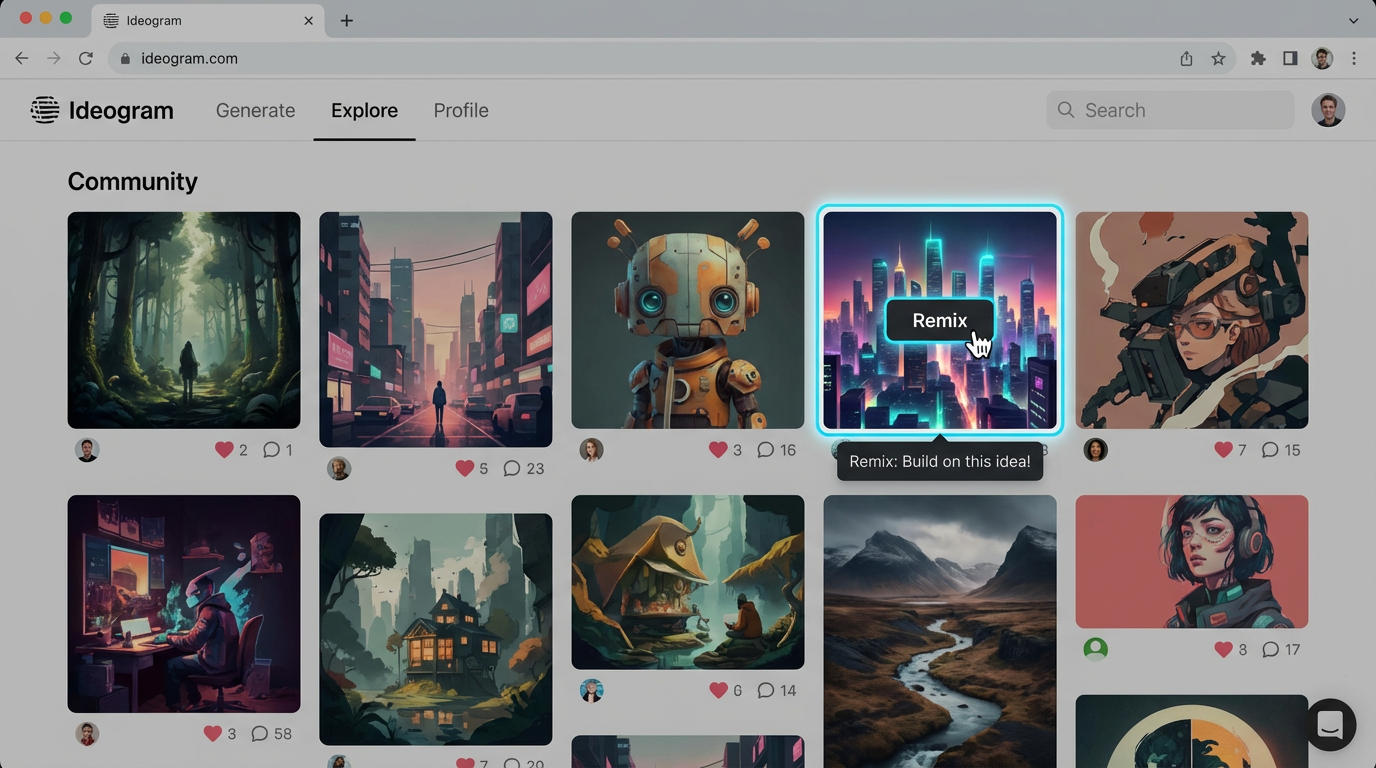
For a low barrier to entry and a collaborative environment, Ideogram is the clear winner. For professionals already invested in the OpenAI ecosystem, DALL-E 3 offers a more streamlined, integrated experience.
Fan-Out Query 5: The Best AI Image Generator for Text and Logos
Ultimately, the question of which tool is "best" depends entirely on the user's primary need.
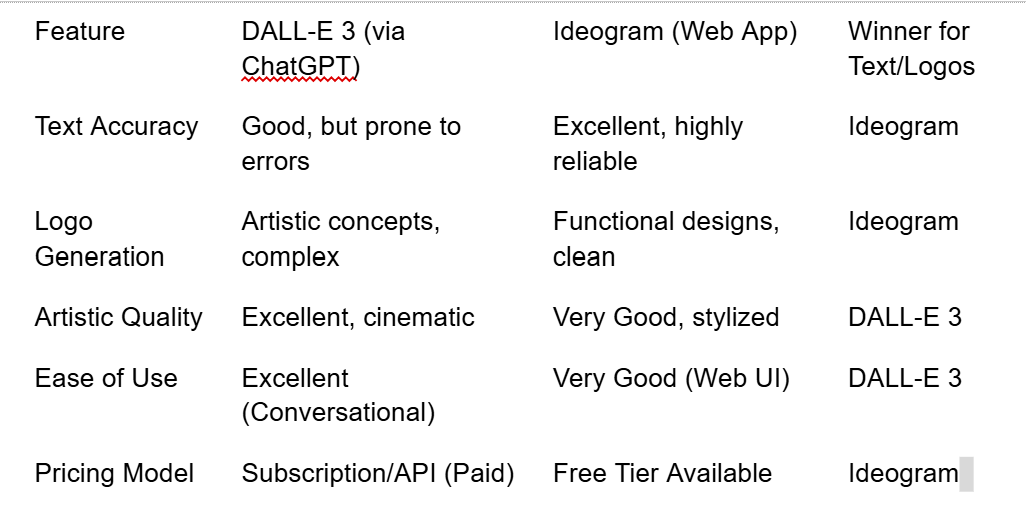
For the specific focus of text and logos, Ideogram is the superior tool. Its core strength—reliable text rendering—directly addresses the most critical requirement for branding assets. While DALL-E 3 is a better general-purpose artist, the risk of text errors makes it unsuitable for final logo or text-heavy commercial work.
Final Verdict: A Dual-Tool Strategy
The optimal strategy for a professional is to use both tools for their respective strengths:
•Use DALL-E 3 for: Concept art, high-end editorial images, and complex artistic backdrops, leveraging the conversational interface for rapid iteration.
•Use Ideogram for: Logos, banners, posters, and any asset requiring perfectly rendered, readable text, leveraging its free tier and typographic accuracy.
By understanding the unique strengths of DALL-E 3 vs Ideogram, creators can maximize their output, ensuring both artistic quality and commercial reliability.
Deep Dive: Advanced Features and Control Mechanisms
The true power of an AI image generator for a professional lies in the level of control it offers over the final output. Both DALL-E 3 vs Ideogram have developed advanced features, but they cater to different user needs.
DALL-E 3: Conversational and Integrated Control
DALL-E 3's control mechanisms are deeply rooted in its conversational interface and integration with the OpenAI ecosystem.
•Conversational Refinement: The primary control is the ability to refine an image through natural language. Instead of re-writing a complex prompt, a user can simply say, "Make the robot's eyes red and change the background to a desert sunset." ChatGPT handles the prompt engineering automatically.
•Aspect Ratios: DALL-E 3 offers a limited but practical set of aspect ratios (square, portrait, landscape ), which are sufficient for most common digital and print needs.
•Image Prompts (Coming Soon/API): While not always available in the consumer ChatGPT interface, the underlying DALL-E 3 model supports image-to-image prompting, allowing users to guide the composition, style, or color palette of the new generation with a reference image.
•Inpainting/Outpainting: Through the API and sometimes the ChatGPT interface, DALL-E 3 supports advanced editing features like Inpainting (editing a specific area of an image) and Outpainting (expanding the canvas beyond the original borders), offering powerful post-generation control.
•Integration with Bing/Copilot: DALL-E 3 is also accessible through Microsoft's Copilot and Bing Image Creator, providing a free, albeit slower, entry point to the model. This broad integration makes it a highly accessible tool for the general public.
These features position DALL-E 3 as the tool of choice for users who value a seamless, integrated, and conversationally-driven workflow.
Ideogram: Structural and Typographic Control
Ideogram's control features are more focused on the utility and structure of the design, particularly around text and community.
•Text Rendering Control: Ideogram's core strength is its reliable text rendering. Users can specify fonts, colors, and effects directly in the prompt, and the model is highly capable of executing these instructions. This is a form of structural control that DALL-E 3 cannot reliably match.
•Style Tags: Ideogram relies heavily on its style tags (e.g., "Poster," "Logo," "3D Render," "Typography") to guide the output. This simplifies the prompting process, making it faster to achieve a desired functional style without complex syntax.
•Remix Feature: The "Remix" button acts as a powerful control mechanism, allowing users to take a public image and instantly modify its prompt, style, or aspect ratio. This is a form of control through community iteration, which is highly efficient for designers looking for inspiration or wanting to build upon existing successful designs.
•Magic Prompt: Ideogram's "Magic Prompt" feature is similar to ChatGPT's automatic prompt expansion, helping users who are new to prompt engineering to generate more detailed and effective inputs.
For a designer focused on functional output, Ideogram's simpler, text-centric controls and community features are often more efficient than DALL-E 3's conversational parameters.
Ethical and Commercial Considerations: The Training Data Debate
The commercial viability of assets generated by AI is a major concern for creative professionals. The debate around DALL-E 3 vs Ideogram is heavily influenced by their training data and licensing.
DALL-E 3's Licensing and Training Data
OpenAI has been more transparent about its efforts to address copyright concerns. DALL-E 3 is trained on a massive dataset, but OpenAI has implemented policies to prevent the generation of images in the style of living artists and has offered an opt-out for artists whose work was used in the training data.
•Commercial Rights: Users who pay for a subscription or use the API generally receive commercial rights to their images.
•Safety and Ethics: OpenAI has implemented strict safety filters to prevent the generation of harmful or explicit content, making it a safer choice for corporate environments.
•SynthID Watermarking: Google's Veo and other models are starting to use invisible watermarking. While DALL-E 3 does not currently use SynthID, OpenAI is actively exploring similar digital provenance technologies to ensure the authenticity of AI-generated content.
Ideogram's Licensing and Training Data
Ideogram, while also not fully transparent about its training data, has a clearer focus on commercial use, particularly for logos and text. Its training is likely more focused on design assets and typography, which inherently reduces the risk of generating images too close to specific copyrighted artwork.
•Commercial Rights: Ideogram's focus on functional design suggests a stronger intent for commercial use, though users must still verify their specific terms of service.
•Text-as-Code: Because Ideogram's architecture treats text as a primary input, the resulting logos and typography are often considered more original and less derivative than the artistic output of DALL-E 3.
For a professional whose reputation and business depends on legally sound assets, the ethical and legal clarity surrounding the training data is a crucial factor. While both models carry some risk, the functional nature of Ideogram's output often makes it a safer bet for simple branding elements.
The Future Outlook: Integration and Specialization
The future of DALL-E 3 vs Ideogram will likely see both models leaning further into their respective strengths.
DALL-E 3's Path: The Integrated Creative Suite
DALL-E 3 is expected to continue its pursuit of seamless integration, focusing on:
•Advanced Editing: Deeper, more precise inpainting and outpainting capabilities directly within the ChatGPT interface.
•3D and Video Integration: Expanding its capabilities into 3D asset generation and high-fidelity video (following the path of Sora).
•Enterprise Adoption: Further integration into Microsoft and OpenAI's enterprise offerings, making it the default AI art tool for large organizations.
Ideogram's Path: The Design Utility Powerhouse
Ideogram is poised to become the go-to utility for design professionals, focusing on:
•Vector Output: The ability to generate true vector graphics (SVG, AI) directly, eliminating the need for manual tracing of logos and typography.
•Advanced Layout Control: Features that allow users to control the placement, alignment, and hierarchy of text and graphic elements, turning it into a true layout tool.
•API Integration: Offering a robust API for developers to integrate its text-accurate generation into design software, marketing automation tools, and e-commerce platforms.
In the long run, the choice will be less about which tool is "better" and more about which tool fits the specific point in the creative workflow. DALL-E 3 will be the integrated concept engine, and Ideogram will be the design asset factory.
Final Verdict: A Dual-Tool Strategy
For the creative professional, the ultimate strategy is not to choose one over the other, but to embrace a dual-tool workflow.
•Use DALL-E 3 for: Concept art, high-end editorial images, and complex artistic backdrops, leveraging the conversational interface for rapid iteration.
•Use Ideogram for: Logos, banners, posters, and any asset requiring perfectly rendered, readable text, leveraging its free tier and typographic accuracy.
By understanding the unique strengths of DALL-E 3 vs Ideogram, creators can maximize their output, ensuring they achieve both artistic quality and commercial reliability.