DALL-E 3 vs Playground AI: The Ultimate AI Image Generation Showdown
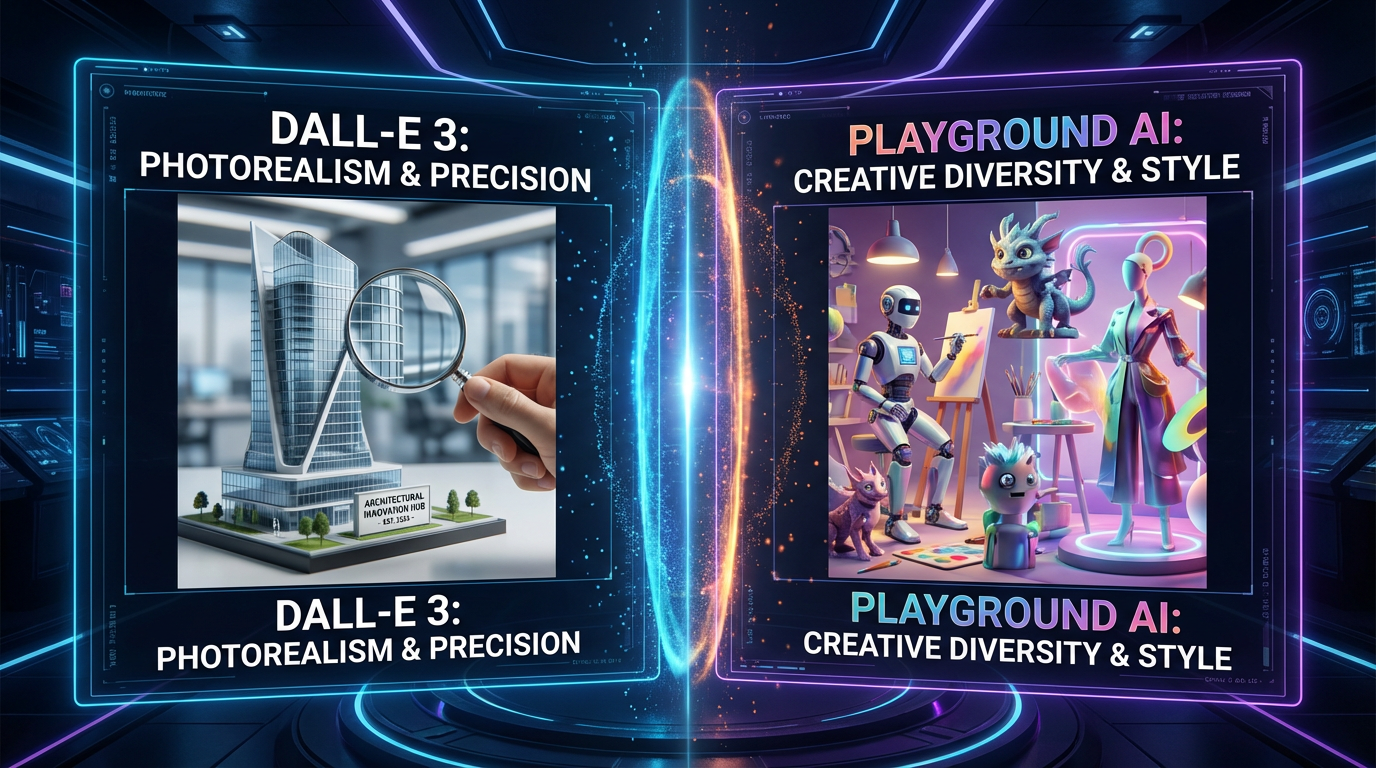
The landscape of AI image generation is a dynamic arena where two distinct philosophies are competing for the attention of millions of creators. On one side stands DALL-E 3, the powerful model from OpenAI, which has set the gold standard for photorealism, text adherence, and deep integration with natural language processing. On the other is Playground AI, a versatile, web-based platform that champions accessibility, a generous free tier, and a comprehensive suite of built-in editing tools.
For artists, designers, and content creators, the choice between DALL-E 3 vs Playground AI is a critical decision that hinges on their priorities: is it raw, uncompromised quality and precision, or is it creative flexibility, model variety, and cost-effective, high-volume generation? This comprehensive 2500-word analysis will dissect the core differences, compare their technical outputs, and provide a clear verdict on which platform is the superior tool for various creative workflows.
1. Core Technology and Image Quality: Precision vs. Versatility
1. Core Technology and Image Quality: Precision vs. Versatility
While both platforms are leaders in the text-to-image space, they achieve their results through different means and prioritize different aspects of the final image.
DALL-E 3: The Champion of Precision and Photorealism
understand and execute complex, multi-layered prompts. It is a model built for precision.
- Prompt Adherence: DALL-E 3 is tightly integrated with the natural language understanding capabilities of GPT-4, allowing it to interpret long, nuanced prompts and translate them into visual elements with remarkable accuracy 1. This minimizes the need for complex prompt engineering, making it highly effective for commercial and narrative work.
- Text Rendering: A major breakthrough for DALL-E 3 was its ability to render legible, accurate text within images—a task that historically plagued all generative models. This feature alone makes it invaluable for graphic design, logos, and any image requiring specific typography.
- Photorealistic Fidelity: The model excels at generating images that are virtually indistinguishable from photographs, with superior handling of lighting, texture, and complex shadows, making it the top choice for high-end visual effects and marketing materials.
The image below illustrates DALL-E 3's superior text rendering capability.
A side-by-side comparison emphasizing DALL-E 3's superior text rendering and photorealistic precision against a more stylized output.
Playground AI: The Hub of Model Diversity
Playground AI is not a single model but a platform that acts as a hub for multiple powerful generative engines, offering users a wide spectrum of creative possibilities.
- Model Variety: Playground AI provides access to a variety of models, including its own Playground v2.5, Stable Diffusion XL (SDXL), and other community models. This allows users to switch between engines to achieve different aesthetic results, from photorealism to abstract art.
- Stylistic Flexibility: While DALL-E 3 focuses on a polished, hyper-realistic aesthetic, Playground AI’s access to multiple models allows for greater stylistic experimentation, making it a favorite for artists who prioritize unique visual flair and diversity.
- Community-Driven Enhancements: The platform frequently integrates new open-source models and community-driven features, ensuring it remains on the cutting edge of generative technology and offering a level of versatility that a single-model platform cannot match.
The image below visualizes Playground AI's model diversity.
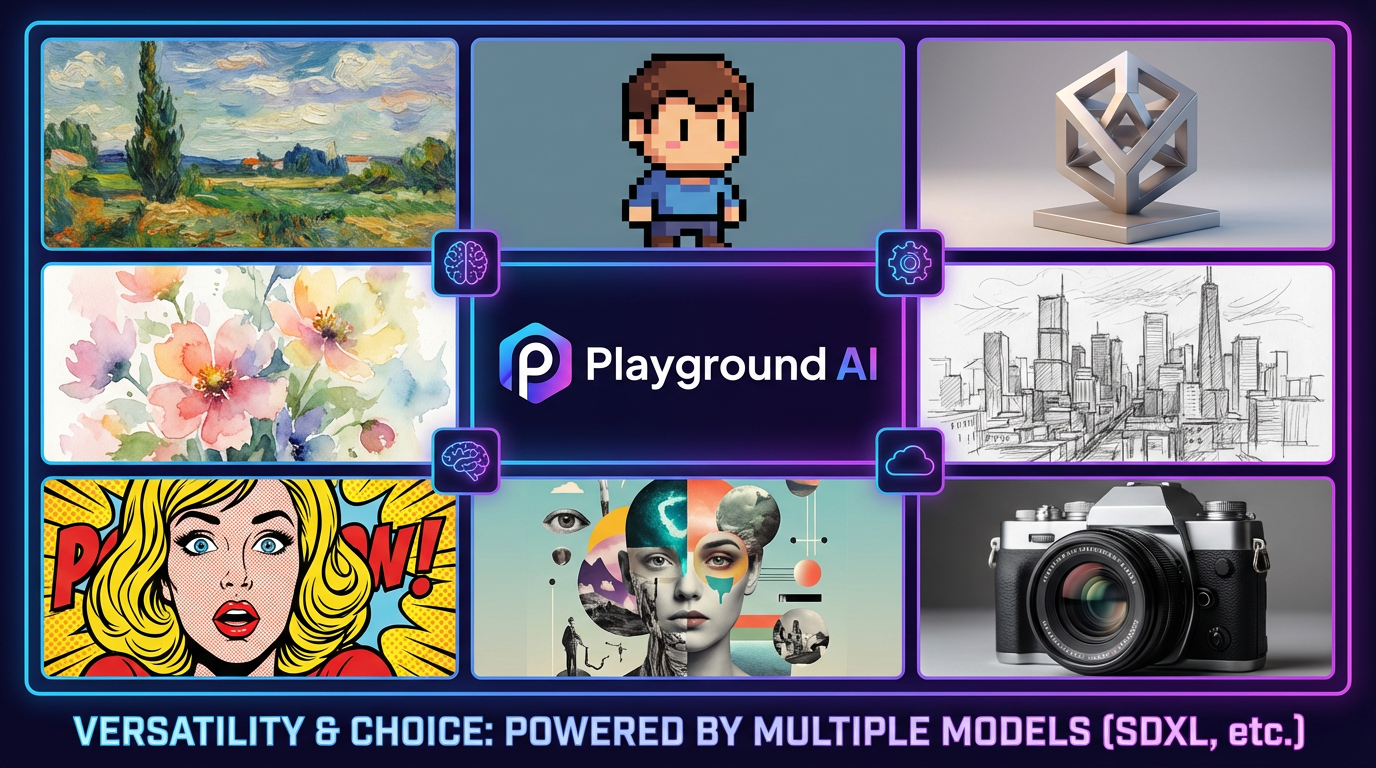
A visual representation of a wide variety of artistic styles (e.g., oil painting, pixel art, 3D render, watercolor) arranged in a grid, with a small logo for "Playground AI" prominently displayed, symbolizing the platform's access to multiple underlying models.
2. Workflow and Prompting: Rewriting vs. Direct Control
The way a user interacts with the prompt is one of the most significant differences in the DALL-E 3 vs Playground AI experience.
DALL-E 3’s Guided Workflow
When accessed through the ChatGPT interface, DALL-E 3 employs a unique workflow that involves an intermediary step of prompt rewriting.
- The ChatGPT Filter: Users input a simple, natural language prompt into ChatGPT. The GPT-4 model then acts as a creative director, automatically expanding, refining, and optimizing the prompt with technical details, artistic styles, and compositional elements before sending it to the DALL-E 3 model for generation.
- Ease of Use: This guided workflow is incredibly user-friendly, as it requires no technical knowledge of prompt engineering. The user simply describes their idea, and the AI handles the rest, leading to consistently high-quality results.
- Loss of Direct Control: The trade-off is a loss of direct control. The user cannot see or directly edit the final, expanded prompt, which can be frustrating for advanced users who want to fine-tune every parameter.
Playground AI’s Direct Workflow
Playground AI, in contrast, offers a more traditional, direct-control workflow that is familiar to users of open-source tools like Stable Diffusion.
- Direct Prompting: What the user types is what the model sees. This allows for maximum control over the final output, as advanced users can leverage negative prompts, seed numbers, and specific model parameters to achieve highly customized results.
- Customization: The platform exposes numerous controls, including guidance scale, sampler selection, and model-specific settings, catering to the enthusiast who wants to experiment with the technical levers of image generation.
- Iterative Refinement: The workflow encourages iterative refinement, where users generate an image, adjust a single parameter, and re-generate to see the precise effect of that change.
The image below provides a visual comparison of the two prompting workflows.
.png)
A visual metaphor for prompt interpretation. The left side shows a simple, short prompt entering a complex, multi-stage filter (representing DALL-E 3's internal prompt rewriting via ChatGPT). The right side shows a long, detailed prompt entering a direct, single-stage processor (representing Playground AI's direct prompt usage).
3. Editing and Post-Processing: Integration vs. External Tools
A crucial factor for designers and artists is the ability to edit and refine generated images without switching between multiple applications.
Playground AI: The Integrated Canvas Editor
Playground AI’s most significant advantage over DALL-E 3 is its built-in, powerful editing suite, known as the Canvas editor.
- Inpainting and Outpainting: The Canvas editor allows users to seamlessly perform inpainting (editing specific areas of an image) and outpainting (expanding the image beyond its original borders) directly within the platform. This is essential for creating large-scale artwork or correcting minor flaws without needing Photoshop 2.
- Layered Editing: The editor supports basic layered editing, allowing users to move, resize, and combine elements from different generations or uploaded images, transforming the platform from a simple generator into a full-fledged creative workspace.
- Non-Destructive Workflow: This integrated approach creates a non-destructive workflow, where the user can generate, edit, and refine all in one place, saving significant time and effort.
The image below showcases Playground AI's integrated Canvas editor.
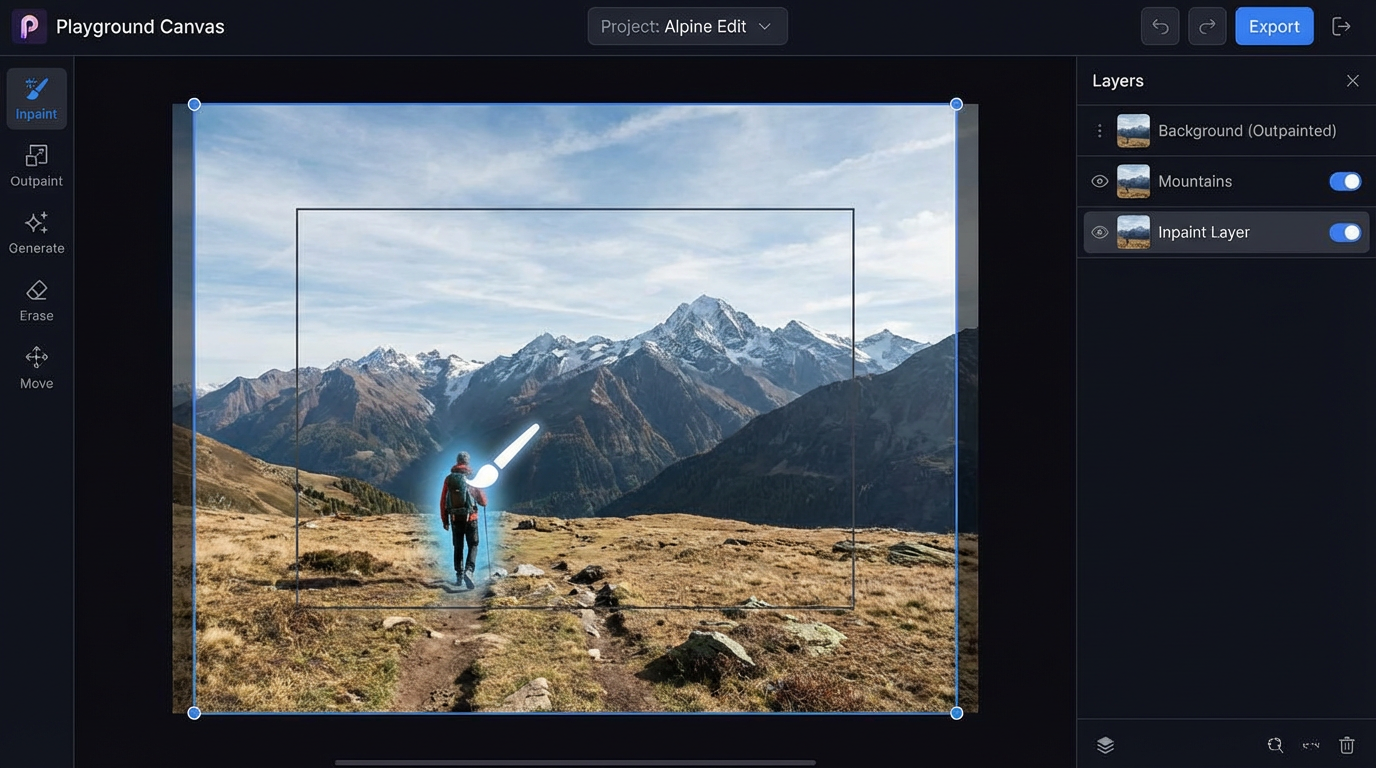
A clean, professional screenshot of a web-based image editor interface (like Playground AI's Canvas). The screen shows an image being edited with tools for inpainting, outpainting, and a layer panel visible, emphasizing the built-in editing capabilities.
DALL-E 3: The External Workflow
DALL-E 3, particularly when accessed via ChatGPT, is primarily a generation tool. Its workflow is designed to output a final image that is then downloaded and edited using external software.
- Iterative Refinement: While users can ask ChatGPT to "change the color of the hat" or "add a dog to the background," this is a re-generation process, not a true in-place edit. The model generates a new image based on the revised prompt, which can lead to subtle changes in other parts of the image.
- Focus on Output: The platform's focus is on generating the highest quality initial output possible, assuming that any complex post-processing will be handled by professional tools like Adobe Photoshop or Illustrator.
- API Flexibility: For developers, DALL-E 3's API offers flexibility for custom integrations, but the core user interface lacks the dedicated editing tools of Playground AI.
4. Accessibility and Pricing: Free-for-All vs. Premium Quality
The financial model is arguably the most decisive factor in the DALL-E 3 vs Playground AI comparison for the average user.
Playground AI: The Generous Free Tier
Playground AI has built its massive user base on an extremely generous free tier, making high-quality AI art accessible to everyone.
- 1,000 Free Images Per Day: The platform offers up to 1,000 free image generations per day, a volume that is more than sufficient for most casual users, students, and high-volume social media creators. This removes the financial barrier to entry entirely.
- Cost-Effective Scaling: Paid plans are also highly competitive, offering unlimited generations and faster processing speeds at a lower cost per image than DALL-E 3's API, making it the cost-effective choice for frequent users.
- Community Focus: The platform fosters a strong community, allowing users to share prompts, learn from others, and participate in challenges, which is a significant value-add for beginners.
DALL-E 3: The Premium Experience
DALL-E 3 is positioned as a premium product, reflecting the massive computational and research investment by OpenAI.
- ChatGPT Plus Requirement: Full, convenient access to DALL-E 3 is typically bundled with a ChatGPT Plus subscription, which costs $20 per month. While this provides access to GPT-4 and other features, it is a significant financial commitment solely for image generation.
- API Cost: DALL-E 3's API pricing is significantly higher than the models available on Playground AI, making it a more costly option for developers or high-volume commercial applications.
- Value Proposition: The higher cost is justified by the superior prompt adherence, text rendering, and overall photorealistic quality, positioning DALL-E 3 as the tool for mission-critical, high-stakes commercial projects where quality cannot be compromised 3.
The image below visually compares the two pricing models.

A visual comparison of two pricing models. The left side shows a large, prominent "1,000 FREE IMAGES/DAY" with a small "Playground AI" logo. The right side shows a smaller, more exclusive "Premium Access Required" with a "DALL-E 3" logo. The visual clearly communicates the difference in free tier accessibility.
5. The Verdict: Choosing Your AI Partner
The final choice between DALL-E 3 vs Playground AI depends entirely on the user's specific needs, budget, and technical comfort level. Neither platform is objectively "better" than the other; they are optimized for different user profiles.
Choose DALL-E 3 if:
- Precision is Paramount: You need the highest possible photorealistic quality and flawless text rendering for commercial or high-end design work.
- You Use ChatGPT: You are already a ChatGPT Plus subscriber and prefer a simple, conversational workflow where the AI handles the complex prompt engineering.
- You Need Commercial Indemnity: You require the legal assurances and clear commercial rights that come with a premium, enterprise-backed service.
Choose Playground AI if:
- Budget is a Concern: You need a high volume of free or low-cost generations for personal projects, social media, or rapid prototyping.
- You Need Editing Tools: You require integrated inpainting, outpainting, and layered editing capabilities without having to export to external software.
- You Value Model Variety: You want the flexibility to switch between different models (SDXL, Playground v2.5) to achieve a wider range of artistic styles and effects.
DALL-E 3 vs Playground AI: Feature Comparison Summary
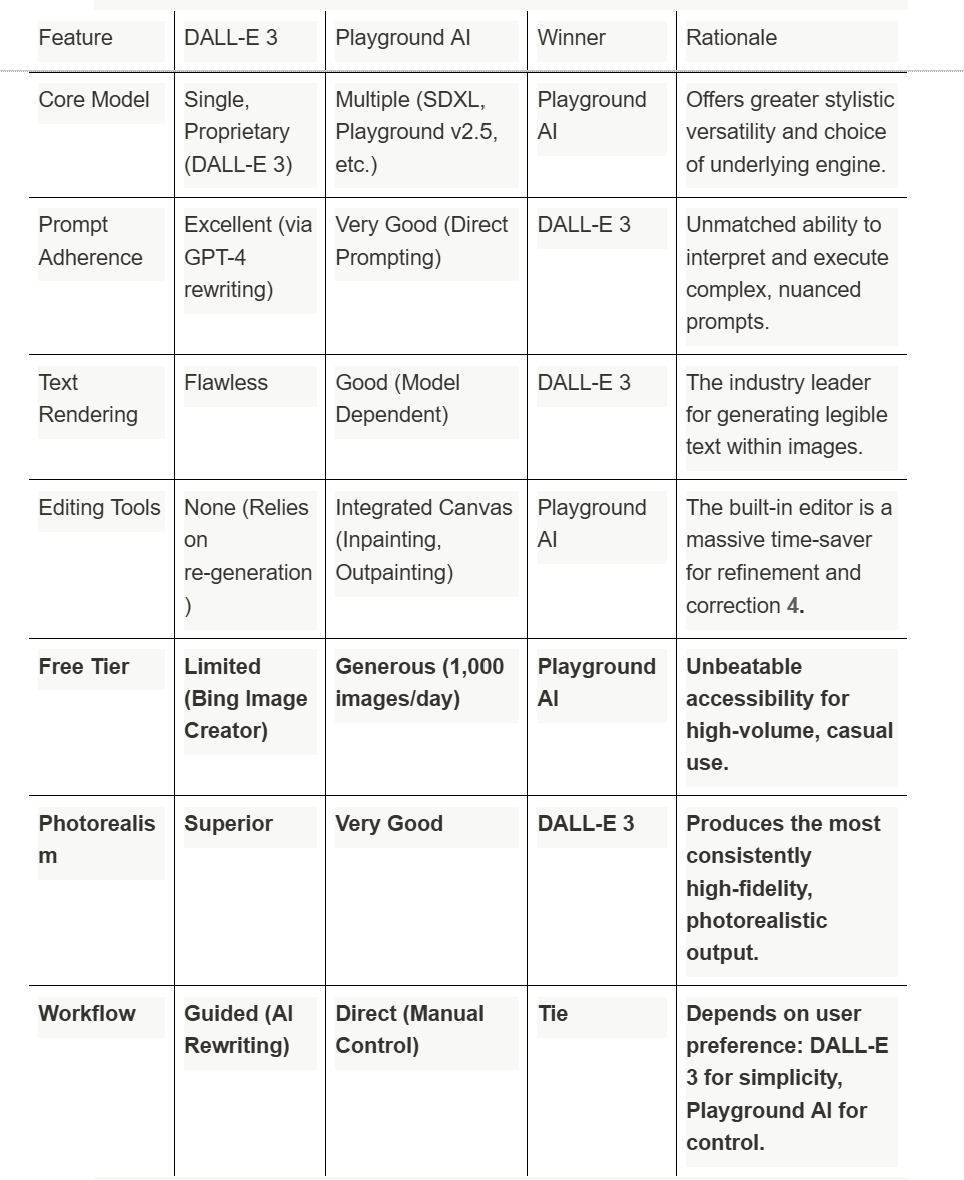
The competition between DALL-E 3 vs Playground AI is a perfect microcosm of the current AI landscape: the battle between premium, closed-source precision and accessible, open-source versatility. For the professional designer, DALL-E 3 is the powerful, high-fidelity engine. For the everyday creator, Playground AI is the versatile, cost-effective creative playground.
6. Community, Social Features, and Commercial Licensing
The final layer of comparison between these two platforms involves the social and legal aspects of creation, which are often overlooked but critical for professional users.
Playground AI: The Social Creative Hub
Playground AI is designed as a social platform, fostering a strong sense of community and shared learning.
- Prompt Sharing and Remixing: The platform encourages users to share their generated images, along with the exact prompts and settings used to create them. This transparency is invaluable for beginners who can learn advanced techniques by remixing successful creations.
- Public Gallery and Inspiration: The public gallery serves as a massive source of inspiration and a real-time showcase of the platform's capabilities. This social aspect drives engagement and continuous improvement among its user base.
- Community Challenges: Regular community challenges and contests further incentivize creation and experimentation, making the platform feel more like a collaborative creative space than a solitary tool.
DALL-E 3: The Private, Professional Toolic sharing
DALL-E 3, particularly through the ChatGPT interface, is a more private and professional tool, with less emphasis on public sharing.
- Private Workflow: The generation process is typically private, occurring within the user's chat session. While images can be shared externally, the core workflow is not built around a public gallery or prompt-sharing mechanism.
- Focus on Utility: The emphasis is on utility—getting the desired image for a specific purpose—rather than on the social aspects of creation.
- Commercial Rights and Indemnity: For commercial users, DALL-E 3's licensing, often backed by OpenAI's terms, offers clear commercial rights. Furthermore, Microsoft, through its Copilot/Designer integration, has offered a form of copyright indemnity for images generated using DALL-E 3, providing a crucial layer of legal protection for businesses 5. This legal assurance is a significant advantage for DALL-E 3 in the high-stakes commercial world.
The choice here is clear: Playground AI for the creator who values community, learning, and inspiration, and DALL-E 3 for the professional who prioritizes legal safety and a private, focused workflow.