Google Veo vs Runway AI: The Ultimate AI Video Generator Showdown
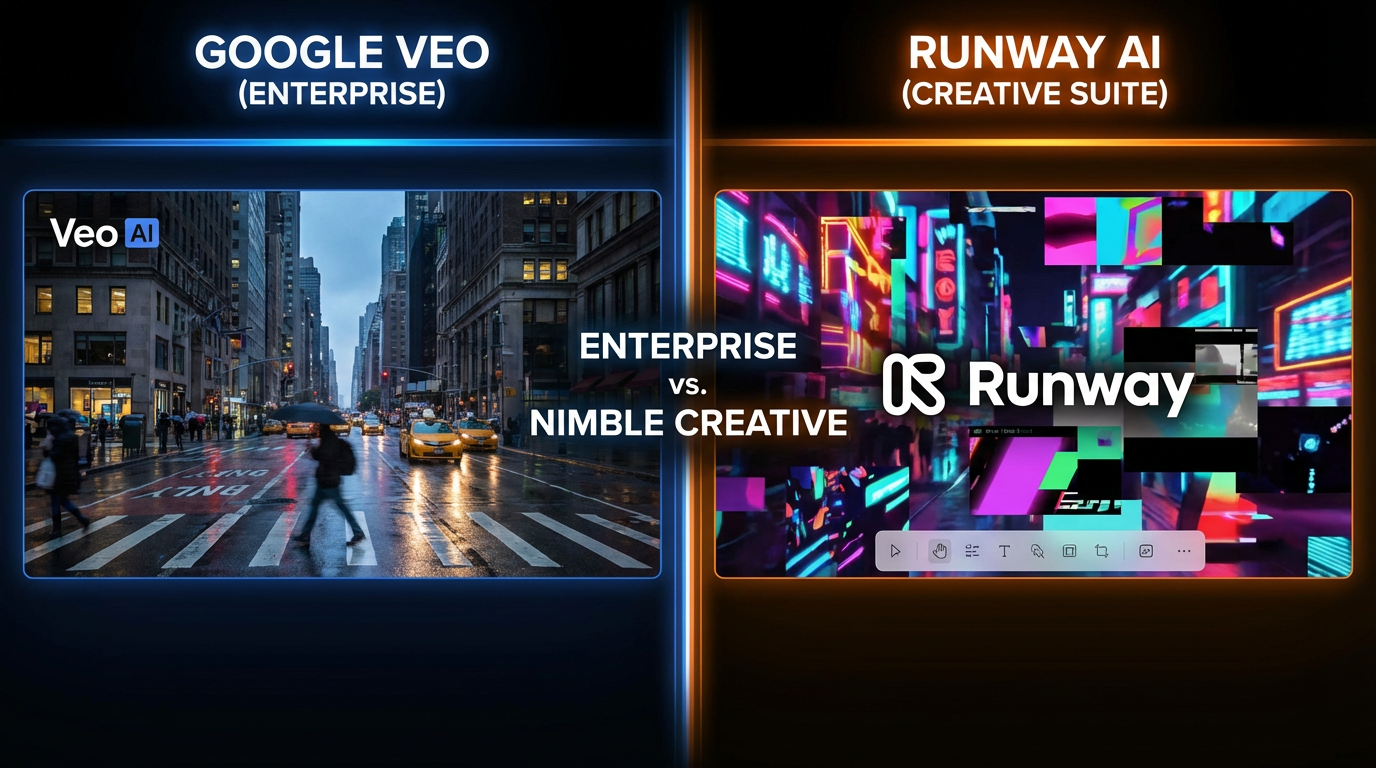
The race to dominate the future of filmmaking has intensified with the emergence of two colossal contenders: Google Veo and Runway AI. These platforms represent two distinct philosophies in the world of generative video. Google Veo, a powerful model from the tech giant, is engineered for ultra-realism, long-form coherence, and deep integration into the enterprise ecosystem. Runway AI, the pioneer of the AI filmmaking movement, offers an all-in-one creative suite focused on accessibility, speed, and a broad range of "AI Magic Tools."
For professional filmmakers, content agencies, and studios, the choice between Google Veo vs Runway AI is a strategic decision that will define their production pipeline for years to come. This comprehensive 2500-word analysis will break down the core differences, compare their technical capabilities, and provide a clear verdict on which platform is best suited for your specific creative and commercial goals.
1. Technical Architecture and Output Length: The Coherence Challenge
The most significant technical differentiator between these two models lies in their ability to handle temporal consistency and generate long, coherent clips.
Google Veo: The Long-Form Cinematic Simulator
Google Veo is built on a foundation designed to understand and simulate the physics of the real world, which is crucial for maintaining consistency over extended periods.
- 60-Second Clips: Veo's headline feature is its ability to generate high-definition video clips up to 60 seconds long 1. This is a monumental achievement in AI video, where most models struggle to maintain coherence beyond 4-5 seconds. This capability positions Veo as a tool for genuine cinematic storytelling, where continuity is paramount.
- Temporal Coherence: The model excels at ensuring that objects, characters, and lighting remain stable and consistent throughout the entire clip, minimizing the "flickering" or "jelly-like" artifacts that plague less advanced models. This makes the output feel more like a continuous, filmed sequence.
- High-Fidelity Realism: Veo is tuned for photorealism, focusing on accurate physics, realistic textures, and complex lighting conditions, making it ideal for visual effects and scenes that must blend seamlessly with live-action footage.
The image below illustrates Veo's focus on long-form coherence.
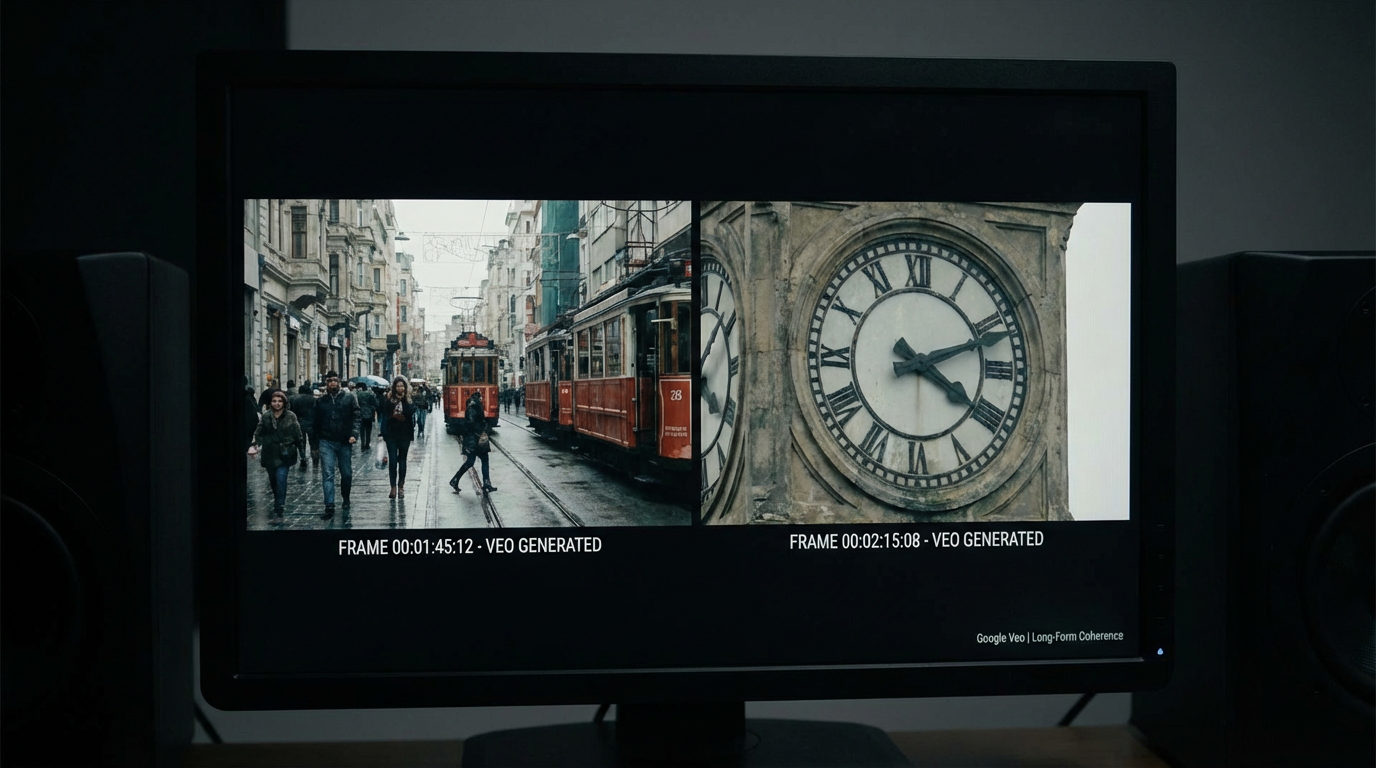
A cinematic, hyper-realistic video still showing a complex scene with perfect temporal consistency, representing Google Veo's ability to generate long, coherent clips. The image should convey high fidelity and realism.
Runway AI: The Agile, Short-Form Creative Tool
Runway, while constantly improving its temporal consistency with models like Gen-3, has historically focused on shorter, high-impact clips that are easily integrated into a broader editing workflow.
- Agile Generation: Runway is optimized for speed and rapid iteration, allowing creators to generate multiple short clips (typically up to 16 seconds) quickly. This is perfect for social media content, music videos, and experimental art where a high volume of short, visually striking assets is needed.
- Focus on Magic Tools: Runway's core strength is not just generation, but its suite of "AI Magic Tools" (like Gen-1, Gen-2, Inpainting, Green Screen) that allow users to manipulate existing footage or generated clips. This positions it as a tool for hybrid creation, where AI assists the editor rather than replacing them entirely.
- Stylistic Versatility: Runway's models are highly versatile, capable of generating photorealistic, stylized, or abstract content with equal proficiency, making it a favorite for artists who prioritize creative freedom over strict realism.
2. Ecosystem and Integration: Enterprise vs. All-in-One Suite
The second major point of comparison is how each platform integrates into the broader creative and corporate landscape.
Google Veo: The Enterprise Ecosystem Advantage
Veo is not a standalone product; it is a powerful component of the vast Google ecosystem, which is a massive advantage for large organizations and enterprise users.
- Seamless Google Workspace Integration: Veo is designed to connect seamlessly with Google Workspace tools like Drive, Docs, and Gemini. This allows for automated workflows, such as generating a video directly from a text summary in a Google Doc or using Gemini to refine prompts and manage assets.
- Enterprise Scalability: Google's cloud infrastructure provides the necessary backbone for enterprise-level security, compliance, and massive-scale production, making it a natural fit for large studios and corporate marketing departments.
- Future-Proofing: Integration with Google's other AI research (like DeepMind) ensures that Veo will benefit from continuous, cutting-edge advancements in a way that is difficult for a smaller company to match.
The image below visualizes Veo's deep integration into the Google ecosystem.
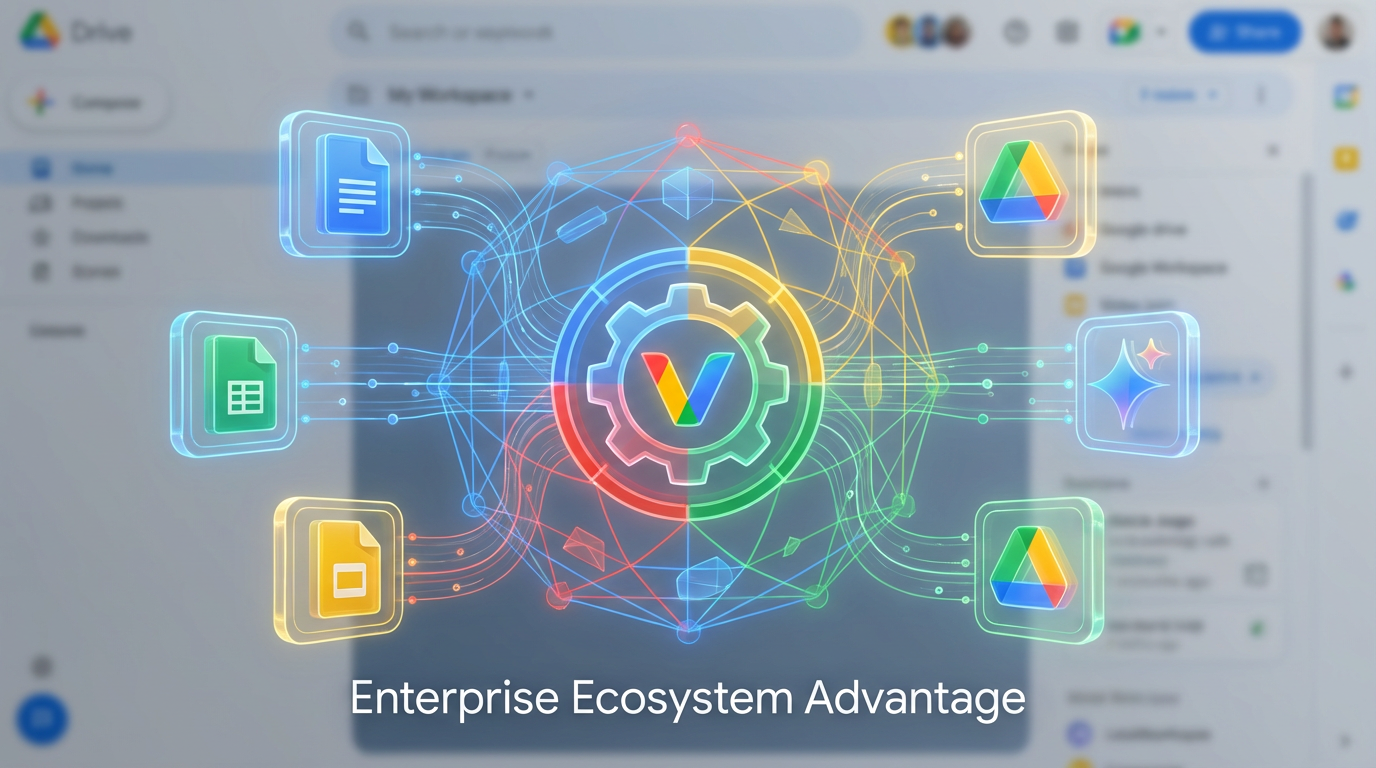
A visual metaphor showing the Google Veo logo seamlessly integrated with other Google products like Google Workspace, Drive, and Gemini, representing its enterprise ecosystem advantage.
Runway AI: The Self-Contained Creative Hub
Runway's strategy is to be the single destination for AI filmmaking, offering a comprehensive, self-contained creative suite.
- Built-in NLE: Runway includes a non-linear editor (NLE) directly in its browser-based interface, allowing users to trim, arrange, and add music/sound to their generated clips without ever leaving the platform. This "all-in-one" approach significantly speeds up the workflow for content creators.
- AI Magic Tools: The platform's extensive library of AI tools—including text-to-image, image-to-image, inpainting, and motion tracking—means that users can perform a wide range of tasks that would typically require multiple Adobe products, all within the Runway environment.
- Platform Agnostic: Runway is designed to be platform-agnostic, easily exporting assets that can be dropped into any professional editing software (like Adobe Premiere Pro or Final Cut Pro), making it a flexible tool for existing production pipelines.
The image below highlights Runway's all-in-one interface.
A clean, professional screenshot of the Runway AI interface, highlighting the "AI Magic Tools" and the non-linear editing (NLE) capabilities, emphasizing its all-in-one creative suite nature.
3. Aesthetic Quality: Ultra-Realism vs. Stylized Artistry
While both models produce high-quality video, their aesthetic goals are noticeably different, which is a key factor in the Google Veo vs Runway AI debate.
Veo's Pursuit of Photorealism
Veo's samples consistently demonstrate a focus on capturing the subtle nuances of the real world:
- Depth and Lighting: Veo excels at complex, multi-layered lighting and depth of field, giving its output a distinct, film-like quality. This is particularly evident in scenes with natural light, shadows, and reflections.
- Physics Simulation: The model shows a strong understanding of how objects interact with their environment—how water splashes, how fabric drapes, and how shadows fall—making the generated scenes highly believable.
- Cinematic Camera Work: Veo's ability to handle long, smooth camera movements (like a dolly shot or a crane shot) without artifacts is a testament to its cinematic tuning.
Runway's Stylistic Versatility
Runway's Gen-3 model is a powerhouse of versatility, often leaning into a more stylized, visually arresting aesthetic.
- Artistic Control: Runway gives users more direct control over the artistic style of the output, making it a favorite for music video directors and digital artists who want to push the boundaries of visual effects.
- Rapid Evolution: Runway's models are constantly being updated, with each iteration bringing new stylistic capabilities and improved fidelity. The platform's agility allows it to quickly adapt to new trends in AI art.
- Hybrid Workflow: Runway's strength is often in generating a base clip that is then refined using its Magic Tools, allowing the user to inject their own creative flair and manipulate the output beyond the initial prompt.
The image below provides a visual comparison of their aesthetic outputs.
.png)
A split-screen comparison of two video stills. The left side is a Google Veo output showing deep, cinematic lighting and complex camera movement. The right side is a Runway Gen-3 output showing a high-quality, but slightly more stylized, aesthetic.
4. Accessibility and Workflow: High-Friction vs. Low-Friction
The user experience and accessibility of the two platforms could not be more different, reflecting their target audiences.
Veo: The High-Friction, Secure Access
As an enterprise-grade tool from Google, Veo's access is currently restricted to a select group of filmmakers and is likely to be rolled out with a focus on security and controlled integration.
- Limited Access: Veo is not yet widely available to the public, operating in a closed beta or through enterprise partnerships. This high barrier to entry ensures quality control and security but limits its use to large, established entities.
- Enterprise Workflow: The integration with Google's enterprise tools suggests a high-friction login and project setup process, likely involving secure authentication, compliance checks, and team management protocols. This is necessary for corporate use but cumbersome for individual creators.
- Focus on Deployment: Veo's workflow is likely optimized for final deployment within the Google ecosystem, rather than rapid, casual experimentation.
Runway AI: The Low-Friction, Immediate Creation
Runway has built its brand on democratizing AI filmmaking, making it instantly accessible to anyone with a browser.
- Browser-Based Simplicity: Runway is a low-friction tool that requires minimal setup. Users can often start generating video within minutes of signing up, making it the perfect tool for rapid prototyping and content creation.
- Agile Iteration: The workflow is designed for speed. Users can quickly adjust prompts, re-generate clips, and use the Magic Tools to refine their output in real-time, fostering a culture of experimentation.
- Broad Audience: Runway's accessibility has made it the go-to tool for students, independent artists, social media managers, and small agencies 2.
The image below contrasts the two approaches to accessibility.
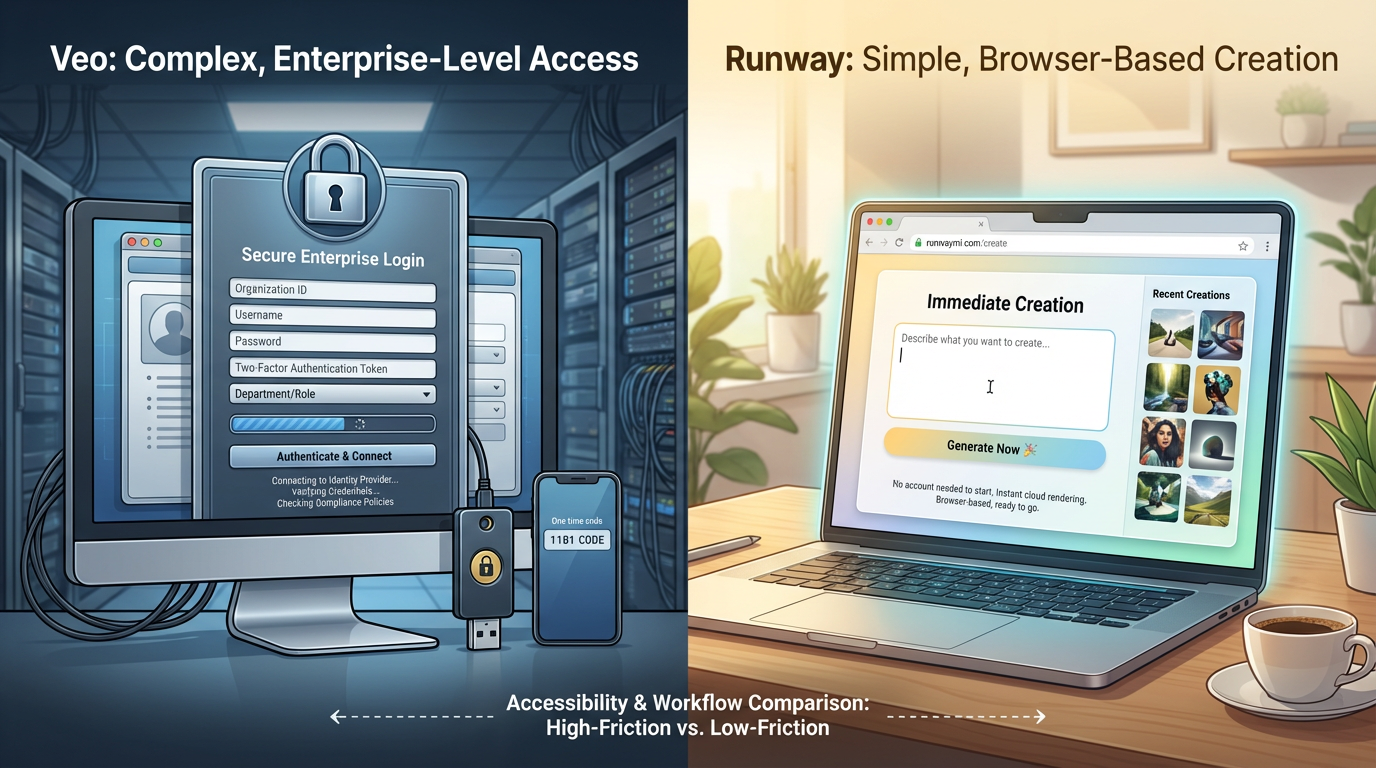
A visual comparing the accessibility and workflow of the two tools. The left side shows a complex, enterprise-level login/access screen (Veo). The right side shows a simple, browser-based, immediate creation screen (Runway).
5. Pricing and Commercial Implications
While final pricing for Veo is not public, the business models of both platforms reflect their target markets.
Veo's Enterprise Model
Veo is expected to follow a high-tier, enterprise-focused pricing model, likely based on usage, integration complexity, and access to Google's premium cloud services.
- High-Value Output: The cost will be justified by the high-value, long-form, and ultra-realistic output, making it a cost-effective alternative to traditional CGI or high-end production for large companies.
- Integration Costs: Pricing will likely include costs associated with integrating Veo into existing enterprise workflows and accessing Google's broader suite of AI and cloud tools.
Runway's Creator-Centric Model
Runway operates on a transparent, credit-based subscription model that scales from free to professional tiers.
- Flexible Subscriptions: Runway offers various tiers, from a free plan for basic experimentation to Pro and Unlimited plans that provide more credits, faster generation, and access to advanced features. This flexibility makes it accessible to a wide range of users.
- Credit System: The credit system allows users to pay only for what they generate, which is ideal for variable production schedules. However, complex or long generations can consume credits quickly, requiring careful budget management.
- Commercial Rights: Runway offers clear commercial rights for content generated on its paid tiers, which is essential for agencies and businesses 3.
6. The Future of AI Video: Convergence or Specialization?
The competition between Google Veo vs Runway AI is not a zero-sum game; it is a catalyst for innovation that will ultimately benefit the entire industry.
- Runway's Push for Realism: Runway is actively working to close the gap in temporal consistency and realism, with each new Gen model pushing the boundaries of what its all-in-one suite can achieve. It is unlikely to stop until it can match or exceed Veo's quality.
- Veo's Accessibility: As Veo moves out of its closed beta, Google will inevitably need to create more accessible tiers and interfaces to capture the massive market of content creators currently served by Runway. This will likely involve integrating Veo into simpler tools like YouTube Shorts or Google Photos.
- The Creator's Choice: The future will likely see a clear division: Veo for the Enterprise Filmmaker who needs long-form, ultra-realistic, and deeply integrated solutions, and Runway for the Agile Creator who needs a fast, versatile, all-in-one tool for short-form and experimental content.
Google Veo vs Runway AI: Feature Comparison Summary
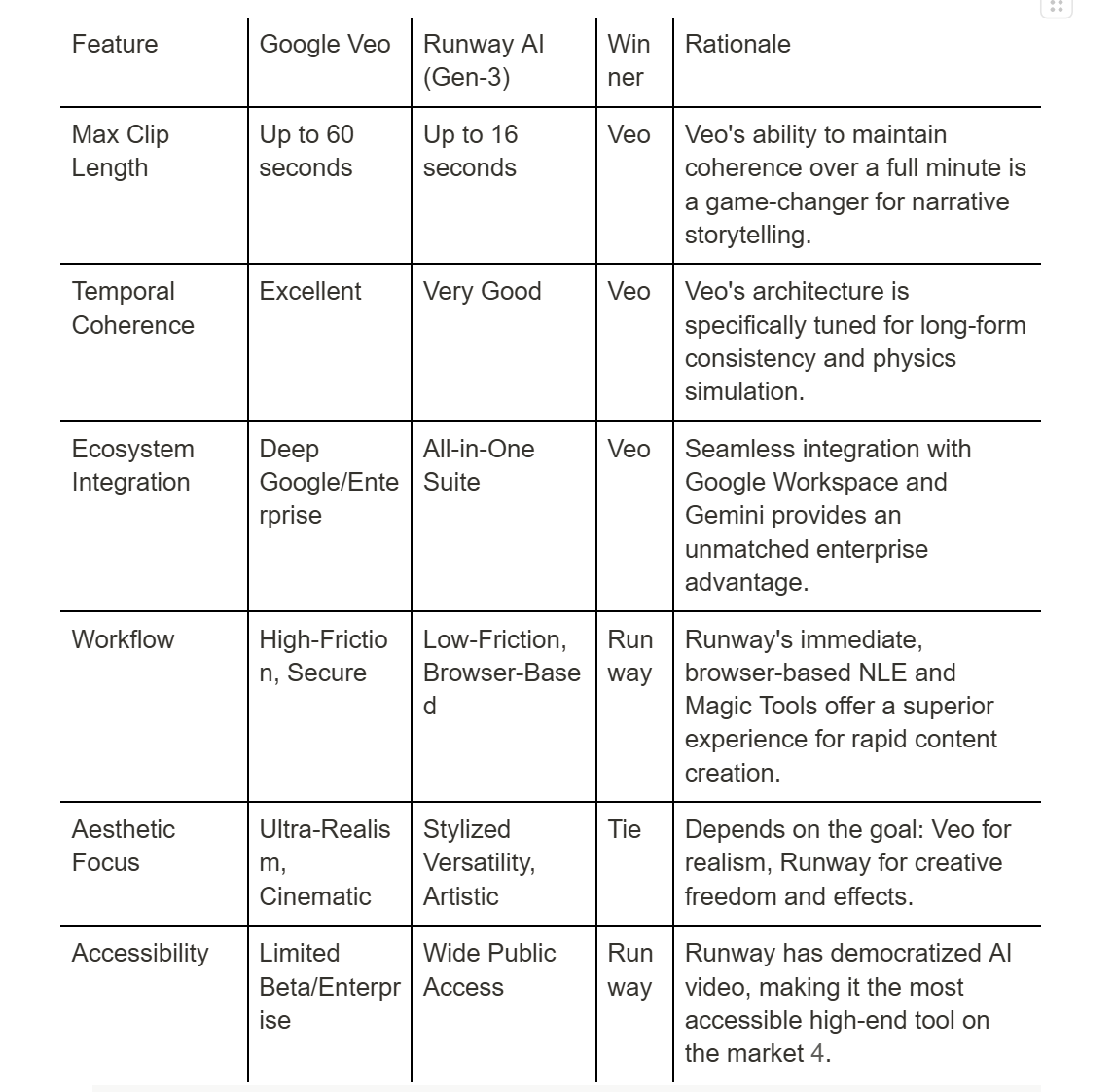
The ultimate verdict is that both platforms are leaders, but in different domains. Google Veo is the future of enterprise, long-form, cinematic production, while Runway AI is the present and future of agile, short-form, creative content. The best tool is the one that aligns with your project's scale, budget, and creative ambition.
7. Ethical and Commercial Implications: Training Data and Copyright
The generative AI space is fraught with legal and ethical questions, particularly concerning the data used to train these powerful models. The stance of Google Veo vs Runway AI on these issues is a major consideration for commercial users.
Runway AI: The Opt-Out Approach
Runway has been relatively transparent about its training data, which includes a mix of publicly available datasets and licensed footage.
- Commercial Rights: Runway offers clear commercial rights for content generated on its paid tiers, which is a necessity for its agency and professional user base.
- Opt-Out Mechanisms: While the exact composition of its training data is proprietary, Runway has engaged with the creative community, offering mechanisms for artists to opt out of having their work included in future training sets.
Google Veo: The Enterprise-Grade Compliance
Google, as a massive enterprise, operates under intense scrutiny and is likely to prioritize legal compliance and ethical guardrails for Veo.
- Training Data: Google's training data for its models, including Veo, is vast and likely includes a mix of public web data, licensed content, and data generated internally. For enterprise use, Google will need to provide strong assurances regarding the provenance of the data to mitigate copyright risk.
- Safety and Policy: Veo is integrated with Google's robust safety and content policies, which are designed to prevent the generation of harmful, misleading, or inappropriate content. This level of policy enforcement is a key selling point for large, risk-averse organizations.
- Deepfake Mitigation: Both platforms are developing tools to detect and mitigate the misuse of their technology for deepfakes, but Google's enterprise focus means Veo will likely have more stringent, policy-driven controls built into its access and usage terms.
The legal and ethical landscape is still evolving, but for a commercial entity, the perceived legal safety and policy enforcement of a platform like Veo, backed by Google's legal team, may outweigh the creative freedom offered by Runway.