Pika Labs vs Sora: The Future of AI Video Generation Showdown
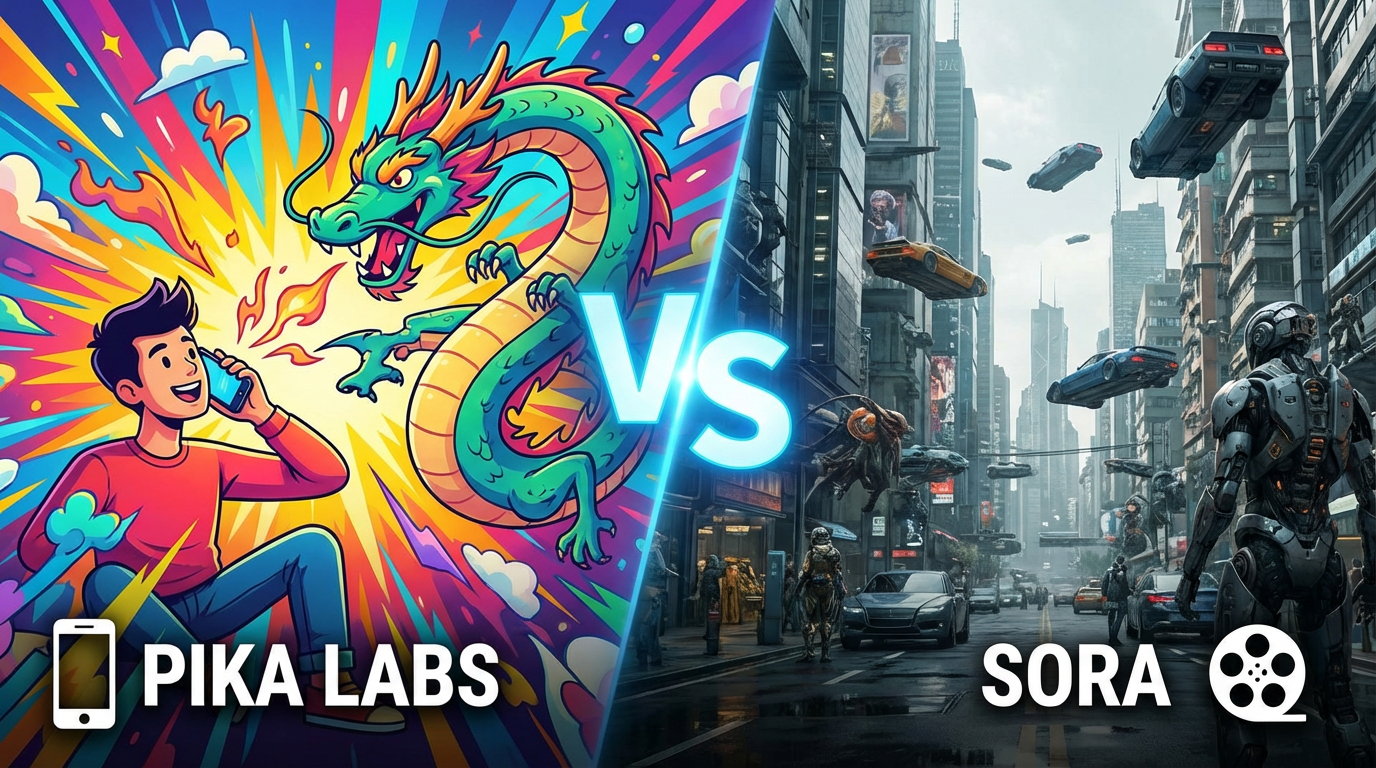
The landscape of generative AI video is being rapidly redefined by two groundbreaking platforms: Pika Labs and OpenAI’s Sora. While both promise to turn text into stunning video, they cater to different user needs, boast distinct technical capabilities, and represent contrasting visions for the future of filmmaking. For content creators, marketers, and filmmakers, understanding the nuances of Pika Labs vs Sora is essential for choosing the right tool to bring their vision to life.
This 2600-word deep dive will meticulously compare these two titans, focusing on the latest updates (including Sora 2 and Pika V2), to determine which platform is best suited for different creative and commercial goals. We will analyze their core features, video quality, accessibility, and pricing to provide a definitive guide for 2025.
The Cinematic Divide: Quality and Realism
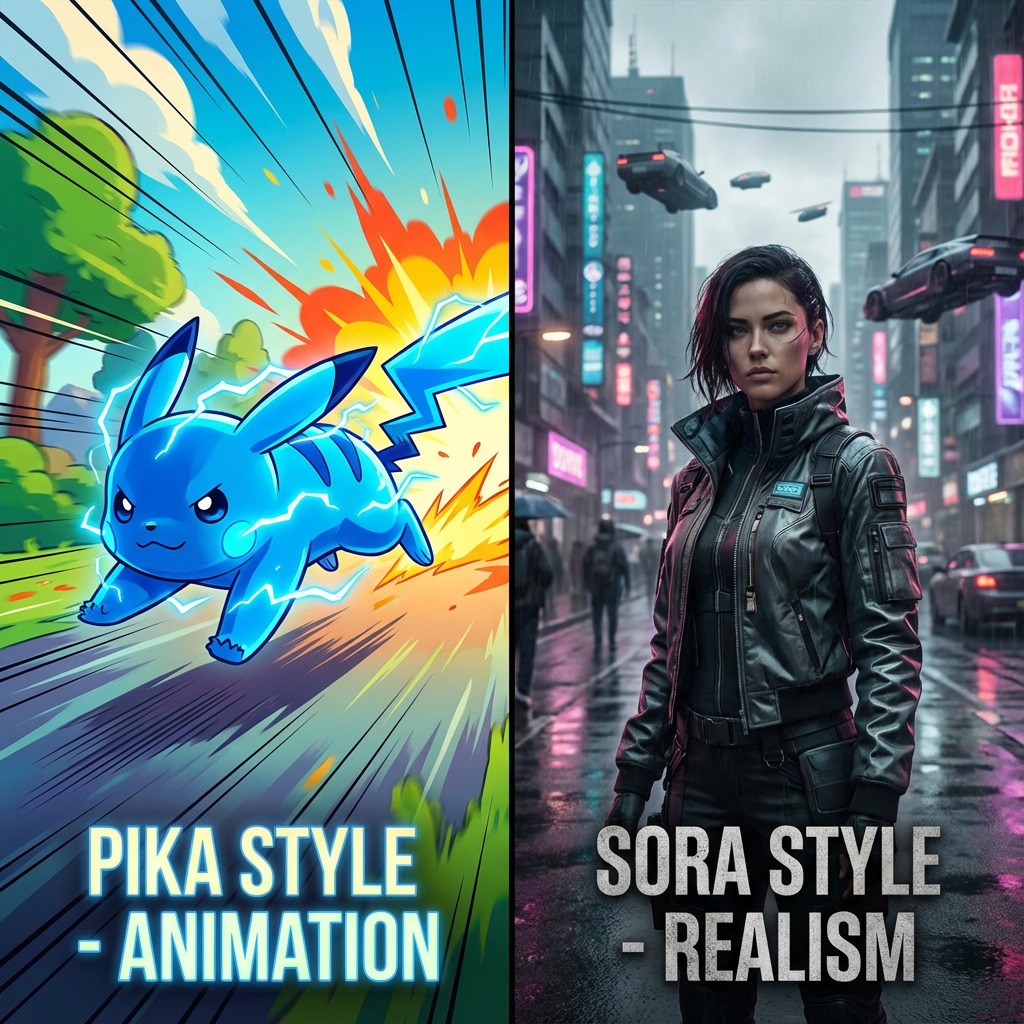
The most significant difference between the two platforms lies in the quality and style of the video output, which directly addresses the fan-out query Pika Labs vs Sora cinematic quality.
Sora: The Pursuit of Photorealism
OpenAI’s Sora is engineered to achieve an unprecedented level of photorealism, aiming to generate video that is virtually indistinguishable from real-world footage.
•Physical Accuracy: Sora’s underlying model is designed to understand and simulate the physical world, including complex object interactions, lighting, and camera movements. This results in videos with fewer of the "AI glitches" that plague earlier models.
•High Fidelity: Sora’s outputs are characterized by high resolution, intricate detail, and a deep understanding of cinematic composition. It excels at generating complex scenes with multiple characters and specific motions.
•Longer, Coherent Clips: With the release of Sora 2, the platform has demonstrated the ability to generate clips up to 25 seconds long while maintaining temporal coherence—meaning the characters and objects remain consistent throughout the entire clip .
Pika Labs: The Master of Stylization and Speed
Pika Labs, while constantly improving its realism, has built its reputation on speed, accessibility, and a highly stylized, often animated aesthetic.
•Stylized Output: Pika’s videos often lean towards a more illustrative, animated, or motion-graphic style. This is ideal for social media content, explainer videos, and artistic projects where a hyper-realistic look is not the primary goal.
•Rapid Iteration: Pika is designed for quick, iterative creation. Its fast generation times allow users to test multiple prompts and styles rapidly, making it a favorite for fast-paced content creation.
•Focus on Editing: Pika V2 has introduced powerful editing features like Inpainting and Outpainting, allowing users to modify specific elements within a generated video or expand its aspect ratio, which is a key feature for creators who need fine-grained control over their final product.
Accessibility and Workflow: The User Experience
The fan-out query Pika Labs vs Sora accessibility and ease of use is a crucial point of comparison, as it determines the barrier to entry for new users.
Pika Labs: Designed for the Creator
Pika Labs has prioritized accessibility and a creator-friendly workflow, making it a powerful tool for individuals and small teams.
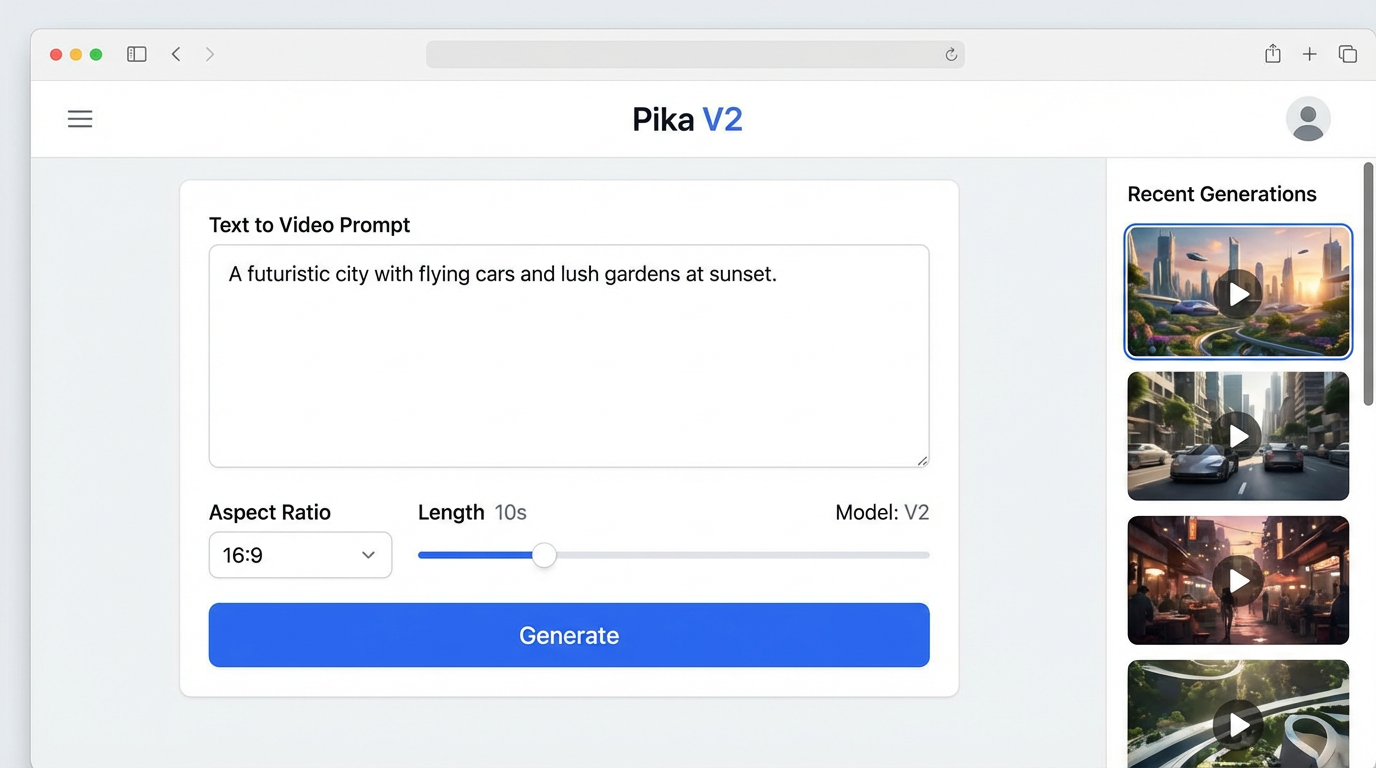
•Discord and Web Interface: Pika initially gained popularity through its simple, intuitive Discord bot. It has since expanded to a dedicated web interface, which is easy to navigate and requires minimal technical knowledge.
•Free Tier and Affordable Plans: Pika offers a generous free tier, allowing new users to experiment with the technology before committing to a paid plan. Its paid plans are credit-based and generally affordable, catering to the budget of independent creators 11
.
•Mobile-Friendly: Pika’s design philosophy is inherently mobile-friendly, recognizing that a large portion of its user base creates content for platforms like TikTok and Instagram.
Sora: The Professional Tool
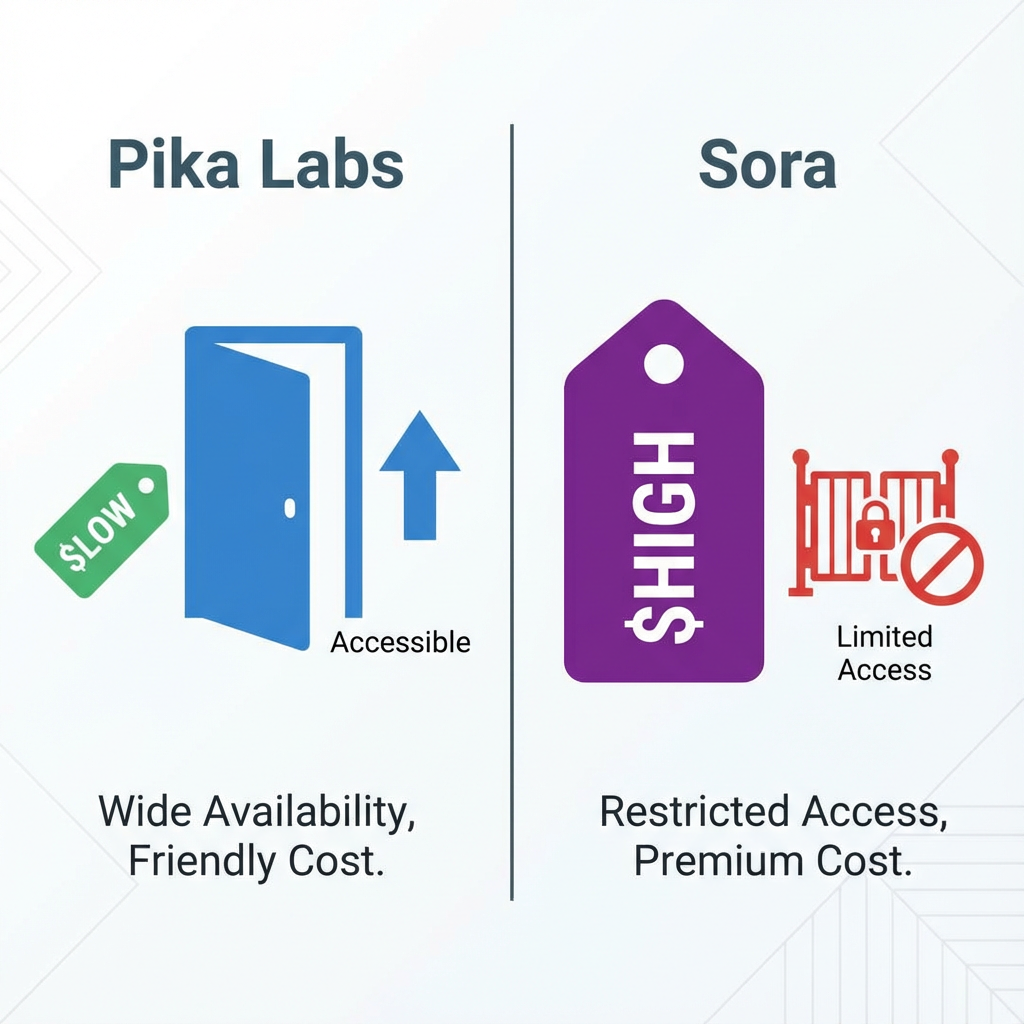
Sora, while powerful, is currently positioned as a high-end, professional tool, with a more limited and controlled access model.
•Limited Access: As of late 2025, Sora access is primarily granted to a select group of filmmakers, visual artists, and researchers. This limited availability suggests a focus on quality control and high-end use cases rather than mass market accessibility.
•Steeper Learning Curve: While the prompt interface is simple, achieving the highest quality, most controllable results in Sora requires a deeper understanding of cinematic language and prompt engineering. The introduction of Storyboards in Sora 2, while powerful, adds a layer of complexity aimed at professional production pipelines 11
.
•Integration with OpenAI Ecosystem: Sora is deeply integrated with the broader OpenAI ecosystem, suggesting future workflows that may involve combining video generation with large language models (LLMs) for scriptwriting and editing.
Video Length and Temporal Coherence
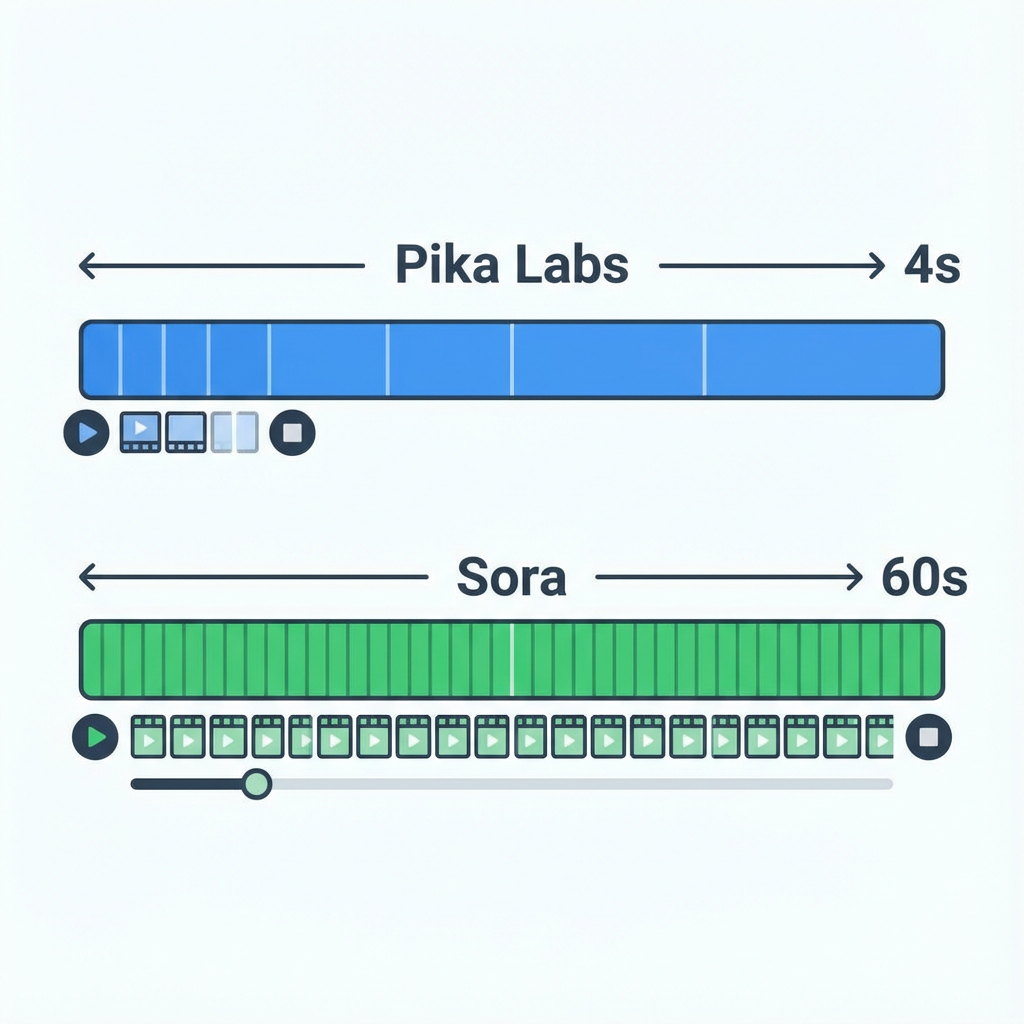
The fan-out query Pika Labs vs Sora video length and temporal coherence is a technical battleground where Sora currently holds a significant lead.
Sora’s Coherence Advantage
Sora’s ability to generate videos up to 25 seconds long with high temporal coherence is a game-changer. Temporal coherence refers to the model's ability to keep characters, objects, and the environment consistent from one frame to the next.
•Longer Clips: Sora 2 allows for clips between 15 and 25 seconds, which is a crucial length for cinematic shots and short-form narratives 11
.
•Scene Understanding: Sora’s model is trained to understand the entire scene and how elements interact over time, drastically reducing the common issue of objects morphing or disappearing.
Pika’s Iterative Approach
Pika’s focus has been on shorter, more editable clips, though it is rapidly catching up.
•Shorter Clips: Pika typically generates clips that are shorter, often under 10 seconds, which are then chained together or looped for social media use.
•Editing Tools as a Solution: Pika’s advanced editing tools (Inpainting, Outpainting) are a pragmatic solution to the temporal coherence problem. If an object glitches, the user can quickly edit that specific frame or section without regenerating the entire clip.
Pricing and Commercial Viability
The fan-out query Pika Labs vs Sora pricing and commercial viability is a practical concern for any business or professional creator.
Pika Labs: Clear and Credit-Based
Pika Labs operates on a transparent, credit-based system, which is common among AI tools.
•Free Tier: The free tier is excellent for testing and hobby use.
•Paid Plans: Paid plans, such as the Standard Plan for around $10/month, offer a set number of credits and access to premium features and models. This predictable, subscription-based model is easy for creators to budget 11
.
•Commercial Use: Pika’s terms generally allow for commercial use of generated content, provided the user is on a paid plan.
Sora: Enterprise-Level Pricing (Expected)
While OpenAI has not released public pricing for Sora, its positioning suggests an enterprise-level, API-driven pricing model similar to its GPT-4 or DALL-E 3 API access.
•High Cost per Second (Expected): Given the massive computational resources required to generate a high-fidelity, 25-second clip, the cost per second of video generation is expected to be significantly higher than Pika’s.
•API Integration: The primary commercial viability of Sora will likely be through API integration into professional video editing software and large-scale media production pipelines.
Conclusion: Which Platform Reigns Supreme?
The battle between Pika Labs vs Sora is not a zero-sum game; rather, it is a clear delineation of the market.
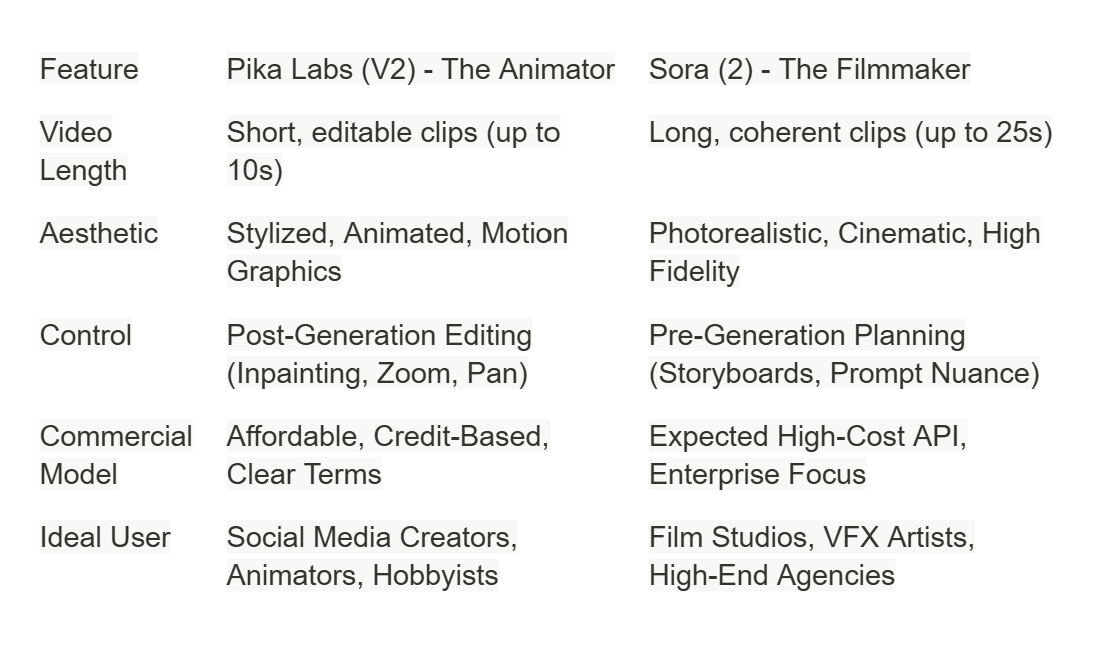
Pika Labs is the clear winner for the everyday content creator, social media marketer, and independent artist who needs fast, affordable, and highly editable video.
Sora is the undisputed champion for the professional filmmaker, VFX artist, and large studio that requires the highest level of photorealism and temporal coherence for cinematic projects.
The future of AI video generation is not about one tool replacing the other, but about creators strategically leveraging both Pika Labs vs Sora to cover the entire spectrum of creative needs, from quick social media posts to high-end cinematic sequences.
Advanced Features and Creative Control
Beyond the basic text-to-video function, the true power of these platforms is revealed in their advanced features and the level of creative control they offer the user.
Pika Labs: The Toolkit for the Animator
Pika Labs has focused on providing a robust set of tools that allow users to manipulate and refine their generated videos, effectively turning the platform into a lightweight animation studio.
•Image-to-Video and Video-to-Video: Pika excels at taking an existing image or video and animating it or transforming it based on a new text prompt. This is invaluable for creators who want to maintain a specific visual style or character design.
•Camera Controls: Pika offers intuitive camera controls (e.g., pan, zoom, rotate ) that can be applied to the generated video, giving the user a director-like ability to refine the shot after generation.
•Motion Control: Users can specify the intensity and direction of motion, which is critical for achieving precise, non-chaotic movement in the final clip. This level of control makes Pika highly suitable for animators and motion graphic designers.
Sora: The Simulation Engine
Sora’s advanced features are less about post-generation manipulation and more about pre-generation simulation and control, which is a key differentiator in the Pika Labs vs Sora debate.
•Frame-by-Frame Planning: Sora 2 introduced the ability to plan scenes using a storyboard-like interface, allowing users to define key frames and camera angles, ensuring a more predictable and controllable output for complex narratives 11
.
•High-Resolution Output: Sora’s ability to generate videos at resolutions up to 1080p (and potentially higher for professional users) means its output is immediately production-ready for high-end projects, unlike Pika's output which often requires upscaling.
•Complex Prompt Understanding: Sora’s core strength is its deep understanding of long, complex, and nuanced prompts. It can accurately render scenes with specific physical properties, emotional tones, and detailed environmental interactions, which is a significant leap in generative AI capability.
Ethical Considerations and Data Training
The ethical and commercial implications of AI video generation are a growing concern, and the training data used by Pika Labs vs Sora reflects their differing philosophies.
Sora’s Opaque Training
OpenAI has been characteristically opaque about the exact dataset used to train Sora. While they have stated it includes publicly available data and licensed data, the lack of transparency raises concerns for some creators and intellectual property rights holders.
•High-Value Content: The quality of Sora’s output suggests it has been trained on an extremely high-quality, vast, and diverse dataset of video content, likely including professional film and stock footage.
•Watermarking: OpenAI has committed to watermarking its content, but the lack of transparency in the training data remains a point of contention for the creative community.
Pika Labs’ Community-Driven Approach
Pika Labs, while also not fully transparent, has a more community-driven and open approach, often engaging with its user base on the ethical use of the tool.
•Focus on User-Generated Content: Pika’s early success was built on its community, and a significant portion of its development is guided by user feedback and the types of content its users create.
•Clearer Commercial Terms: Pika’s clear pricing and commercial terms make it easier for users to understand their rights to the generated content, which is a significant advantage for small businesses and independent creators.
The Future: API Integration and Ecosystems
The long-term viability of Pika Labs vs Sora will depend on their ability to integrate into the broader creative ecosystem.
Sora: The API Powerhouse
Sora is poised to become the dominant API for video generation, integrated into third-party applications and professional software suites.
•Platform Agnostic: By offering a powerful API, Sora can be integrated into any video editing software (e.g., Adobe Premiere Pro, DaVinci Resolve) or 3D rendering pipeline, making it a powerful backend engine for the entire industry.
•Enterprise Focus: Sora’s focus on high-fidelity, controllable output makes it a natural fit for large media companies, advertising agencies, and film studios that require consistent, production-ready assets at scale.
Pika Labs: The Standalone Studio
Pika Labs is building a strong case for being the go-to standalone application for quick, creative video generation.
•All-in-One Platform: Pika’s continued development of in-app editing and manipulation tools suggests a future where it is an all-in-one platform for video creation, from prompt to final edit, without needing to rely on external software.
•Community and Innovation: Pika’s rapid iteration cycle, driven by community feedback, allows it to quickly adopt new features and stay ahead of the curve in terms of user-requested functionality.
Final Verdict: The Strategic Use of Both
In the final analysis of Pika Labs vs Sora, the most strategic approach for any serious creator is to understand the unique strengths of each platform and use them in tandem.
Pika Labs is the tool for speed, iteration, and artistic manipulation. It is the perfect platform for daily content creation and rapid prototyping.
Sora is the tool for fidelity, realism, and complex narrative. It is the future of high-end, cinematic visual effects and film production.
By recognizing that Pika offers the creative toolkit and Sora offers the simulation engine, creators can leverage the best of both worlds to dominate the AI video landscape in 2025 and beyond.