Runway vs DeepBrain AI: The Ultimate AI Video Generation Showdown
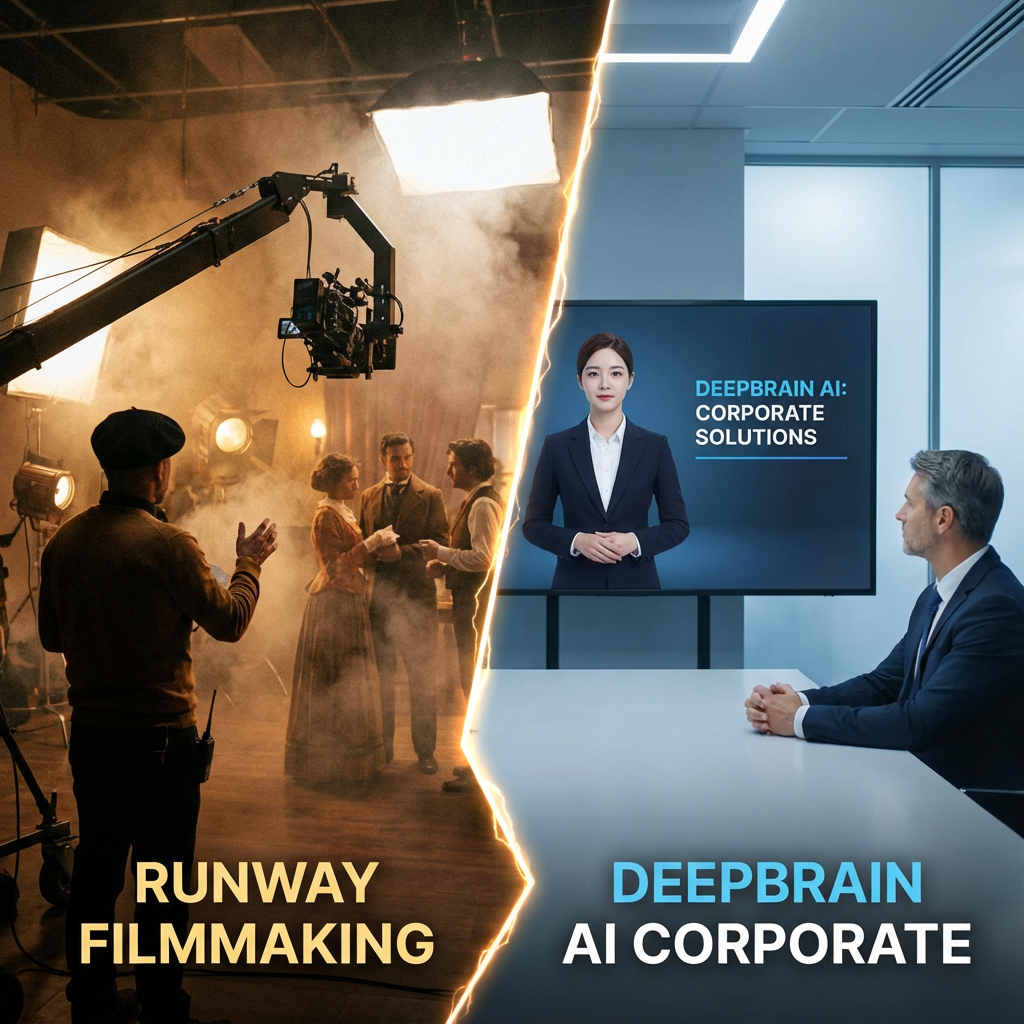
The landscape of AI video generation is rapidly segmenting into two distinct, yet equally powerful, domains: generative filmmaking and automated corporate communication. At the intersection of this divide stand two major players: Runway vs DeepBrain AI. While both platforms leverage artificial intelligence to create video, their core philosophies, target audiences, and ultimate output are worlds apart.
Runway, the pioneer of the AI filmmaking movement, has built an all-in-one creative suite focused on artistic freedom, cinematic quality, and granular control over every frame. DeepBrain AI, conversely, has specialized in the hyper-efficient creation of corporate, educational, and marketing content using photorealistic AI Avatars.
This comprehensive 2500-word analysis will dissect the fundamental differences between these two platforms, helping professional creators and businesses determine which tool is the ultimate fit for their specific needs. We will compare their core technology, workflow, pricing, and ideal use cases to provide a definitive answer to the question: Which platform reigns supreme in the age of generative video?
1. Core Philosophies: Filmmaking vs. Corporate Efficiency
The most critical distinction between these two platforms lies in their foundational mission. Understanding this difference is key to choosing the right tool.
Runway: The Creative Suite for the Next Generation of Filmmakers
Runway's philosophy is rooted in the democratization of filmmaking. Its goal is to provide a comprehensive, end-to-end creative suite that empowers artists to generate, edit, and manipulate video content with unprecedented ease. The platform is designed for creative professionals—filmmakers, motion designers, and artists—who need maximum control and artistic flexibility.
Key tenets of Runway's philosophy include:
- Generative Freedom: Generating entirely new scenes, objects, and environments from text or image prompts.
- Granular Control: Offering tools like Motion Brush, Camera Controls, and Director Mode to fine-tune the output.
- All-in-One Workflow: Integrating generative tools with traditional editing features (green screen, inpainting, object removal) to create a seamless post-production environment.
DeepBrain AI: The Automated Solution for Business Communication
DeepBrain AI's philosophy is centered on efficiency, consistency, and the automation of professional video content. It is not a tool for artistic expression but a solution for businesses that need to produce high-volume, high-quality, and highly consistent video presentations, training modules, and corporate announcements without the cost and complexity of traditional filming.
Key tenets of DeepBrain AI's philosophy include:
- Avatar Consistency: Providing a library of photorealistic AI Avatars that can deliver any script with perfect lip-sync and consistent appearance.
- Text-to-Video Simplicity: Streamlining the process to a simple script input, eliminating the need for cameras, actors, or studios.
- Scalability: Enabling the rapid creation of localized content in over 80 languages, making it an ideal tool for global enterprises.
2. Technical Output: Cinematic Artistry vs. Avatar Synthesis
The final video output from each platform is the clearest indicator of their divergent goals.
Runway's Cinematic Output
Runway's Gen-3 model is focused on generating cinematic, temporally coherent, and photorealistic video clips. Its strength lies in creating complex scenes, dynamic camera movements, and highly artistic visual effects. The output is designed to be a foundation for further creative work, often serving as B-roll, concept art, or the core of a music video.
The aesthetic is often characterized by:
- High Fidelity: Attention to detail in lighting, texture, and shadow.
- Artistic Flair: The ability to generate videos in a vast array of styles, from hyper-realistic to abstract animation.
- Dynamic Motion: Excellent handling of complex camera moves (pan, tilt, dolly) and object movement within the scene.
DeepBrain AI's Consistent Output
DeepBrain AI's output is highly specialized: a photorealistic human avatar speaking a user-provided script. The platform's technical achievement is not in generating a complex world, but in synthesizing a perfectly consistent, professional human presenter.
The aesthetic is characterized by:
- Uncanny Realism: Highly convincing facial expressions, lip-sync, and body language.
- Predictable Consistency: The avatar looks and sounds the same across hundreds of videos, which is crucial for brand identity and training materials.
- Focus on Script: The visual elements are secondary to the clear, professional delivery of the spoken script.
The following visual illustrates this core difference in output:
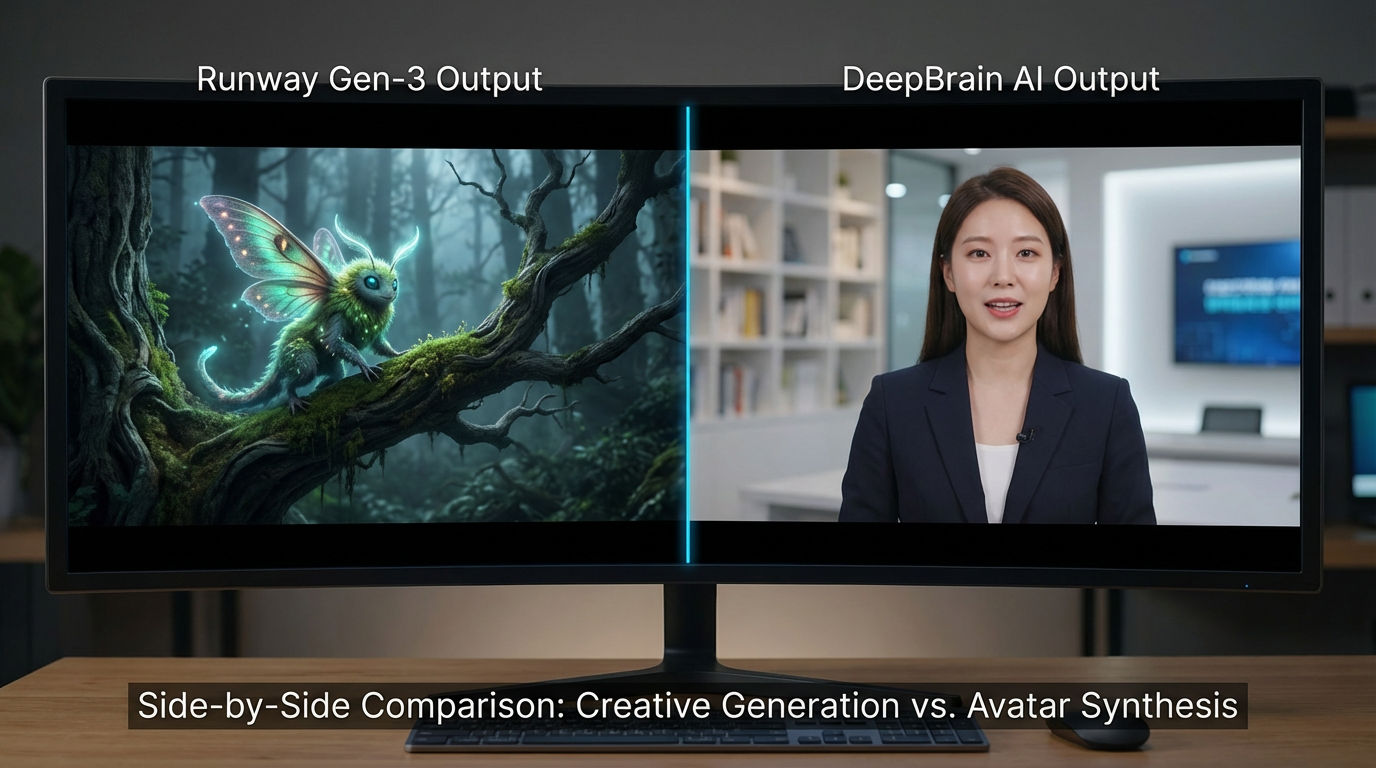
A side-by-side comparison of video output. The left side shows a hyper-realistic, generated scene (e.g., a fantastical creature in a forest, representing Runway's Gen-3). The right side shows a photorealistic human AI avatar speaking directly to the camera in a professional setting (representing DeepBrain AI's core output).
3. Workflow and Ecosystem Integration
The way a user interacts with each platform reveals its intended place in the broader production pipeline.
Runway: The All-in-One Creative Hub
Runway is designed to be a creative hub where multiple AI tools and traditional editing features coexist. Its workflow is iterative and experimental, encouraging users to combine different "Magic Tools" to achieve their vision.
The Runway ecosystem is built for integration with the existing creative industry 1. Generated clips are often exported to professional Non-Linear Editing (NLE) software like Adobe Premiere Pro or DaVinci Resolve for final assembly. Runway's strength is its versatility, offering tools like:
- Gen-3 Alpha: Text-to-video generation.
- Motion Brush: Adding movement to specific areas of a static image.
- Inpainting/Outpainting: Seamlessly removing or extending elements in a video.
DeepBrain AI: The Text-to-Video Assembly Line
DeepBrain AI offers a highly streamlined, low-friction workflow that is more akin to a content assembly line. The user's primary interaction is through a clean, web-based interface where they upload a script, select an avatar, choose a background, and click "Generate."
DeepBrain AI's ecosystem is built for integration with business platforms. Its output is often used directly in:
- Learning Management Systems (LMS): For rapid course deployment.
- Corporate Intranets: For internal communications.
- Marketing Automation: For personalized video outreach.
The platform's strength is its speed and simplicity, allowing a non-video professional to create a polished video in minutes.
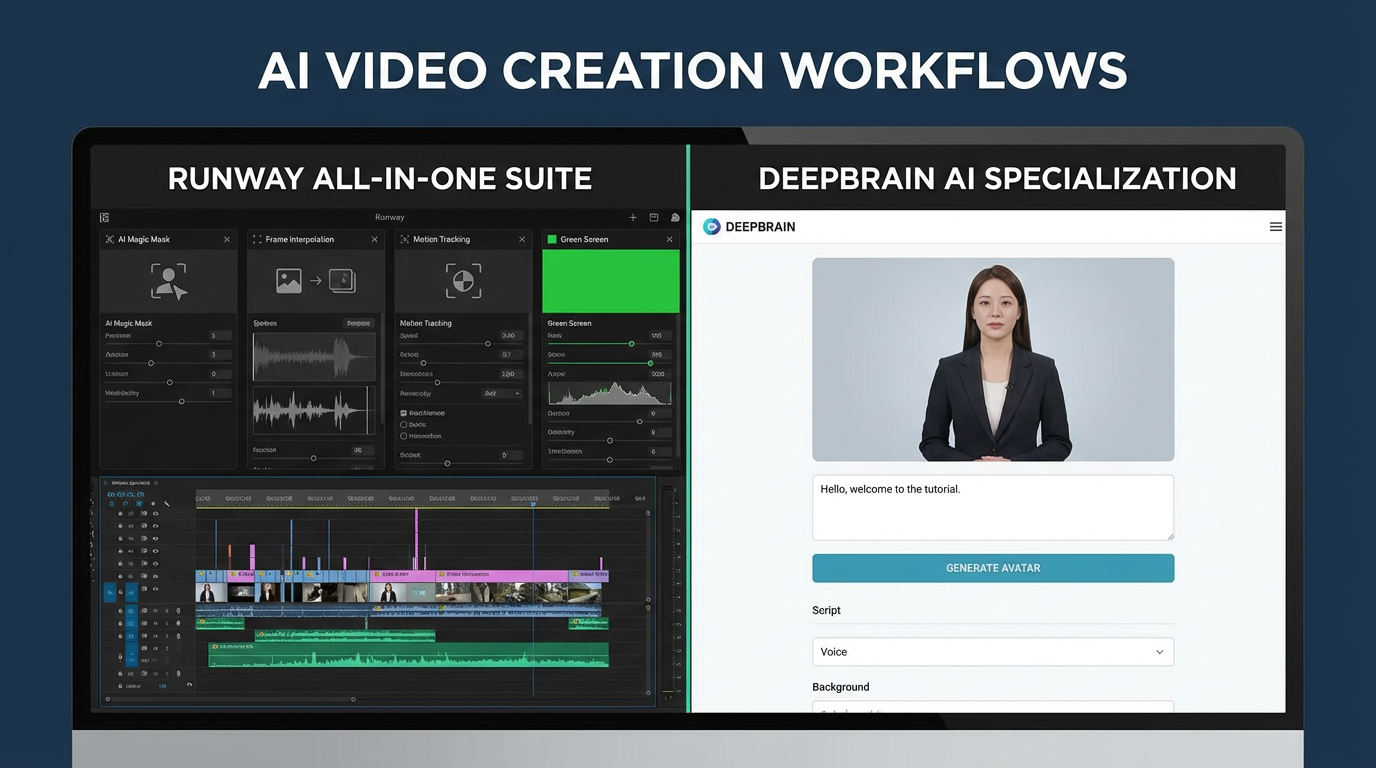
A visual showing a complex, multi-track video editing timeline with various AI tools open (representing Runway's all-in-one suite) next to a clean, text-to-avatar interface with a professional AI presenter (representing DeepBrain AI's specialization). Use a clear split to show the two different workflows.
4. Control and Customization: Granular vs. Script-Level
The level and type of control offered by each platform are fundamentally different, reflecting their core philosophies.
Runway: Granular, Frame-Level Control
Runway offers a deep level of granular control over the generative process. Tools like Director Mode allow users to define camera angles, movements, and shot composition with precision. The Motion Brush gives frame-level control over which elements move and how. This level of detail is essential for creative professionals who need to match a specific storyboard or artistic vision.
Customization in Runway is about manipulating the raw visual output. It is a tool for creative iteration.
DeepBrain AI: Script-Level and Avatar Control
DeepBrain AI offers script-level control. The user's primary levers are the script itself, the choice of avatar, and the background/template. The platform ensures the avatar's performance (lip-sync, emotion) perfectly matches the script. While it offers customization of the avatar's clothing and background, it does not offer granular control over the generative video itself.
Customization in DeepBrain AI is about ensuring brand consistency and message clarity.
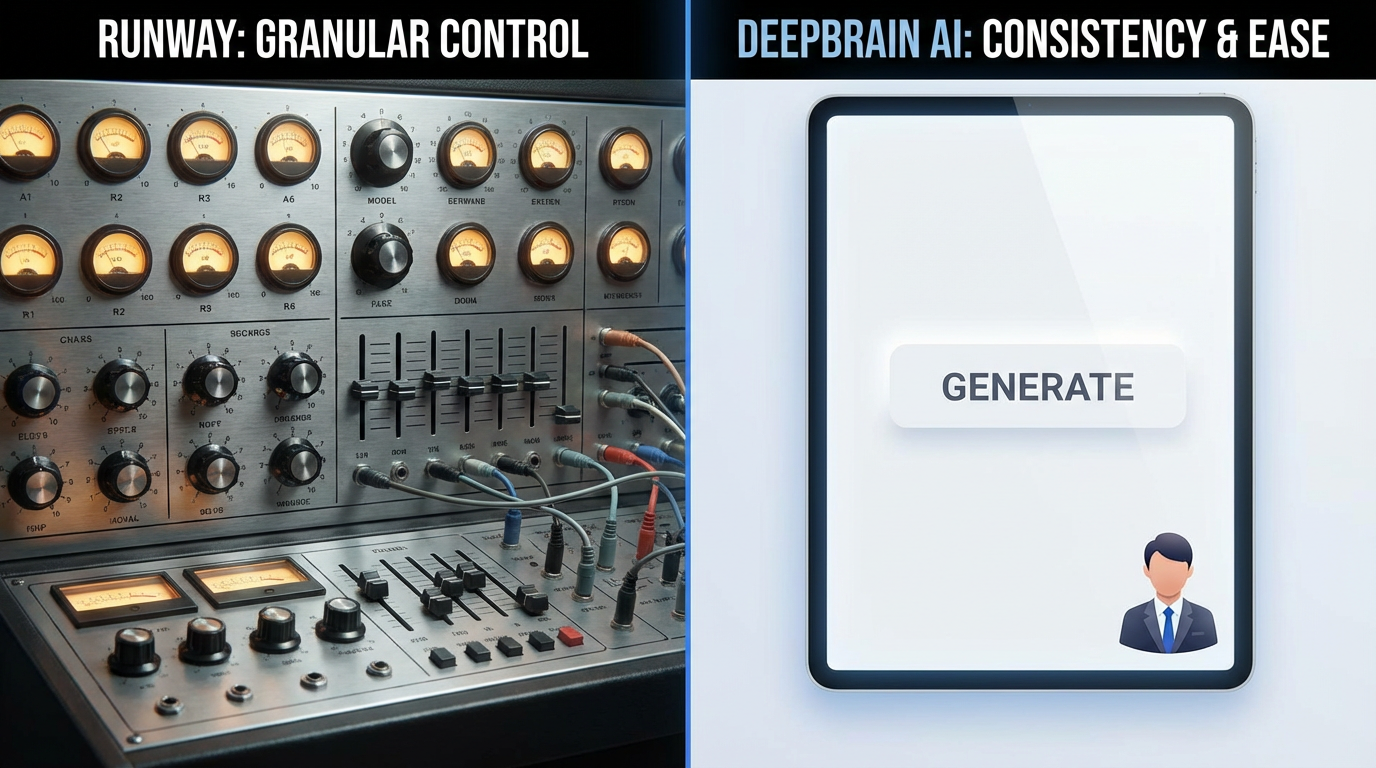
A visual metaphor. The left side shows a complex control panel with many dials and sliders (representing Runway's granular control). The right side shows a simple, clean interface with a single "Generate" button and a consistent, professional-looking avatar (representing DeepBrain AI's focus on consistency and ease of use).
5. Pricing and Business Model: Credits vs. Subscription
The financial models of Runway vs DeepBrain AI are a direct reflection of their target markets and usage patterns.
Runway's Credit-Based Model
Runway operates on a credit-based system, where users purchase credits that are consumed based on the complexity and length of the generation. This model is ideal for:
- Intermittent Users: Artists and freelancers who only need the tool for specific projects.
- Creative Experimentation: Users can test many ideas quickly, with costs scaling directly with usage.
- Flexibility: Credits can be used across all of Runway's 30+ Magic Tools.
A typical 5-second Gen-3 video consumes a set number of credits, making the cost variable and directly tied to the volume of generative output 2.
DeepBrain AI's Subscription-Based Model
DeepBrain AI uses a more traditional subscription model based on the total minutes of video output per month. This model is ideal for:
- High-Volume Corporate Users: Businesses that need a predictable, fixed monthly cost for regular content creation (e.g., weekly training videos).
- Budget Predictability: The cost is fixed regardless of the number of attempts or minor edits, prioritizing time-saving over creative iteration.
The pricing reflects a focus on business users who value time savings and professional presentation over extensive creative experimentation.
.png)
A visual comparison of two pricing models. The left side shows a credit-based system with a small icon of a film reel (Runway). The right side shows a subscription-based system with a large icon of a clock (DeepBrain AI's focus on time-saving).
6. Ideal Use Cases: Where Each Platform Shines
The ultimate decision between Runway vs DeepBrain AI comes down to the specific project requirements.
Runway's Domain: Creative and Artistic Projects
Runway is the superior choice for projects that require high artistic input, unique visuals, and integration with a traditional post-production workflow.
- Music Videos: Generating surreal, stylized, or hyper-realistic visuals that would be impossible to film.
- Concept Art & Pre-Visualization: Rapidly creating animated storyboards and visual concepts for film production.
- VFX & Post-Production: Using Magic Tools like Inpainting and Green Screen to enhance existing footage.
- Independent Filmmaking: Providing a low-cost, high-quality alternative to traditional visual effects.
DeepBrain AI's Domain: Corporate and Educational Content
DeepBrain AI is the clear winner for projects that prioritize speed, consistency, and the delivery of information through a human-like presenter.
- Corporate Training & Onboarding: Creating hundreds of minutes of consistent, multi-lingual training videos without hiring actors.
- E-Learning & Tutorials: Producing professional-looking educational content where the focus is on the script and the presenter's clarity.
- Internal Communications: Generating quick, personalized video messages from leadership to employees.
- Marketing & Explainer Videos: Creating product demos and explainer videos with a consistent brand face.
7. Ethical and Commercial Safety: Provenance vs. Brand Safety
The commercial viability of AI-generated video hinges on two critical factors: provenance (knowing where the content came from) and brand safety (ensuring the content is legally and ethically sound). The approaches of Runway vs DeepBrain AI to these issues are fundamentally different.
Runway: Provenance and Creative Rights
Runway, as a tool for generative art, is deeply involved in the debate over training data and copyright. To address this, Runway is a key proponent of the C2PA (Coalition for Content Provenance and Authenticity) standard 4. This technology embeds cryptographic metadata into generated videos, allowing viewers to verify that the content was created by Runway's AI. This is crucial for establishing trust and combating misinformation.
Furthermore, Runway's commercial terms are generally favorable to the creator, allowing users to own the commercial rights to the content they generate, provided they are on a paid plan. The primary ethical concern remains the source of the training data, which is a common industry-wide issue.
DeepBrain AI: Legal and Brand Safety
DeepBrain AI operates in a highly sensitive corporate environment where legal and brand safety are paramount. Its primary ethical advantage is its controlled output. Since the video is synthesized from a script and a pre-approved, licensed avatar, the risk of generating inappropriate, copyrighted, or off-brand content is significantly lower.
DeepBrain AI's business model includes licensing the use of its avatars, which provides a layer of legal protection and consistency that is highly valued by enterprise clients. The focus is on ensuring that the final video is a legally sound, brand-safe communication tool, making it the safer choice for regulated industries and large corporations 5.
8. The Ecosystem Battle: Integration and Future Growth
The long-term value of a platform is often determined by its ecosystem and its ability to integrate with other tools.
Runway's Creative Ecosystem
Runway is deeply integrated into the creative ecosystem. Its focus is on interoperability with the Adobe Creative Cloud and other professional tools. The future of Runway involves expanding its suite of Magic Tools and improving the temporal coherence of its generative models to better serve the needs of professional filmmakers 3. Its growth is tied to the evolution of the creative industry.
DeepBrain AI's Business Ecosystem
DeepBrain AI is integrated into the business communication ecosystem. Its focus is on providing API access and direct integration with platforms like Microsoft PowerPoint, various Learning Management Systems (LMS), and Customer Relationship Management (CRM) tools. The future of DeepBrain AI involves expanding its library of avatars, voices, and languages, and improving the realism and emotional range of its AI presenters. Its growth is tied to the enterprise demand for scalable, automated video content.
.png)
A visual showing Runway's integration with a traditional video editor (e.g., Adobe Premiere Pro) next to DeepBrain AI's integration with a business communication platform (e.g., Microsoft PowerPoint or a CRM). Use connecting lines to show the different ecosystem focuses.
8. Summary of the Showdown: Runway vs DeepBrain AI
The table below summarizes the key differences between the two platforms across critical metrics.
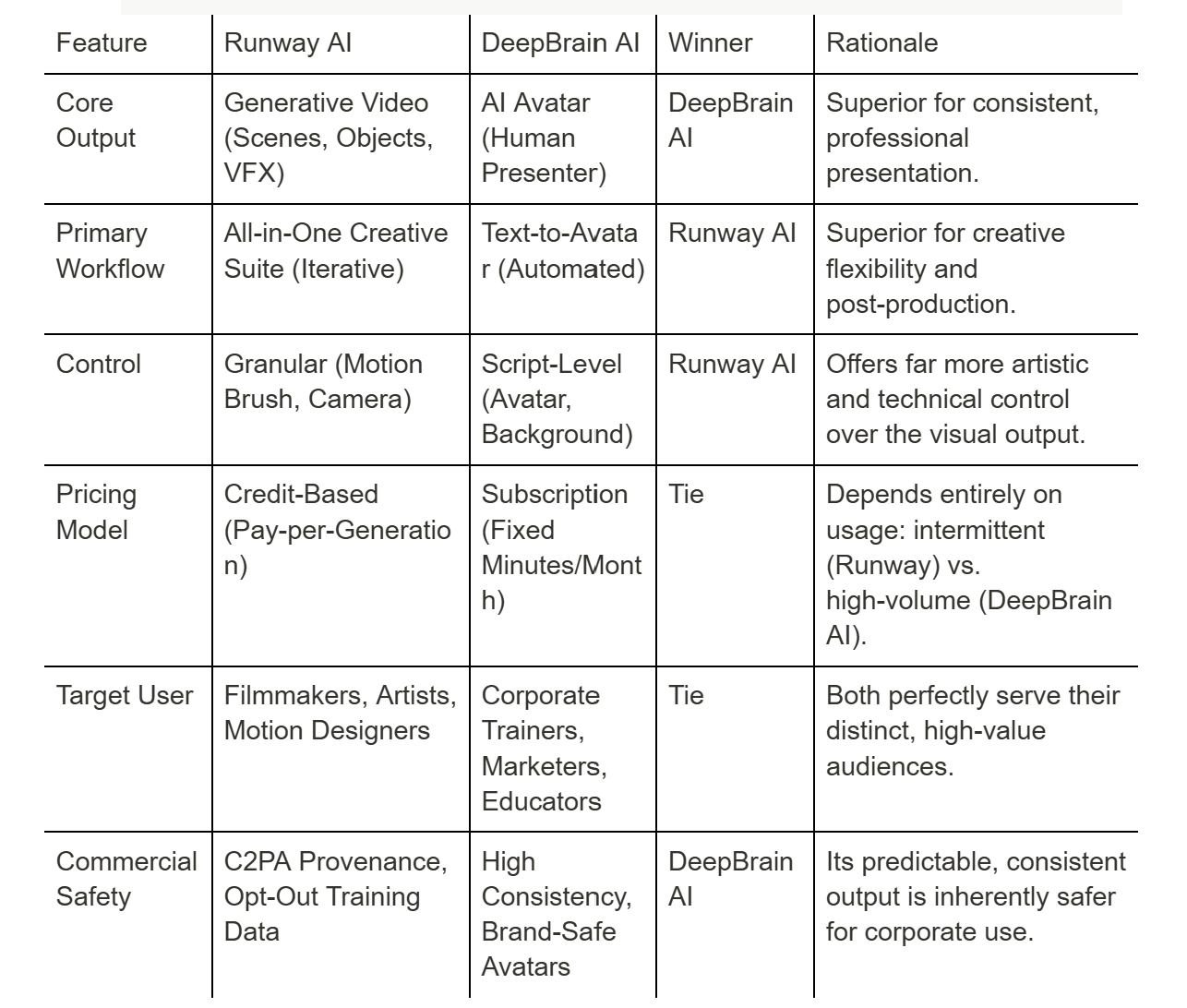
9. Conclusion: Choosing Your AI Partner
The choice between Runway vs DeepBrain AI is a choice between two highly specialized, best-in-class tools. There is no single "better" platform; only the one that is better suited for your specific creative or business objective.
If your goal is artistic expression, cinematic quality, and maximum control over every visual element, Runway is the clear and undisputed winner. Its Gen-3 model and suite of Magic Tools make it the essential platform for the next generation of filmmakers and visual effects artists 4.
If your goal is high-volume, consistent, and cost-effective communication through a professional human presenter, DeepBrain AI is the superior choice. Its streamlined text-to-avatar workflow is a game-changer for corporate training, e-learning, and internal communications, offering a level of speed and scalability that traditional video production cannot match.
The competition between Runway vs DeepBrain AI ensures that the future of video creation will be both highly artistic and hyper-efficient, catering to the full spectrum of media production needs.