Sora vs Veo vs Kling: The Ultimate AI Video Generator Showdown
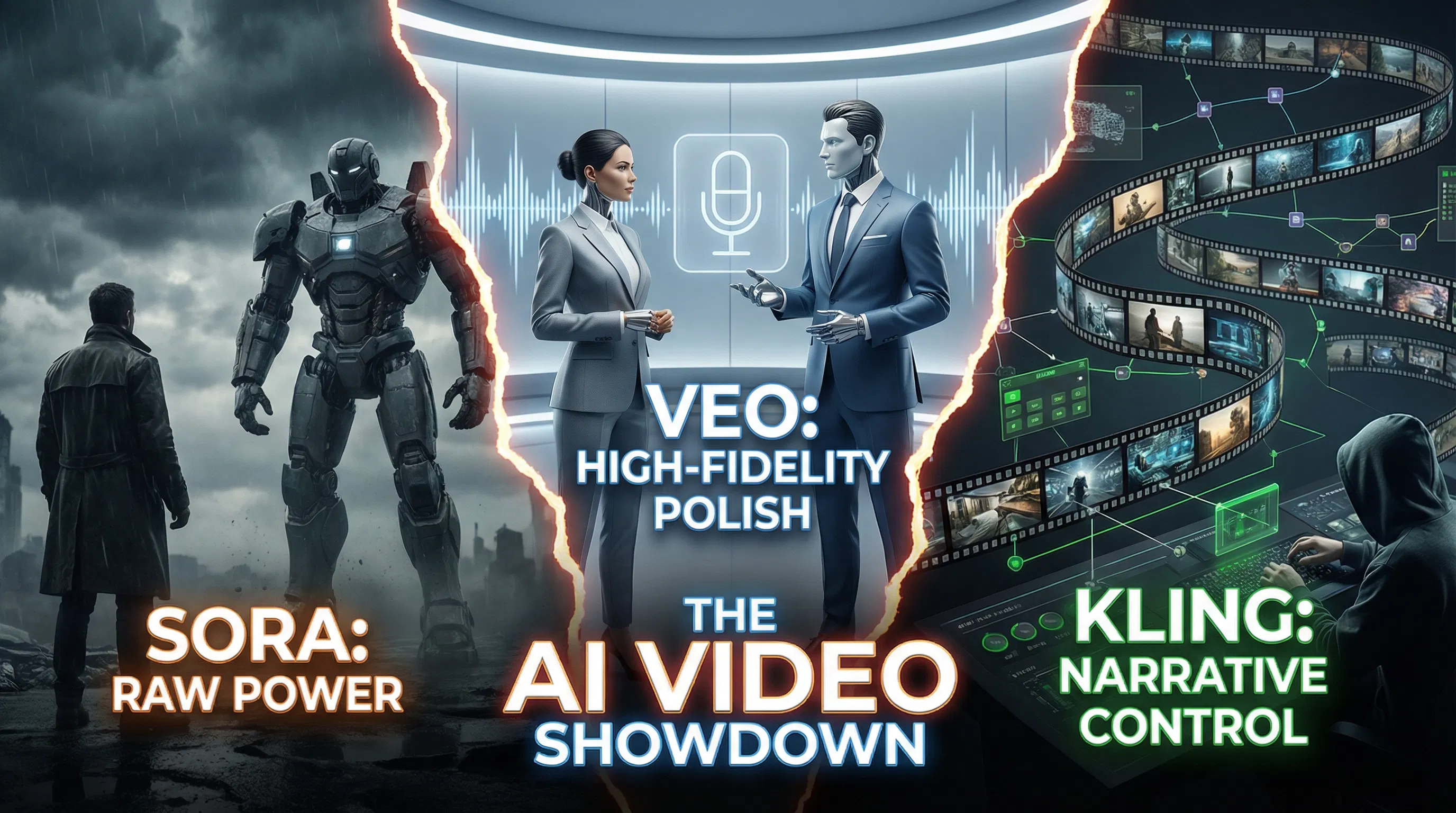
The race to create the world’s most powerful and realistic AI video generator has narrowed to a fierce three-way contest. On one side is Sora, the highly-anticipated model from OpenAI, promising unprecedented realism and temporal coherence. In the middle is Veo, Google’s polished and rapidly-evolving model, which has quickly established itself as a leader in high-fidelity output and native audio integration. And on the third side is Kling, the Chinese-developed dark horse, which is pushing the boundaries of video length and user control.
For filmmakers, content creators, and technologists, the comparison of Sora vs Veo vs Kling is not just a technical exercise—it’s a look into the future of cinematic production. Each model represents a distinct philosophy: Sora, the pursuit of raw, photorealistic power; Veo, the focus on polished, integrated, and accessible quality; and Kling, the emphasis on long-form narrative control. This comprehensive 2500-word analysis will serve as your definitive guide, comparing the core technical specifications, aesthetic output, control features, and accessibility of these three titans.
1. Core Technical Specifications: Length, Resolution, and Temporal Coherence
The true measure of a generative video model lies in its ability to maintain consistency and detail over time.
Sora: The Coherence Champion
Sora’s primary technical advantage, based on public demonstrations, is its temporal coherence—the ability to maintain the identity of characters, objects, and the physics of a scene over a long duration. This is achieved through a transformer architecture that processes video data as a collection of "patches" in space and time, allowing it to model the underlying structure of the world.
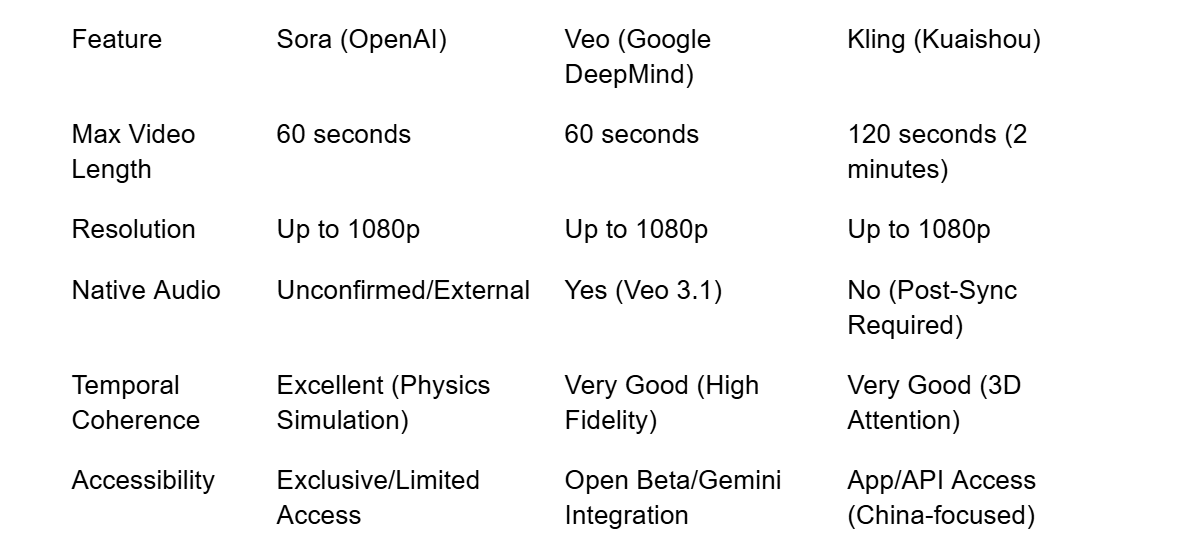
•Video Length: Up to 60 seconds. This was a groundbreaking length upon its announcement and remains a benchmark for high-quality, single-prompt generation. The ability to generate a full minute of coherent video is a massive leap over previous models.
•Resolution: Up to 1080p (Full HD). Sora can also generate content in various aspect ratios, including native cinematic formats, without compromising quality.
•Temporal Coherence: Excellent. Sora is designed to understand and simulate the physical world, leading to significantly fewer "glitches," object distortions, or sudden changes in lighting and shadow that plague lesser models. Its focus is on the physics of the scene.
Veo: The Polish and Audio Integrator
Veo, developed by Google DeepMind, has rapidly evolved, with its latest versions (Veo 3.1) focusing on high-fidelity output and a crucial feature: native audio.
•Video Length: Up to 60 seconds. Veo matches Sora’s maximum length for a single generation.
•Resolution: Up to 1080p.
•Native Audio: Veo 3.1 is one of the first major models to generate native, synchronized audio alongside the video, a massive leap for realism and post-production efficiency 1.
Kling: The Long-Form Narrative Driver
Kling, from the Chinese tech giant Kuaishou, distinguishes itself by offering the longest single-generation video length among the three. Its architecture is optimized for managing the complexity of long-duration sequences, making it a powerful tool for narrative content.
•Video Length: Up to 2 minutes (120 seconds). This makes Kling the current leader for long-form, narrative-driven scenes from a single prompt. This extended length allows for full scene development, including character introductions, action sequences, and conclusions, all within one generation.
•Resolution: Up to 1080p. Kling maintains high visual fidelity even at this extended length, a significant technical achievement.
•Temporal Coherence: Very good, with a focus on 3D spatiotemporal attention mechanisms, which are essential for simulating realistic camera movements and maintaining object persistence across the 120-second duration. This attention mechanism is key to its ability to handle complex, multi-shot sequences 2.
2. Aesthetic and Output Quality: Realism vs. Polish vs. Cinematic Scale
While all three models aim for high quality, their aesthetic signatures differ based on their training data and core optimization.
Sora’s Photorealistic Power
Sora’s output is often described as hyper-realistic and cinematic. Its training on vast amounts of high-quality video data allows it to capture subtle details like light refraction, complex textures, and natural camera movements.
•Realism: Unmatched in its ability to generate photorealistic scenes that are difficult to distinguish from real footage. The model excels at rendering complex elements like water, glass, and hair with stunning accuracy.
•Camera Control: Demonstrations show an inherent understanding of cinematic language, including smooth dolly shots, complex pans, and depth of field. However, early tests have occasionally shown minor physics errors, such as objects moving unnaturally or characters performing impossible actions, a common challenge for world-modeling AI.
Veo’s High-Fidelity Polish
Veo’s aesthetic is characterized by its clean, polished, and broadcast-ready look. It excels at generating content that is immediately usable in a professional context, often with a slightly brighter, more commercial feel than Sora.
•Integration: Its seamless integration with native audio and other Google tools (like Gemini) makes the final output feel complete and ready for distribution. The focus is on a high-quality, reliable, and predictable output that is less prone to the "uncanny valley" effect.
•Consistency: Veo is highly reliable, producing consistent results across a wide range of prompts, making it a favorite for content creators who need predictable quality for marketing or explainer videos.
Kling’s Narrative Scale
Kling’s strength lies in its ability to handle complex, multi-scene narratives within a single generation. Its longer video length naturally lends itself to storytelling.
•Complexity: Kling can manage more complex scene transitions and character interactions over time, essential for narrative structure. Its aesthetic is often more stylized and less strictly photorealistic than Sora, but it compensates with a strong sense of visual flow and scene progression.
•3D Attention: The model’s use of 3D spatiotemporal attention mechanisms allows for highly realistic movement and camera control, giving the final output a strong cinematic feel, particularly in action sequences. The focus is on maintaining the narrative thread over the two-minute duration.
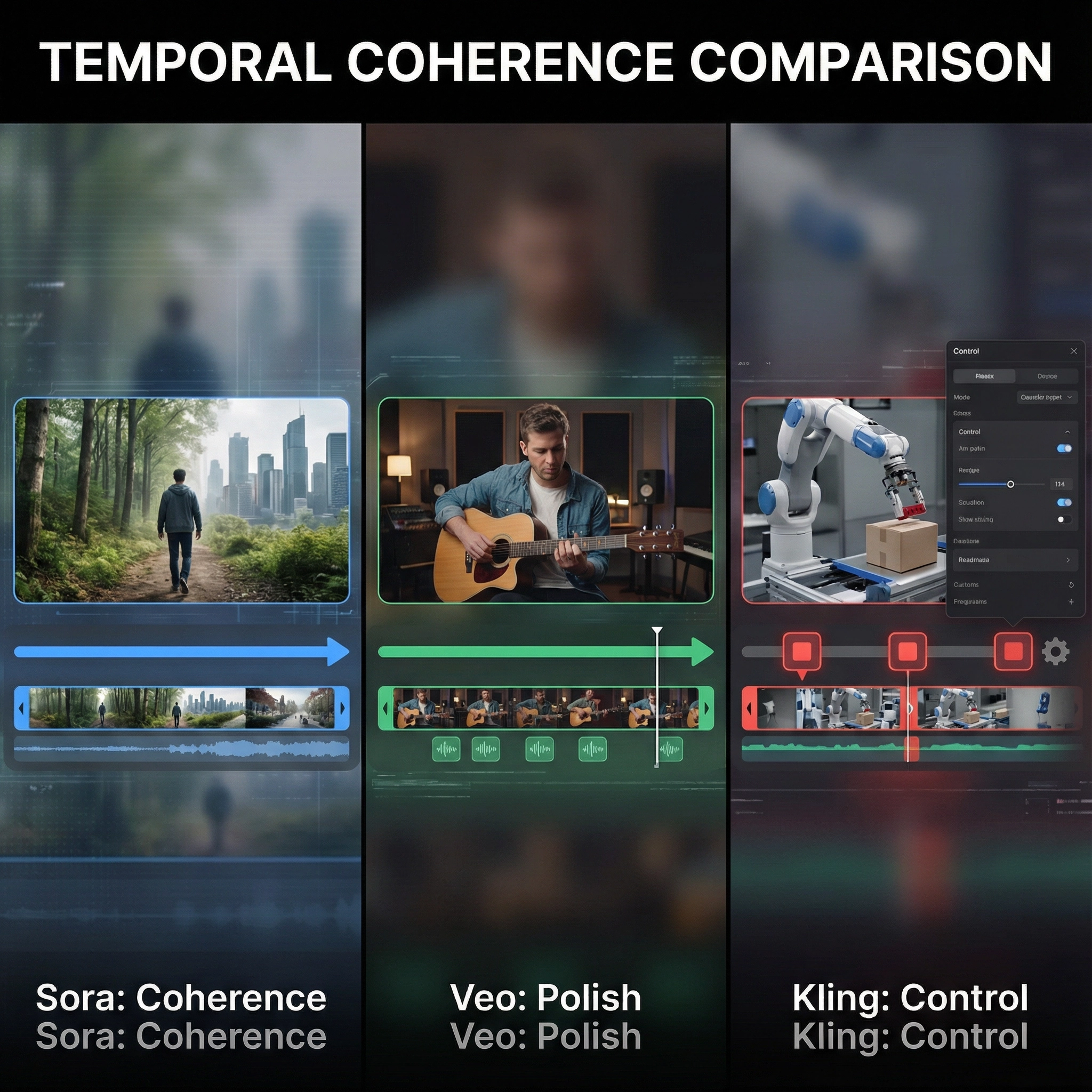
A side-by-side visual comparison of temporal coherence. On the left, a seamless, long-duration clip with perfect object persistence (Sora). In the middle, a high-quality clip with good object persistence and native audio (Veo). On the right, a long-duration clip with visible keyframe markers for control (Kling). Label the sections 'Sora: Coherence', 'Veo: Polish', and 'Kling: Control'.
2. Aesthetic and Output Quality: Realism vs. Polish vs. Cinematic Scale
While all three models aim for high quality, their aesthetic signatures differ based on their training data and core optimization.
Sora’s Photorealistic Power
Sora’s output is often described as hyper-realistic and cinematic. Its training on vast amounts of high-quality video data allows it to capture subtle details like light refraction, complex textures, and natural camera movements.
•Realism: Unmatched in its ability to generate photorealistic scenes that are difficult to distinguish from real footage.
•Camera Control: Demonstrations show an inherent understanding of cinematic language, including smooth dolly shots, complex pans, and depth of field.
Veo’s High-Fidelity Polish
Veo’s aesthetic is characterized by its clean, polished, and broadcast-ready look. It excels at generating content that is immediately usable in a professional context, often with a slightly brighter, more commercial feel than Sora.
•Integration: Its seamless integration with native audio and other Google tools (like Gemini) makes the final output feel complete and ready for distribution.
•Consistency: Veo is highly reliable, producing consistent results across a wide range of prompts, making it a favorite for content creators who need predictable quality.
Kling’s Narrative Scale
Kling’s strength lies in its ability to handle complex, multi-scene narratives within a single generation. Its longer video length naturally lends itself to storytelling.
•Complexity: Kling can manage more complex scene transitions and character interactions over time, essential for narrative structure.
•3D Attention: The model’s use of 3D spatiotemporal attention mechanisms allows for highly realistic movement and camera control, giving the final output a strong cinematic feel, particularly in action sequences.
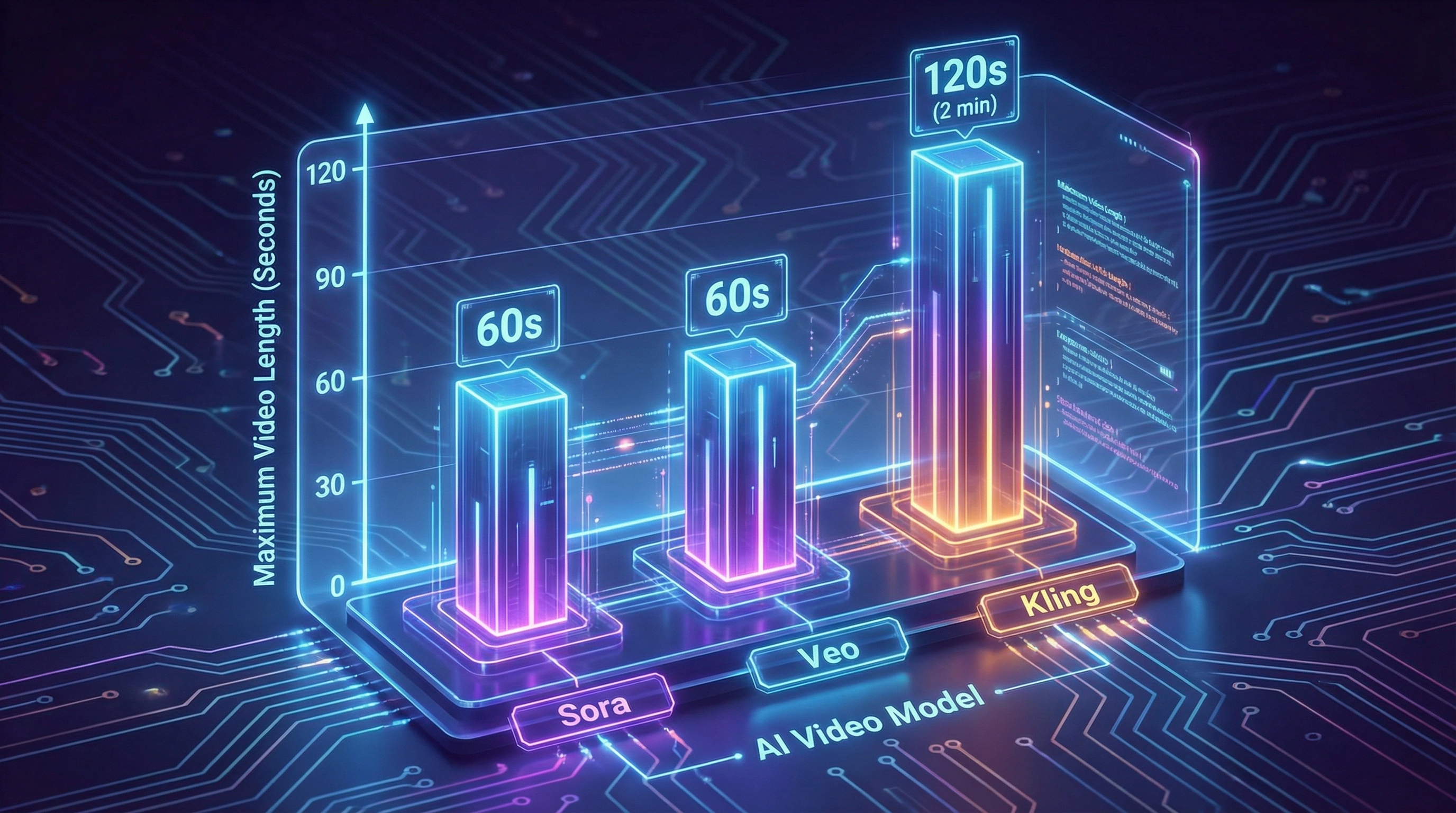
A bar chart visualization comparing the maximum video length of Sora (60 seconds), Veo (60 seconds), and Kling (2 minutes). The chart should be stylized and futuristic. Label the axes clearly.
3. Control Features: Prompt-Centric vs. Keyframe Control
The level of user control is a major factor in the Sora vs Veo vs Kling debate, especially for professional users.
Sora: The Prompt-Centric Approach
Sora’s control is primarily exercised through the text prompt. The model is so powerful that it is designed to interpret complex, natural language instructions, including camera angles, mood, and specific actions.
•Prompt Engineering: Mastery of Sora requires exceptional prompt engineering skills, as the model handles the internal mechanics of physics and camera movement.
•Minimal UI Control: Public interfaces have shown a relatively simple UI, suggesting that the complexity is handled by the model itself, not by user-adjustable sliders.
Veo: Style and Camera Sliders
Veo offers a balance of prompt control and direct UI manipulation, making it highly accessible.
•Style and Camera Sliders: Veo provides intuitive sliders for controlling aspects like Cinematic Style, Camera Zoom, and Movement Speed. This allows users to quickly fine-tune the look and feel without rewriting the entire prompt.
•Image-to-Video: Veo excels at generating video from a single image, maintaining the visual style and content of the input image while adding motion.
Kling: The Keyframe Control Leader
Kling is the clear winner for users who demand granular, frame-by-frame control over their generation.
•Keyframe Control: Kling allows users to set keyframes for camera movement, object placement, and even style changes throughout the 2-minute clip. This is a game-changer for animators and VFX artists who need precise control over the narrative flow.
•Advanced Camera Controls: The interface includes advanced camera controls (Pan, Tilt, Dolly, Curve) that are familiar to users of professional video editing software, bridging the gap between generative AI and traditional post-production 3.
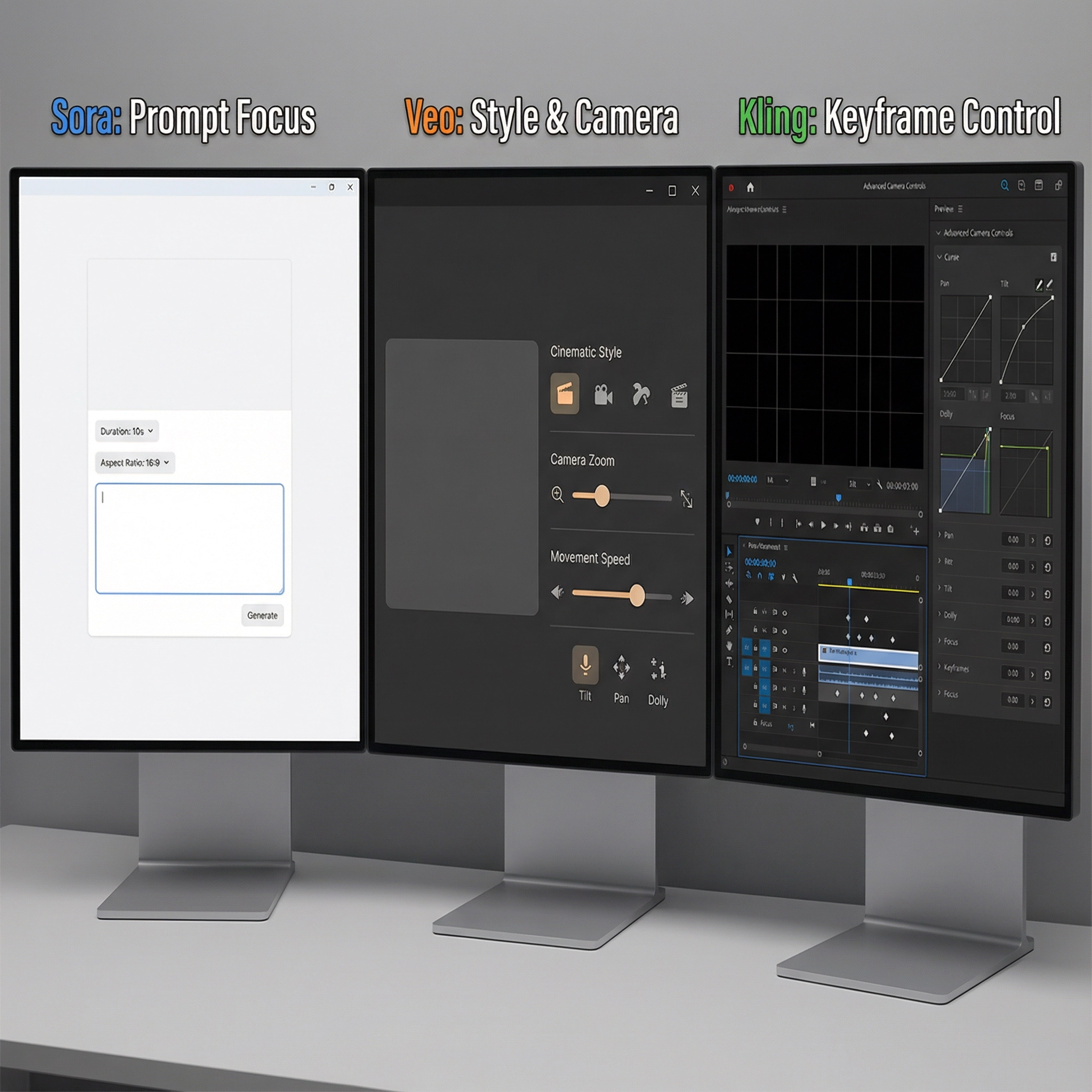
A side-by-side comparison of control features. On the left, a simple text prompt box with minimal parameters (Sora). In the middle, a clean interface with a few sliders for style and camera control (Veo). On the right, a complex interface with a timeline, keyframe markers, and advanced camera controls (Kling). Label the sections 'Sora: Prompt Focus', 'Veo: Style & Camera', and 'Kling: Keyframe Control'.
4. Accessibility and Ecosystem Integration
The availability and integration of these models into existing workflows is a critical factor for adoption.
Sora: The Exclusive Frontier
Sora remains the most exclusive of the three, with access tightly controlled by OpenAI.
•Limited Access: Currently, access is limited to a small group of visual artists, designers, and filmmakers for testing and feedback.
•Ecosystem: Its primary integration is likely to be within the OpenAI ecosystem (via ChatGPT Plus or API), but its high computational cost suggests a premium pricing model upon public release.
Veo: The Accessible Powerhouse
Veo is the most accessible of the three, leveraging Google’s massive ecosystem.
•Open Beta/Gemini Integration: Veo is integrated into Google’s Gemini platform, making it available to a wide user base through a more open beta program.
•Native Audio: The native audio generation is a significant advantage, eliminating the need for a separate audio generation and synchronization step, streamlining the entire workflow.
•Speed: Veo is optimized for speed, with reports suggesting it can generate a 12-second video in about 30 seconds, making it highly efficient for rapid prototyping 4.
Kling: The Developer’s Tool
Kling’s accessibility is currently focused on the Chinese market, but its technical features make it highly attractive to developers and power users globally.
•API and App: Kling is available through a dedicated app and an API, allowing for integration into custom workflows and third-party applications.
•Affordability: Kling is positioned as a more affordable option, with entry-level plans targeting a wider commercial audience, making it a strong contender for budget-conscious creators 5.
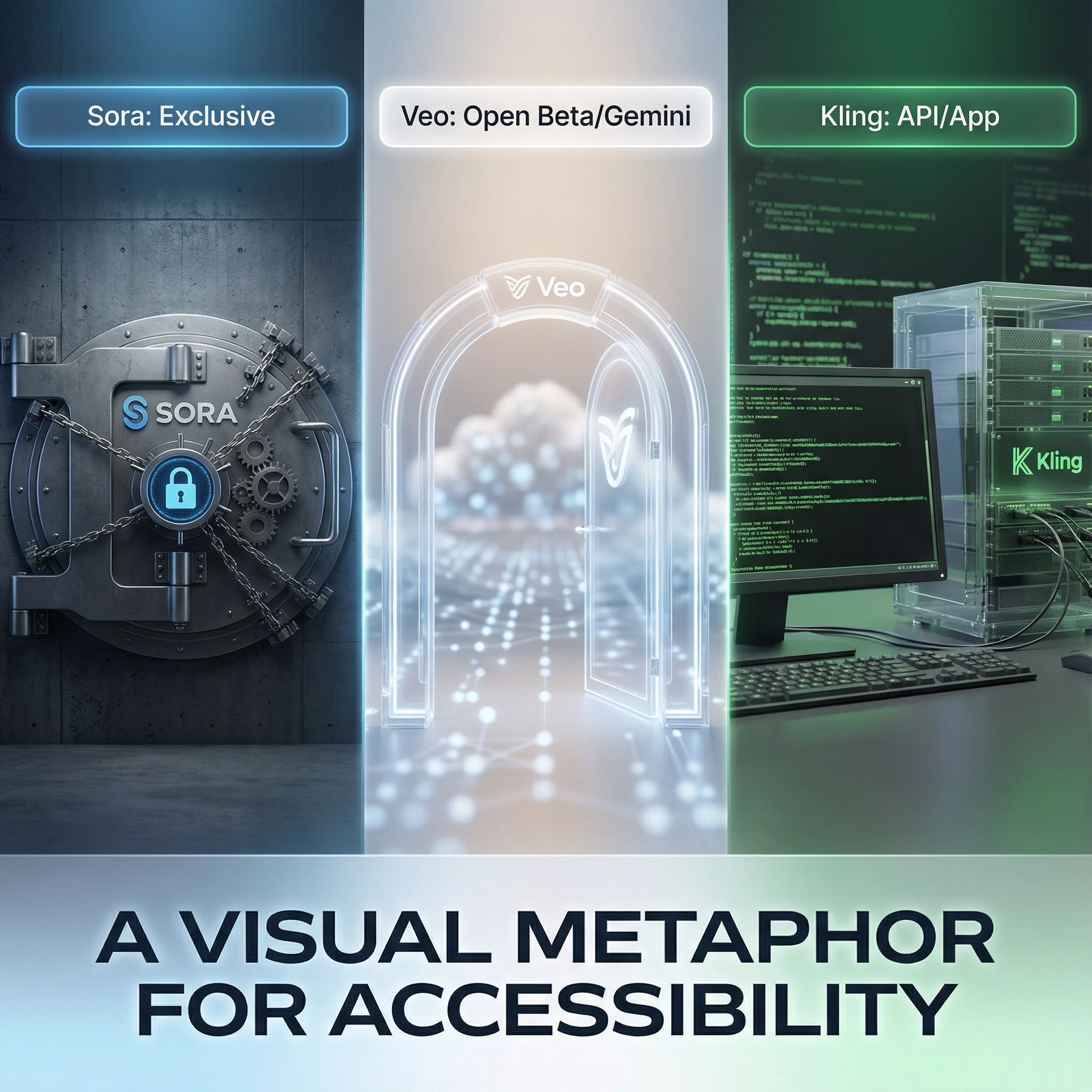
A visual metaphor for accessibility. On the left, a locked, exclusive vault door (Sora). In the middle, a clean, modern, open-access portal (Veo). On the right, a developer's API terminal with code visible (Kling). Label the sections 'Sora: Exclusive', 'Veo: Open Beta/Gemini', and 'Kling: API/App'.
5. The Audio Factor: A Decisive Advantage for Veo
In the comparison of Sora vs Veo vs Kling, the inclusion of native audio in Veo 3.1 is a game-changer that cannot be overstated.
•Veo’s Native Audio: Veo generates sound effects, ambient noise, and even dialogue that is perfectly synchronized with the visual content. This eliminates the most tedious and time-consuming part of AI video post-production: manually adding and syncing sound.
•Sora’s Audio Status: Sora’s audio capabilities remain largely unconfirmed. While the visual quality is stunning, the lack of native audio means the final output is only half-finished, requiring external tools and significant manual effort.
•Kling’s Post-Sync: Kling requires post-synchronization. While this offers flexibility in choosing audio, it adds a mandatory step to the workflow, increasing production time and the potential for sync errors.
For any professional application, a video without sound is incomplete. Veo’s native audio gives it a massive, practical advantage in the current market.
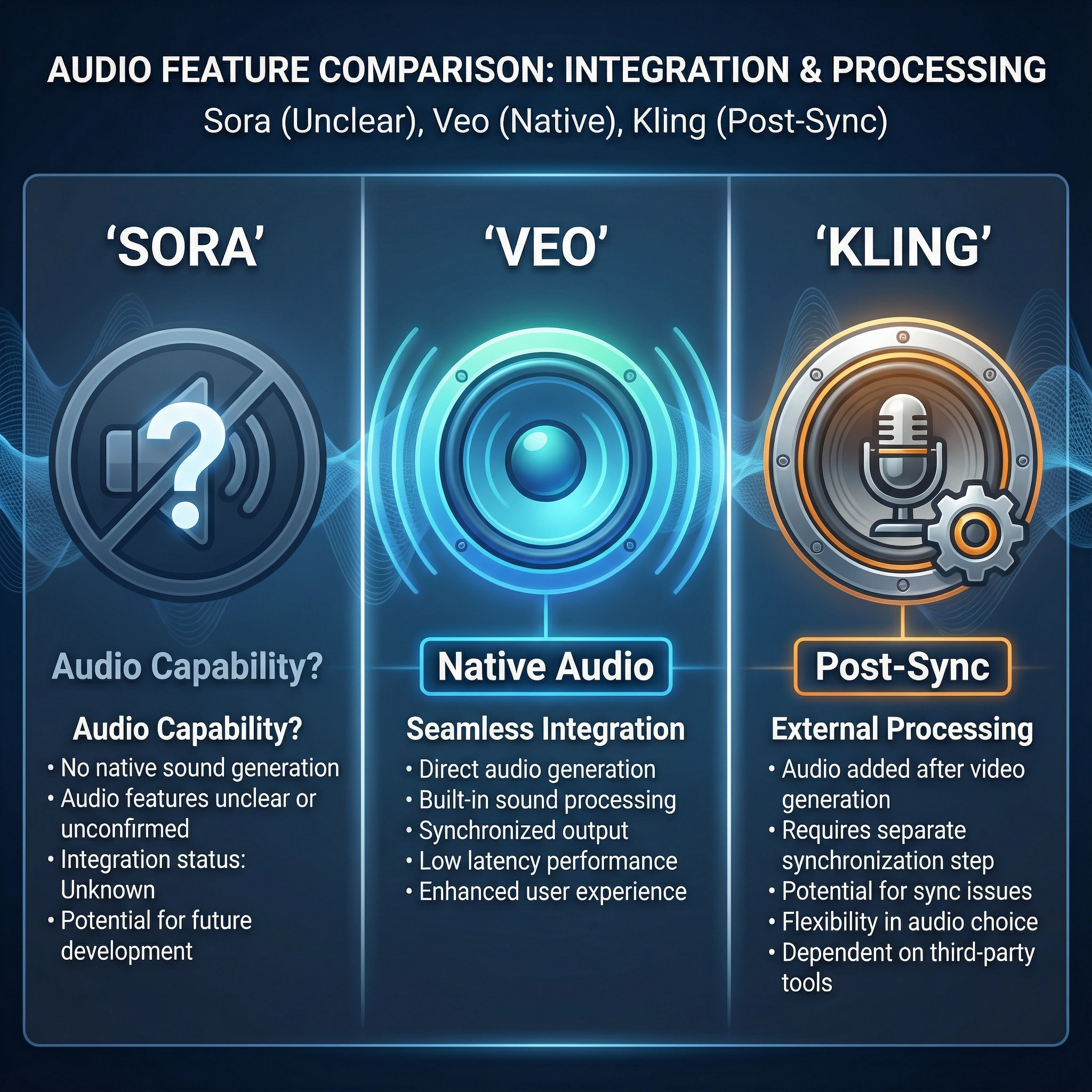
A side-by-side comparison of audio features. On the left, a muted speaker icon with a question mark (Sora). In the middle, a speaker icon with a clear sound wave and a 'Native Audio' label (Veo). On the right, a speaker icon with a 'Post-Sync' label (Kling). The background should be a subtle sound wave pattern.
6. Final Verdict: Which AI Video Generator Reigns Supreme?
The ultimate choice between Sora vs Veo vs Kling depends on your priorities: raw power, integrated polish, or narrative control.
Choose Sora if:
•Your priority is unmatched photorealism and temporal coherence, and you are willing to wait for public access and a premium price point.
•Your workflow can accommodate external audio synchronization.
•You are a filmmaker or artist pushing the absolute limits of visual quality.
Choose Veo if:
•Your priority is high-fidelity, broadcast-ready video with native, synchronized audio.
•You value speed, accessibility, and integration within a major ecosystem (Google/Gemini).
•You are a content creator or marketer who needs a reliable, all-in-one solution for polished output.
Choose Kling if:
•Your priority is long-form narrative (up to 2 minutes) and granular, keyframe-level control over camera and scene elements.
•You are a developer or power user who needs API access and a more affordable, high-control solution.
In the current landscape, while Sora holds the crown for potential visual fidelity, Veo is the most complete and practically usable tool due to its native audio and accessibility. Kling is the dark horse that offers the most control for narrative structure. The true winner of the Sora vs Veo vs Kling showdown is the one that best fits your specific production needs.